

With the threat of rising energy prices, taking steps to reduce how much energy you need to buy from the grid now can help you better deal with price increases.
While it is always a good idea to reduce energy waste around the house, another option is to generate your own electricity at home with solar panels. But solar panels can be very expensive to install and not suitable for those who live in flats or rental properties.
Article continues below
What are plug-in solar panels?
While all types of solar panels will take energy from the sun and convert it into electricity for your home, more traditional panels will need to be hardwired into your home’s electrical, which will need to be done by an electrician. Plug-in solar panels, on the other hand and as the name suggests, do not need to be hardwired and can instead be plugged directly into a socket.
‘Plug-in solar panels are compact, self-install kits that plug directly into a normal wall socket rather than hardwiring into your home’s electrics,’ explains George Penney, solar panel and energy expert. The Solar Co. ‘They can be thought of as the entry-level version of solar, usually just one or two panels with a microinverter that converts the sun’s energy into usable power for your kettle or TV.’
The kits will “typically include one or two panels, a micro-inverter to convert DC to AC power, and a plug that feeds electricity directly into your home circuit,” adds John Collett, director. Quantum Renewables. ‘They are already hugely popular in Germany and the Netherlands, and the UK is now catching up.’
By using plug-in solar panels, you can generate your own electricity and reduce how much you need to purchase from the grid, lowering your monthly energy bill.
How do plug-in solar panels actually work?

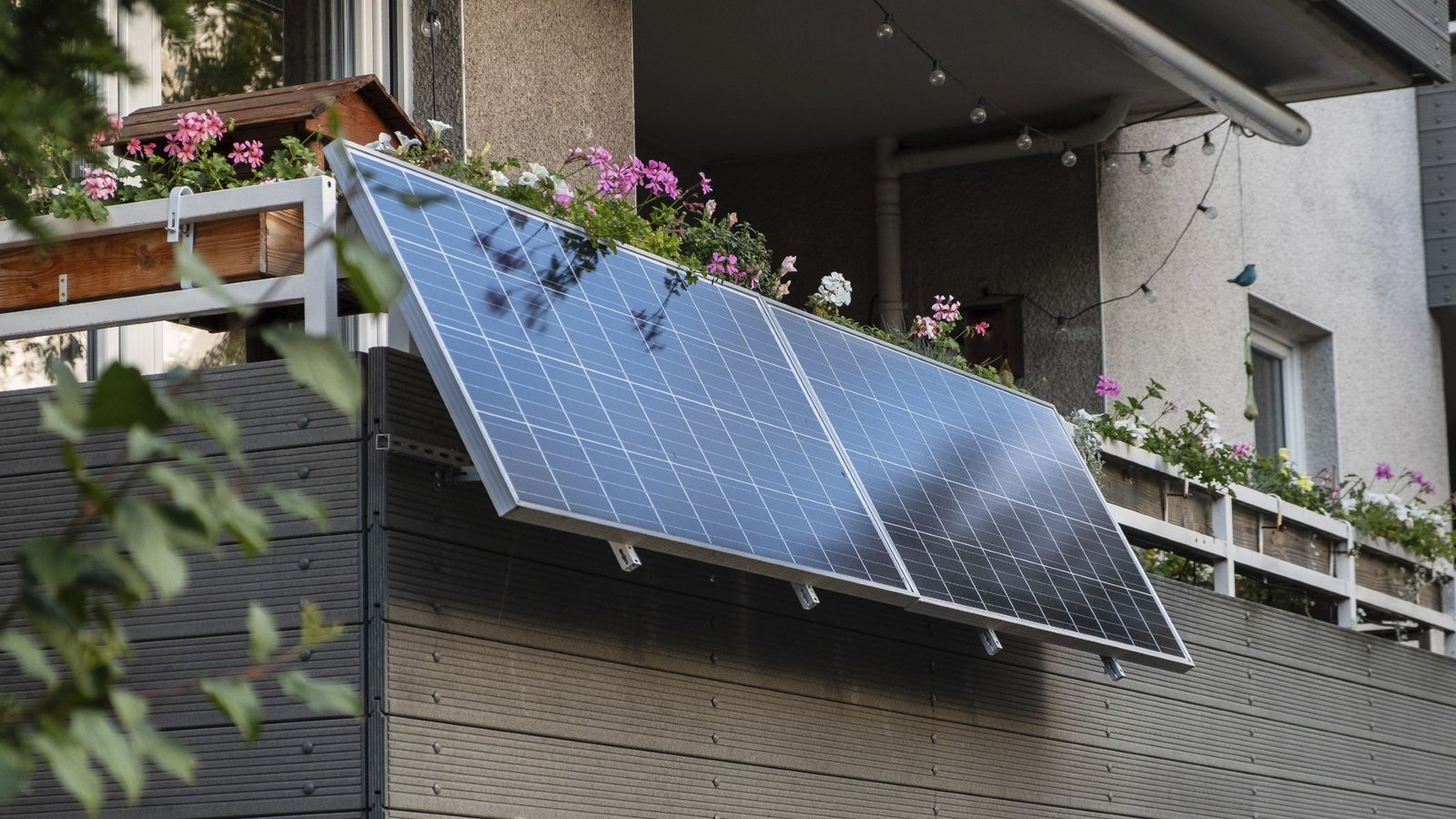
Plug-in solar panels are ideal for people who live in flats and apartments with balconies
(Image credit: Getty Images)
Unlike more traditional solar panels, which are designed to sit on your roof, plug-in solar panels can be installed on balconies, fences, garden sheds or exterior walls instead. For maximum benefits, you would ideally install it on a south-facing structure. Once placed, it needs to be plugged into one of your home’s plug-sockets (either an indoor socket or a weatherproof external outlet).
Once set up, the solar panels will capture sunlight and convert it into direct current (DC). But to use power through your home sockets, direct current will need to be converted to alternating current (AC). This is where the microinverter comes in.
‘When the panels generate electricity, that power is fed directly into the home and used by appliances running at the time, helping to reduce the amount of electricity drawn from the grid’, adds Charlie Findlay, Managing Director. Mole Energy.
How are plug-in solar panels different from conventional solar panels?
While both plug-in and more traditional solar panels convert energy from the sun into electrical power for use in the home, there are some major differences.
Upfront cost and installation
Traditional Solar panels can cost thousands Buying and installing professionally prevents them from being a feasible option for many people. Plug-in solar panels, however, are likely to be more affordable, costing hundreds rather than thousands.
The costs and complications associated with solar panel installation are also eliminated by plug-in solar kits, which can be set up on a DIY basis. ‘The big difference from a traditional rooftop system is that there is no scaffolding, no structural work, no MCS-certified installer required, and no grid connection paperwork, explains John Collett. ‘You buy the kit, attach the panel to a balcony railing, south-facing wall or flat roof edge, plug it in and it immediately starts reducing what you draw from the grid. They make solar energy accessible in a way that wasn’t before.’
How much energy do they generate?
Another big difference between traditional solar panel systems and plug-in solar panels is how much electricity they generate.
‘A standard rooftop solar installation is hard-wired, professionally designed around your property and can produce several thousand kilowatt-hours a year,’ explains Kian Milroy, Renewables Electrical Engineer. Heatable. ‘Plug-in solar is very small, maybe under 800W, and is designed to offset your background daytime electricity consumption rather than powering the whole house. Think fridges, routers, appliances that you leave running during the day.’
Charlie Fandle adds: ‘They don’t replace a full solar installation, but they can provide an easy entry point to generating your own renewable energy.’
How much you can save on your energy bill
If you want to significantly reduce your electricity bill, it’s unlikely you’ll achieve that with a plug-in solar panel kit. A more traditional setup including more panels and solar batteries may be more appropriate instead.
Plug-in solar panels are more likely to offer a small reduction in bills by reducing how much electricity you buy from the grid.
Who are plug-in solar panels best suited for?
While plug-in solar panels may not suit every home, they do provide an ideal solar solution for certain circumstances and properties.
This includes:
- Tenants who do not want to make permanent changes to the property
- Those who live in flats or apartments with balconies
- Those on a tight budget can benefit from some savings by using plug-in solar panels
- For those who want to try out solar before committing to a permanent installation.
Can UK homes use plug-in solar panels yet?
While you may be seeing the news about plug-in solar panels everywhere, there are a few rules that need to be changed before you install a plug-in solar panel kit at home.
‘The government announced in March 2026 that it plans to update the grid code and wiring regulations so that sub-800W systems can be plugged into a normal domestic socket without the need for an electrician, but those changes have not yet been formally implemented,’ explains Kian Milroy. ‘Products can be on the shelves within months once safety standards are signed.
‘If a property has old electrics, it’s still worth getting a qualified electrician to check the wiring before buying anything, even after the law comes into effect. The government’s direction of travel is clear, but buying into the framework before it is in place is a risk people must understand.’
While you wait for plug-in panels to become available, you can try A portable solar panel, like this one from Argos (£59)To use sunlight to charge your devices.

Anker Solix Ps30 Portable Solar Panel
Whether you’re camping or chilling in your garden, this portable solar panel will harvest energy from the sun, which can be used to charge your phone and other devices without adding to your energy bill.

If you enjoyed reading this, sign up for Ideal Home Newsletter All the latest home decor trends and inspiration delivered straight to your inbox



