

While going through these interiors, I started seeing the same furniture ideas over and over again. Different rooms, different brands, but the design moves seem similar. Sofas have strong colors, coffee tables look sculptural rather than basic rectangles, and storage systems resemble architecture.

One of my biggest takeaways is how designers build rooms around a few strong pieces instead of filling the space with lots of smaller items. A sofa, marble table or lighting piece becomes the focal point, while the rest of the furniture supports it.
Looking at these interiors, I began to see clear patterns shaping furniture design for 2026. These rooms show how materials, colors and shapes are evolving and how a few carefully chosen pieces can define an entire space.
A deep green sofa that anchors the entire room

The first thing I noticed in this room was the deep green sofa. It immediately anchors the space and draws the eye before anything else. Instead of fading into the background like many neutral sofas, it becomes the focus of the layout.
I also like how the rest of the room is restrained. Brass shelves, marble surfaces and soft lighting create layers around the sofa without competing with it.
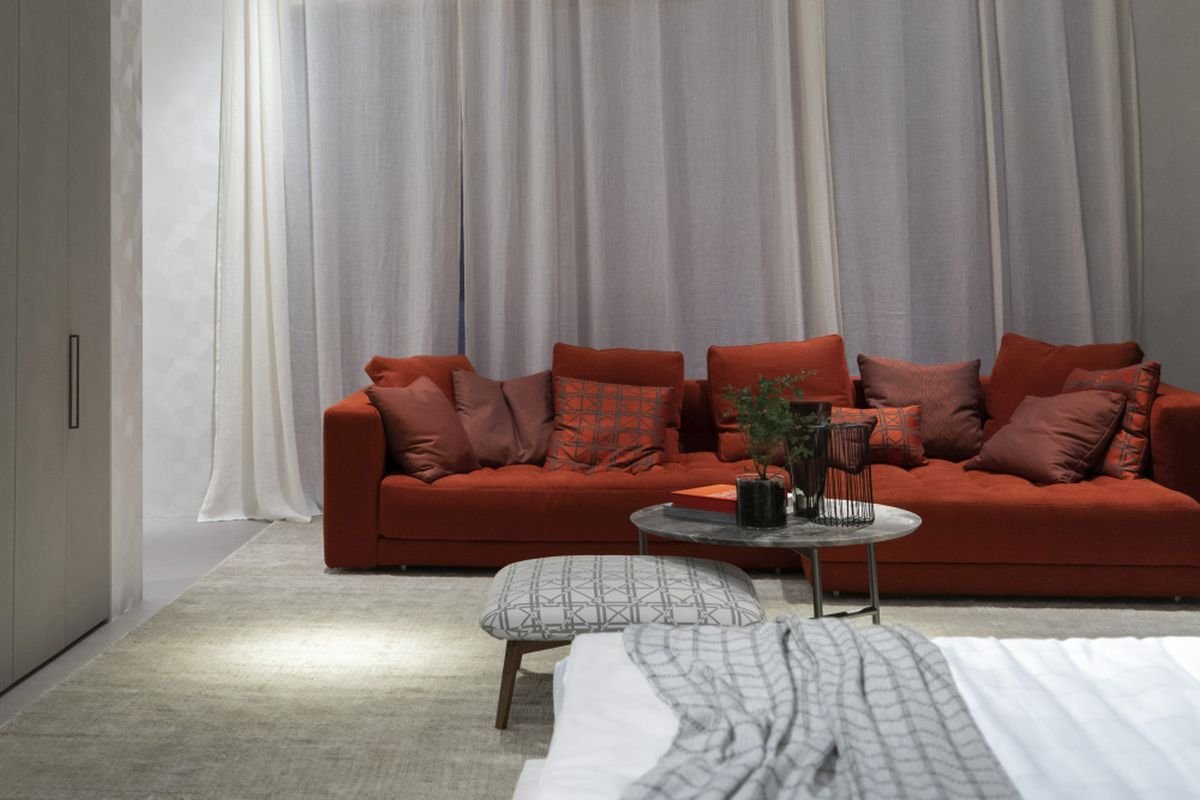
A burnt orange sofa that changes the mood of a room

When I looked at this interior, it was impossible to miss the burnt orange sofa. Against pale curtains and neutral floors, the color introduces warmth and energy.
What works well here is the simplicity of the layout. A small round table and a soft fabric sofa are the focus, carrying the room’s full color story.
An oversized sectional that creates a lounge corner

This section shows how one piece of furniture can shape the entire seating area. I saw how the sofa wraps around the space creating a lounge zone without the need for extra chairs.
Soft cushions and muted tones make the room feel calm and comfortable. A marble side table and low coffee table balance the composition.
A sculptural chair that turns a small corner into a feature

What caught my attention here was the wooden chair with its simple, sculptural form. Even though it is one piece, it defines the entire corner of the room.
Paired with glass tables and soft lighting, the setup feels deliberate rather than decorative. I see this approach appearing more often in modern interiors.
Layered coffee tables that add movement

Instead of a large coffee table, this room uses a layered marble table with a curved shape. I love how the stacked surfaces create depth and break up the rigid lines of the sofa.
The marble texture adds weight to the center of the room while still keeping the texture light.
A sculptural lamp that acts as an object

This bronze lamp immediately reads as a design object rather than a light. When I first saw it, the angular form and metal surface stood out against the wall panels.
Placed on a glass console, it becomes the focal point of the vignette. The surrounding material remains still so that the lamp can emerge.
A neutral sofa with a bold accent ottoman

At first glance the sofa looks calm and neutral, but the mustard ottoman changes the whole scene. I love how a single accent piece can introduce color without overwhelming the room.
Wooden side tables and indoor plants soften the texture and keep the space light.
A marble console that defines the entry area

This console table caught my attention because of its clean geometry. The marble surface introduces texture while the metal frame keeps the piece light.
Placed beneath a round mirror, it creates a simple yet strong entryway vignette.
A wardrobe system that looks like a boutique display

This storage system feels closer to a retail display than a traditional wardrobe. When I looked at it, the integrated lighting and open shelving immediately stood out.
A central island and wooden cabinetry turn storage into a part of interior design rather than something hidden behind doors.
A wall storage unit that works like architecture

This wall system looks more like built architecture than furniture. A combination of wooden panels, drawers and lighted niches give the wall texture and depth.
What I noticed most was how the lighting framed the objects on display. The collection becomes both functional and decorative at the same time.
A geometric sideboard that turns storage into wall art

The first thing I noticed here is the dark blue sideboard with geometric paneling. Instead of acting as quiet storage, the cabinet becomes the main visual part of the room.
Brass framing and mirror artwork reinforce the symmetry of the setup. The whole composition feels balanced, almost like a gallery display built around a piece of furniture.
A curved sofa shape that softens a bold interior

This curved sofa immediately caught my attention. The shape looks soft and sculptural, especially against the strong graphic pattern on the wall.
I see this move in many interiors. Designers use curved seating to break up the rigid lines and make the room more relaxed.
Lounge chairs with reclining ottomans in living room

This leather lounge chair is reminiscent of classic mid-century design paired with a matching ottoman. The proportions are simple, but the comfort is palpable.
I noticed that these setups reappeared more often. A chair and ottoman can create a personal corner without filling the room with additional furniture.
A bold red sofa that becomes the focal point of the room

The red sofa dominates the space when you look at it. Instead of neutral upholstery, color becomes the focal point.
I love how the rest of the furniture is muted here. A sculpted wood coffee table supports the sofa without competing with it.
Open wood shelving that acts as a room divider

This shelving unit caught my attention because it serves both storage and architecture. An open floor divides the space while still allowing light to pass through.
Glass shelves and wooden frames keep the room light. Instead of blocking the room, shelves create layers and visual depth.



