

Color in a room often feels like an afterthought, added by small decor that never completely changes how the space functions. Even when a few bright accents are present, the result remains neutral.

In 2026, color moves in furniture itself. Sofas, chairs, ottomans and built-ins have a palette, defining zones and guiding how each area is used. Instead of spreading the color over many small objects, it is concentrated in a few clear elements that shape the layout.
These ideas show how color becomes part of composition, not decoration. Each example uses furniture and key pieces to anchor the room, control contrast, and make the space feel intentional at first glance.
A sculpted velvet sofa turns color into form

A cool mustard velvet sofa has both color and shape, acting as the main visual weight in the room. The curved base eliminates sharp edges, so the color reads as part of the composition rather than a surface detail.
Wall tones and shelves stay close in palette, letting the sofa take the lead. Small accents on the shelves repeat the color in a controlled manner, keeping the composition tight.
A fringe bench adds texture to the foot of the bed

A saturated bench in warm ocher presents color through composition. The fringe detail breaks up the clean lines of the bed and softens the transition between furniture pieces.
Dark walls and a structured headboard keep the space static. The bench becomes the focal point without competing with the rest of the layout.
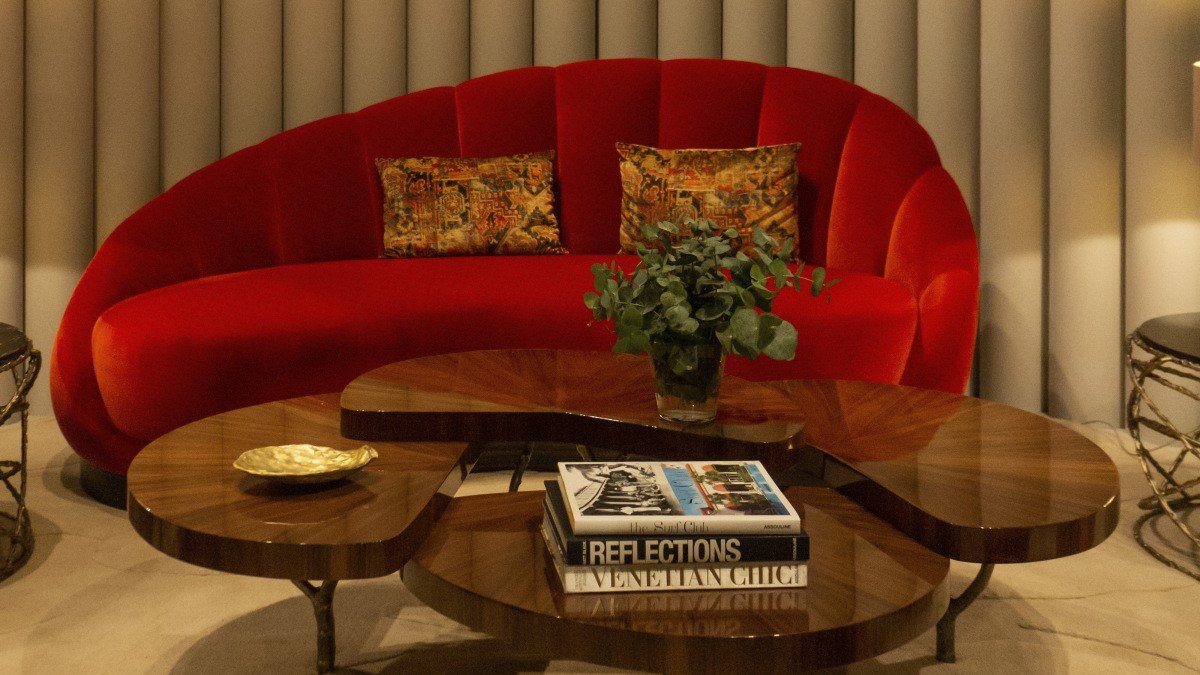
A curved red sofa defines the entire seating area

A bold red sofa anchors the room and sets the tone from the first glance. Its curved back forms a continuous line that wraps around the seating area.
Neutral walls and wooden tables balance the intensity. Color stays contained to one main area, making the room feel restrained rather than crowded.
Paired lounge chairs use color as a symmetry tool

Two mustard-toned chairs mirror each other and create a focused seating zone. Color acts as a unifying element on both sides.
A dark table between them supports the structure. Repeating tones keep the layout structured and easy to read.
Accent chairs introduce color without expanding the palette

Muted red chairs bring contrast to a neutral dining setup without shifting the overall palette. Color stays within a narrow range, adding variety without distraction.
Table and wall art remain understated. This focuses on sitting while maintaining balance.
A sectional sofa uses color blocking to define function

The sectional mixes a warm brown color with a yellow cushion, creating a clear division within a piece. A color shift highlights the lounge corner without adding extra furniture.
Open shelves and a dark background keep the setting grounded. A sofa has both function and visual interest.
A low sofa combines a dark base with bright accents

A low-profile black sofa acts as a base layer, while red cushions introduce contrast. This compartmentalized approach keeps the structure neutral and the accents flexible.
The metal legs and clean lines keep the piece from feeling bulky. The color remains easy to adjust over time.
A red rug anchors the entire seating layout

A saturated red rug defines the seating zone and pulls all the elements together. Instead of spreading color across multiple objects, the design concentrates it at floor level.
Neutral sofas and tables sit on top, allowing the rug to carry the visual weight. This approach keeps the room tidy while still adding impact.
Sculptural orange chairs turn a corner into a defined zone

Two compact chairs in saturated orange tones create a clear seating area without adding bulk. Their curved shells tightly hold the paint, allowing each piece to be read as a complete object.
The backdrop remains neutral and structured, so the chairs focus the entire scene. This approach keeps the layout simple while still delivering impact.
The red sofa uses pattern lines to control the bold color

A deep red sofa anchors the room, but thin gold lines break the surface and guide the eye across the form. The color feels deliberate rather than overwhelming.
Dark wood and black accents around it keep the palette grounded. The sofa stands out without disconnecting from the rest of the space.
A mustard lounge chair adds warmth without broadening the palette

Two low chairs in mustard tones introduce warmth while staying within the tight color range. Their soft geometry makes the look light and flexible.
Mirrors behind them reflect light and repeat shapes, adding depth without new colors. The setup feels layered but controlled.
A curved sofa balances the patterned walls with single tones

A warm-toned sofa sits against a detailed patterned wall, acting as a visual reset. Instead of competing, solid upholstery calms the background.
Above glass lighting adds movement without adding color. The sofa occupies the center and keeps the composition readable.
A blue sofa and a yellow chair create a clear color contrast

Pairing a deep blue sofa with a bright yellow chair creates a strong contrast that defines the seating area. Each part has its own zone within the layout.
Neutral walls and a simple table maintain balance. Contrast seems sharp but still manageable.
An upholstered headboard turns color into a focal surface

A red upholstered headboard spans the width of the bed and becomes the main surface of the room. Patterned rugs repeat the tone in a strict scale.
The dark walls behind it increase the contrast and push the headboard forward. The bed becomes the center without additional elements.
Accent chairs and floor patterns work as a single composition

Pair an orange textured chair with a patterned floor that repeats the same color family. The two components combine, so the color looks distributed rather than separated.
Gold details in mirrors and lighting reinforce the palette. The space reads as a composition rather than separate accents.
The curve uses tone-on-tone yellow for sectional depth

A long section in muted mustard creates color through volume rather than contrast. Tones remain consistent throughout the cushions, with a few bright pillows adding a small shift.
The backdrop remains dark and planted, so the sofa carries the scene. It keeps the color rich without feeling loud.
Bunk bed layouts use color to define each level

Soft pink walls and a yellow base separate the sleeping zone without adding walls. Each layer reads clearly by color rather than structure.
Small accents, like a neon sign and patterned cushions, keep the room active. The palette looks playful but still manageable.
A low sofa blends into the room with a single green tone

A pale green sofa spans the room and stays close to the surrounding palette. The color blends into the shelves and decor, reducing contrast.
Accent rugs introduce darker tones to break up the surface. The fragment reads as part of the architecture rather than as a separate object.
Mixed seating uses color to perform different functions

A neutral sofa pairs with a rust chair and yellow ottoman, each marking a different function. Colors divide the layout without physical barriers.
Tables and shelves remain grounded in a dark finish. This keeps the composition structured while allowing for variation.
Bright sofas and art pieces share a similar palette

A vivid yellow sofa sits under a graphic artwork that repeats the same color family. Both elements combine, so the palette feels deliberate.
Small items, such as lamps and cushions, expand the scheme. The room reads as a controlled composition.
Yellow ottomans act as flexible color blocks

Two large ottomans introduce a bold yellow tone at floor level. They act as movable pieces, shifting the work while keeping the color in place.
A dark sofa behind them keeps the contrast in check. Even with strong color the setup remains balanced.
Upholstered screens add color without weighing down the furniture

A folding screen in deep blue introduces a vertical color surface without adding bulk. It defines the space while remaining flexible.
A soft fabric and wooden frame keep the piece grounded. Color feels present without dominating the room.
Keep the color of the round table and chairs consistent with seating

Warm red chairs add color to a neutral dining area without overwhelming the rest of the space. The tone remains centered around the table.
A dark tabletop and neutral rug anchor the setup. This keeps the palette manageable and easy to read.
Accent tables and rugs use contrast to define the corner

A yellow side table sits in front of a black and white patterned rug, creating a sharp contrast at floor level. The color remains distinct but strong.
A nearby soft blue sofa balances the composition. A mix of tones creates separation without clutter.
Patterned chairs combine multiple colors in one piece

Two lounge chairs mix green, yellow and striped fabric to create color within the cushions. This reduces the need for additional accents.
The wooden frames and plants around them keep the setting natural. Chairs become the main visual layer without overwhelming the space.



