

Want a driveway that does more than just park a car? These ideas show how the front surface of your home can define the entire first impression, using layout, material contrast and clean lines that connect directly to the architecture.

In 2026, plain asphalt begins to disappear. Homeowners are moving toward pavers, concrete panels, stone, and composite materials that structure the entire lot, turning the driveway into a design piece rather than a spare space.
Each approach is different in how it frames the home. Borders, grids, curves, and material shifts guide movement, highlight entrances, and solidly support the facade without adding clutter.
Limestone borders with charcoal inlays define each section

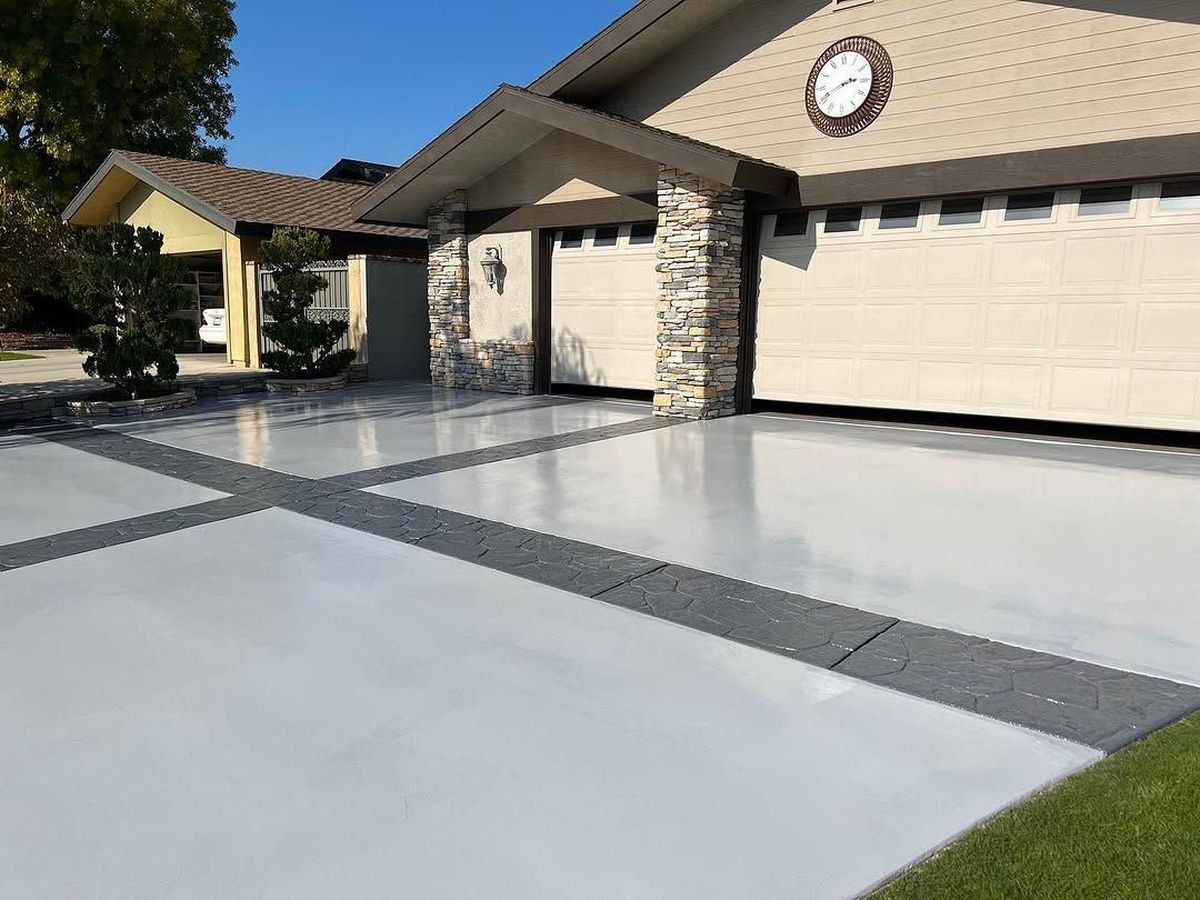
Wide concrete panels are outlined with limestone edges that keep the edges sharp and consistent throughout the driveway. Light tones frame each slab, making the layout read clearly from a distance.
Charcoal inlay cuts across the surface and creates a structured grid that connects to the house line and entry steps. It keeps the driveway from feeling empty while maintaining a calm, controlled look that fits the architecture.
A heated concrete driveway that keeps the surface clean year-round

Large concrete slabs create a calm, uninterrupted surface that matches the clean lines of the home. With minimal joints and no additional patterns, the focus remains on proportion and alignment with the garage and entry.
The heating system below varies how the space works. Snow and ice never freeze, water runs off without freezing and driveways remain usable without constant clearing. It keeps the front of the house consistent even in the middle of winter.
An irregular flagstone driveway softens the grand entry

The organic shapes of the flagstone break away from the rigid grid layout, giving the driveway a more relaxed, almost courtyard-like presence. Each stone piece creates a subtle variation, so the surface never feels repetitive or flat.
This approach works well with Mediterranean-style architecture, where natural stone combines with stucco walls, warm tones and surrounding plantings. It also blends the driveway into the landscape, making the hard surface seem less imposing.
Heated driveway with flagstone banding that keeps the winter out

Wide concrete panels are created with natural flagstone bands that define each section while adding texture to the entire surface. The grid layout looks structured, but the stone inserts break up the uniformity so it doesn’t look flat.
All that changes is the heating system below. Snow never builds up, edges remain visible, and the transition to the front walkway remains clear without constant maintenance. It turns the driveway into a surface that works year-round without extra effort.
A mixed-tone block driveway that blends with the brick facade

Variations in stone color soften large surfaces and blend naturally with the brick exterior. Rather than a flat slab, the driveway reads as a textured extension of the house, keeping everything grounded and balanced.
The tight joint pattern keeps it clean, while the subtle color better hides changing wear and tire marks over time. It looks finished without the need for borders or extra details.
Framed driveway with sharp border contrast

A dark central field combined with a light stone border creates a clear outline that defines the entire driveway. That contrast gives structure to the space and makes the layout appear deliberate from the street.
An angled edge to the curb adds movement, guiding the eye and softening transitions in the road. It works because every line has a purpose, not just decoration.
A grid layout with grass joints that break up the surface

Large pavers separated by grass joints divide the wide driveway into a series of defined sections. Green lines introduce rhythm and reduce the visual weight of the paved area.
This approach also helps with drainage and heat, making the surface feel less harsh. It’s a clean way to blend landscape with hardscape without adding extra elements.
Curved transition from driveway to gravel entry

The transition from block paving to gravel creates a soft arrival point closer to home. Curved edges keep transitions controlled while avoiding harsh, straight splits.
It also solves a practical problem, reducing the amount of paving while keeping the main drive stable and defined. The combination looks natural and easy to maintain.
Large concrete panels framed with brick bands

Wide concrete sections framed by dark brick strips create a strong geometric layout that scales well with the larger house. The pattern breaks the surface into zones without being busy.
It also helps manage parting lines expansion and cracking, so the design isn’t just visual. It holds its shape better over time while being easy to clean.
Open aggregate driveway with cobble edging

Textured aggregate surfaces add grip and visual depth, especially on sloped driveways. It avoids the flat look of plain concrete while remaining durable under constant use.
Cobble borders lock everything in place and clearly define each section. On a slope like this, that structure makes the whole layout feel secure and finished.
A light stone driveway keeps the front bright

Using a pale stone throughout the driveway reflects more light and keeps the entry area open and clean. It combines well with the white facade, extending the brightness across the ground plane.
Subtle variations in the tone of the stone prevent it from feeling flat. It remains quiet but still has enough structure to keep interest.
Concrete slab driveway with minimal dividing lines

Large smooth slabs create a clean base, while thin dark joints present enough texture to avoid a bare surface. The layout looks modern without relying on complicated patterns.
Those lines also guide parking and movement, making the space easy to use. It’s a restrained approach that still looks perfect.
Curved paver driveway that follows house line

The gentle curve of the driveway aligns with the front garden and facade, creating a natural flow from the street to the entrance. It avoids sharp turns and seems easy to navigate.
A consistent paver pattern keeps it unified, while the curves do the visual work. It’s a simple move that changes how the entire front yard reads.
A dark stone driveway anchors the modern facade

Dark pavers ground the home and create a strong base that contrasts with lighter walls and wood accents. It gives more presence to the entire frontage.
Irregular stone patterns add texture without looking busy. He is attentive but restrained.
A tight grid paver pattern that looks precise and durable

Small-format pavers laid in a tight grid create a surface that appears dense and well-built. Repetition adds strength visually and structurally.
This type of layout handles heavy use well and keeps the driveway consistent over time. It’s practical, but it also brings a refined, almost architectural finish.



