


We may earn revenue from products available on this page and may participate in affiliate programs. Learn more ›
Key takeaways
- Mini-split sizing is based on BTU capacity, with larger rooms requiring higher BTU ratings.
- Undersizing or oversizing your mini-split can reduce efficiency, increase energy costs and create uneven temperatures.
- Factors such as insulation, ceiling height, climate and sunlight can affect the BTU capacity your space needs.
Mini-split ductless air systems have become an increasingly popular way to heat and cool individual rooms without the need for bulky ductwork. They are especially useful in spaces like garages, basements, additions or sunrooms where a regular HVAC system may struggle to maintain a constant temperature.
Choosing the right size mini-split for the space is a challenge: a unit that’s too small can run continuously without fully heating or cooling the space, while an oversized unit can short cycle, waste energy, and leave you with humidity problems. Getting the right size helps maximize comfort, efficiency and long-term performance.
Mini-split sizing is primarily based on BTUs (British Thermal Units), but the square footage of your room is only part of the equation. Things like ceiling height, insulation, climate, exposure to sunlight and the number of people in your home can also affect how much heating and cooling power a space needs. This guide breaks down how to size the right mini-split air conditioner for your space.

Essential Gear
Supported by COZEWARE
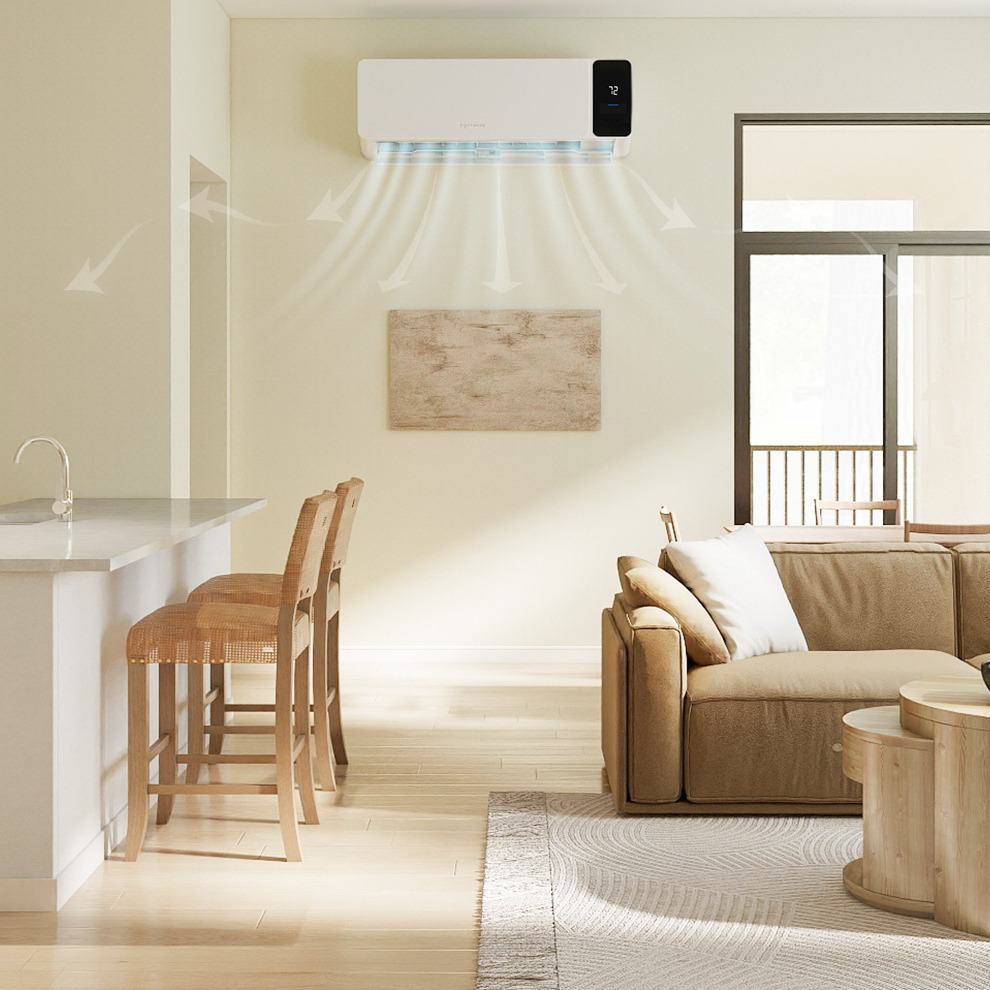
COZEWARE’s 12,000-BTU Visio Mini-Split Air Conditioner delivers efficient heating and cooling to a 750-square-foot room. The unit operates at a whisper-quiet 31db; You can change the temperature through the app, remote control or voice control. With its energy-efficient SEER2 ratio, this unit can save homeowners up to 45% per month in energy costs. Handy homeowners can DIY themselves with the installation kit and 16.4-foot line set that comes with the kit.
Coupon code expires on December 31, 2026
Why is mini-split resizing important?
For a mini-split to heat and cool efficiently, it needs to match the size and conditions of the space. Choosing the right BTU capacity helps maintain a consistent temperature, improve energy efficiency and reduce wear and tear on the system.
Here’s what can happen when a mini-split AC is the wrong size:
- too small: The unit may run continuously without reaching your set temperature, leading to higher energy bills and increased wear and tear.
- too big: An oversized unit may short cycle by turning on and off more often, which wastes energy and can reduce humidity control.
- Poor moisture management: Short cycling prevents the system from running long enough to properly dehumidify the air, which can contribute to mold or mildew growth.
- Uneven Comfort: Improper sizing can create hot and cold spots throughout the room instead of maintaining a constant temperature.
- Reduced Efficiency: Even energy-efficient mini-splits can struggle to perform well if the BTU capacity doesn’t match the space.
Mini-split capacity is measured in British Thermal Units (BTUs), but room size is only part of the equation. Insulation, ceiling height, climate, sun exposure and room use can all affect the ideal size of your space.
Mini-split sizing chart
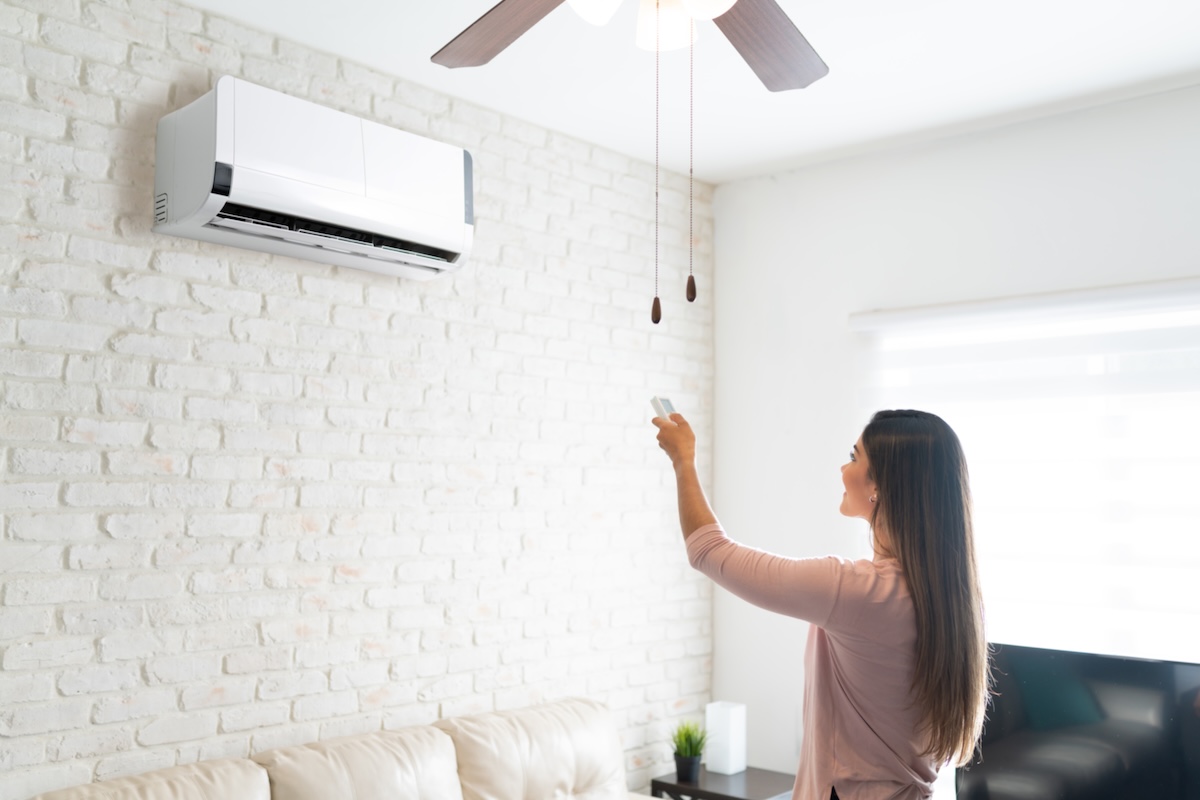
Once you understand the factors that influence capacity, you can use BTUs to determine which of the many mini split sizes is best for your space. Generally, a higher BTU rating allows the system to handle larger areas or rooms with higher heating and cooling demands. Choosing the right capacity will help your mini-split efficiently maintain comfort while keeping energy costs in check.
Use the mini split size chart below to match your room size to the recommended BTU capacity for optimal performance.
| Room size (in square feet) | Example space | BTU capacity |
| 150-250 | Small bedroom, home office | 6,000 is |
| 250-300 | Large bedroom, home gym | 7,000 is |
| 300-350 | Primary bedroom, finished attic | 8,000 is |
| 350-400 | Large bedroom suite, garage workshop | 10,000 |
| 400-500 | Open-concept living room, basement rec room | 12,000 is |
| 500-600 | Large family room, studio apartment | 15,000 is |
| 600-700 | Master suite with living area, large basement | 18,000 is |
| 700-950 | Small apartment, large bonus room | 24,000 is |
| 950-1,200 | Small house, two bedroom apartment | 30,000 is |
| 1,200-1,500 | Medium home, spacious open floor plan | 36,000 is |
How to calculate the correct mini-split size
Determining the right size for a mini-split is a straightforward process that starts with measuring the space and ends with matching it to the right BTU capacity. when HVAC professionals To calculate the load in detail, homeowners can get a solid estimate by following these steps.
Measure the room in square feet.
Measure the length and width of the room, then multiply those numbers to get the square footage. If the room is round, measure the distance from the wall to the center of the room, multiply that number by itself, and then multiply the result by 3.14159 (pi). This calculation gives you the total floor area that the mini-split will need to heat or cool.
Once you have the square footage, multiply it by 25 to estimate the required BTU capacity. For example, if the room is 24 feet by 23 feet, multiply to get 552 square feet. Then multiply 552 by 25 to get 13,800. In this case, you’ll round up to a 14,000-BTU mini-split unit to ensure adequate heating and cooling.
Consider other factors that affect mini-split size.
Room size is just a starting point. Several other variables can influence how powerful your mini-split needs to be.
- Climate: In hot climates where temperatures go above 90 degrees Fahrenheit, you may need to increase the BTU rating by 30 percent or more to ensure the system can keep up.
- Ceiling Height: High ceilings increase the total amount of air in the room. If your ceiling is higher than the standard 8 feet, add at least 20 percent to your BTU estimate.
- Age and Insulation: Older homes with poor insulation lose hot or cold air more quickly, requiring about 30 percent more BTU capacity. New homes with effective insulation may require fewer BTUs for the same space.
- Windows, Doors and Sunlight: Large or leaky windows and doors, as well as rooms with direct sunlight, can increase cooling requirements.
- Heat Sources: Kitchens with ovens or stoves or rooms with multiple electronic devices may need additional capacity to offset the excess heat.
- Occupancy and Flooring: Places with more people generate more heat in the body. Carpeted rooms retain heat better than hardwood or tile floors.
FAQ
This depends entirely on the BTU capacity of the mini-split. Typically, a 12,000 BTU mini-split can cool around 400 to 500 square feet. Larger units like the 30,000 BTU model can handle up to 1,000 square feet or more. Factors such as ceiling height, climate and sun exposure can affect how much cooling power a room needs.
A mini-split zone is an individual room or area controlled by its own air handling unit. Multi-zone mini-split systems combine several units with a single outdoor condenser, allowing different rooms to independently maintain different temperatures. This type of setup can help improve comfort and energy efficiency by heating or cooling only the spaces you’re occupying.
Mini-splits are usually a smart choice for homes without any existing ductwork, or for spaces that are difficult to keep comfortable with a central HVAC system (such as a garage or sun room). Because mini-splits provide room-by-room climate control, they can also help reduce energy use in homes where different occupants prefer different temperatures.
The cost of a mini-split unit largely depends on its size. The most common size (12,000 BTU) usually costs between $700 and $3,200. It is also worth evaluating the unit Seasonal Energy Efficiency Ratio (SEER)which measures how much energy the system uses over the course of a year. The higher the SEER rating, the more efficient the unit will be, which can translate to lower utility bills over time.

Homeowner Survival Kit
Source link



