
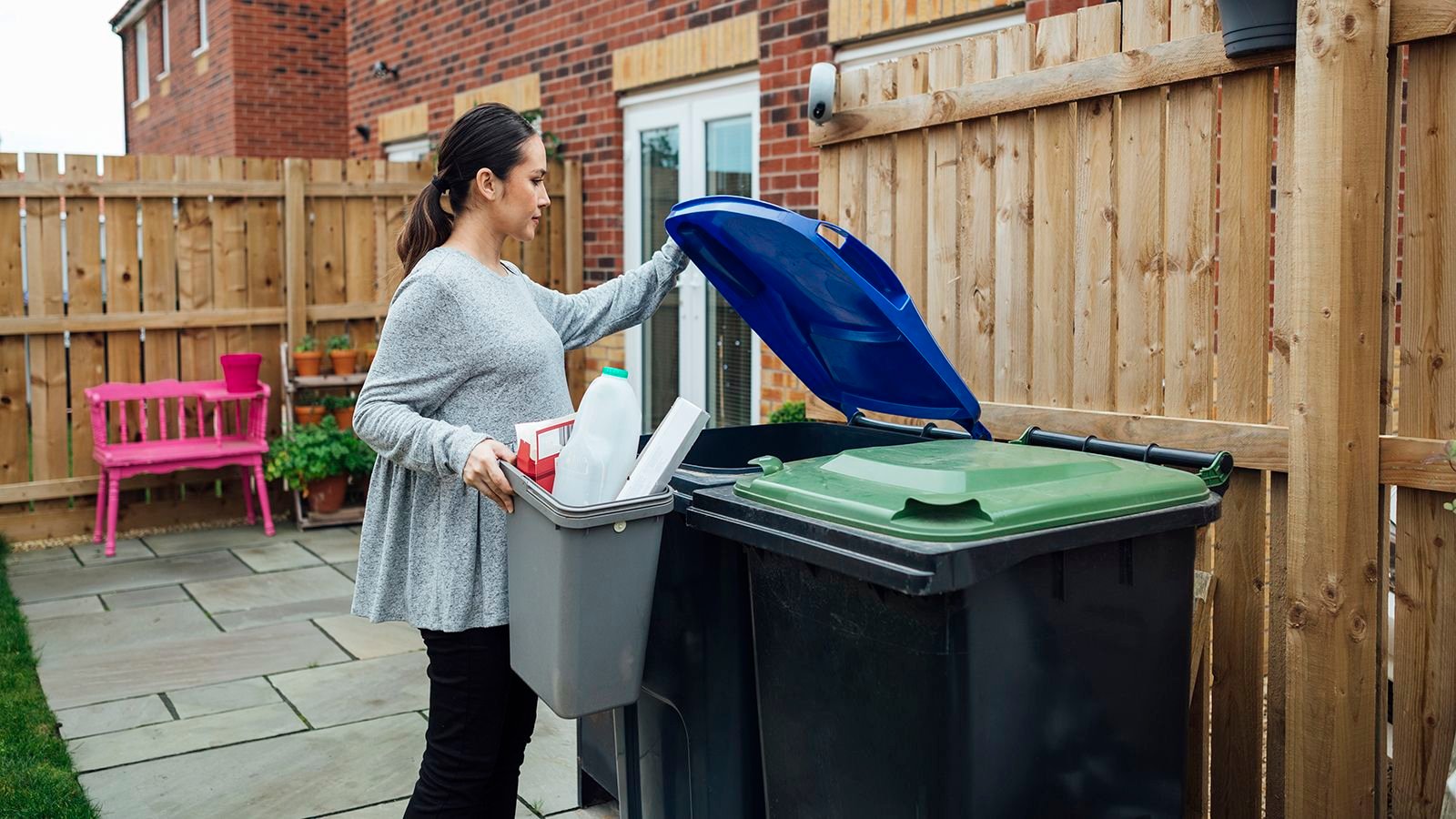

From 31 March 2026, recycling rules will change for households across England under the government’s simplified recycling scheme.
This means that some items people may have previously placed in their recycling bins – including materials often found when clearing out homes or carrying out repairs – they will no longer meet.
Here’s what’s changing, which items are affected, and what homeowners should do to avoid collection issues.
The article continues below
Items that will no longer be collected for recycling
Under Easier recycling regulations, councils and waste collectors are no longer required to collect certain items from household recycling bins. This will affect the recycling of construction materials common in kitchens, bathrooms, gardens and renovation projects:
Glass and ceramics
- Drinking glasses, flat glass, mirrors, vases and window glass
- Glass cookware such as Pyrex
- Candles, crockery and earthenware
Metal objects
- Cutlery, pots, pans and other kitchen utensils
- Electrical appliances such as kettles and irons
- Laminated film, including coffee bags and pet food
- Pipes and metal packaging containing paints, motor oils or antifreeze
Plastic items
- Compostable or biodegradable plastics, including coffee capsules
- Bulky hard plastics such as garden furniture, bins and toys
- PVC packaging and polystyrene packaging
Paper and cardboard
- Absorbent hygiene products such as diapers and period products
- Wet wipes, wipes and toilet paper
- Fiber-based composite food and beverage cartons (now collected in the plastic stream)
Garden waste
- Plastic packaging labeled as compostable or biodegradable
- Garden waste such as pots, sand, stones, gravel and large branches
Although these items are not required to be collected in garden waste bins under the simplified recycling guide, garden waste collection services themselves are not being removed.
Many councils will continue to offer garden waste collection, although households may have to pay for the service depending on their local authority.

These changes come from the official guide published by Department for Environment, Food and Rural Affairs (Defra) which advice people should follow when collecting household recycled waste.
What happens if you break the simplified recycling rules?
If the wrong items are placed in the recycling bins, municipalities can refuse collection and leave a notice asking residents to remove the incorrect waste before the next collection.
Households usually receive a warning first, rather than an immediate penalty. However, if someone repeatedly flouts the rules or continues to litter the recycling, councils can issue a fixed penalty notice, usually between £60 and £80.
A government spokesman clarified that reports suggesting households could face automatic fines of £400 for putting the wrong item in a recycling bin were false.
What can homeowners do with items that are no longer recyclable
The guide to recycling made simple, backed by waste experts, recommends that homeowners:
- Take non-collectable items to Household Waste Recycling Centers (HWRC) – suitable for light bulbs, glass cookware, electrical items, metals and bulky plastics.
- Pack fragile items safely – wrap light bulbs, glass or ceramics to prevent breakage.
- Follow your local council’s instructions for hazardous waste – fluorescent tubes and compact fluorescent lamps contain hazardous materials and should be handled in accordance with municipal guidelines.
- Double-check what can go in your recycling bins – to avoid contaminating recyclables and sending waste to landfill.
Colin Hayes, recycling expert at Panda Recyclesaid: “With the new rules arriving this month, households have a clear opportunity to rein in their recycling habits and make sure items are disposed of correctly.”
By understanding what is no longer collected and taking items to the correct recycling points, homeowners can reduce waste sent to landfill and ensure that household and renovation waste is properly disposed of.



