

Want a pantry that closes like a hidden storage closet behind swinging doors? Reddit user u/millennial_pink A packed walk-in pantry was transformed into something closer to a built-in coffee bar and butler’s pantry using shaker cabinets, open walnut shelves, and a decision that changed how the entire kitchen worked: removing the door.

Instead of treating the pantry as a separate room, she turned it into an extension of the kitchen. The result added counter space, hid clutter behind cabinet fronts, and made the narrow condo kitchen feel more connected.
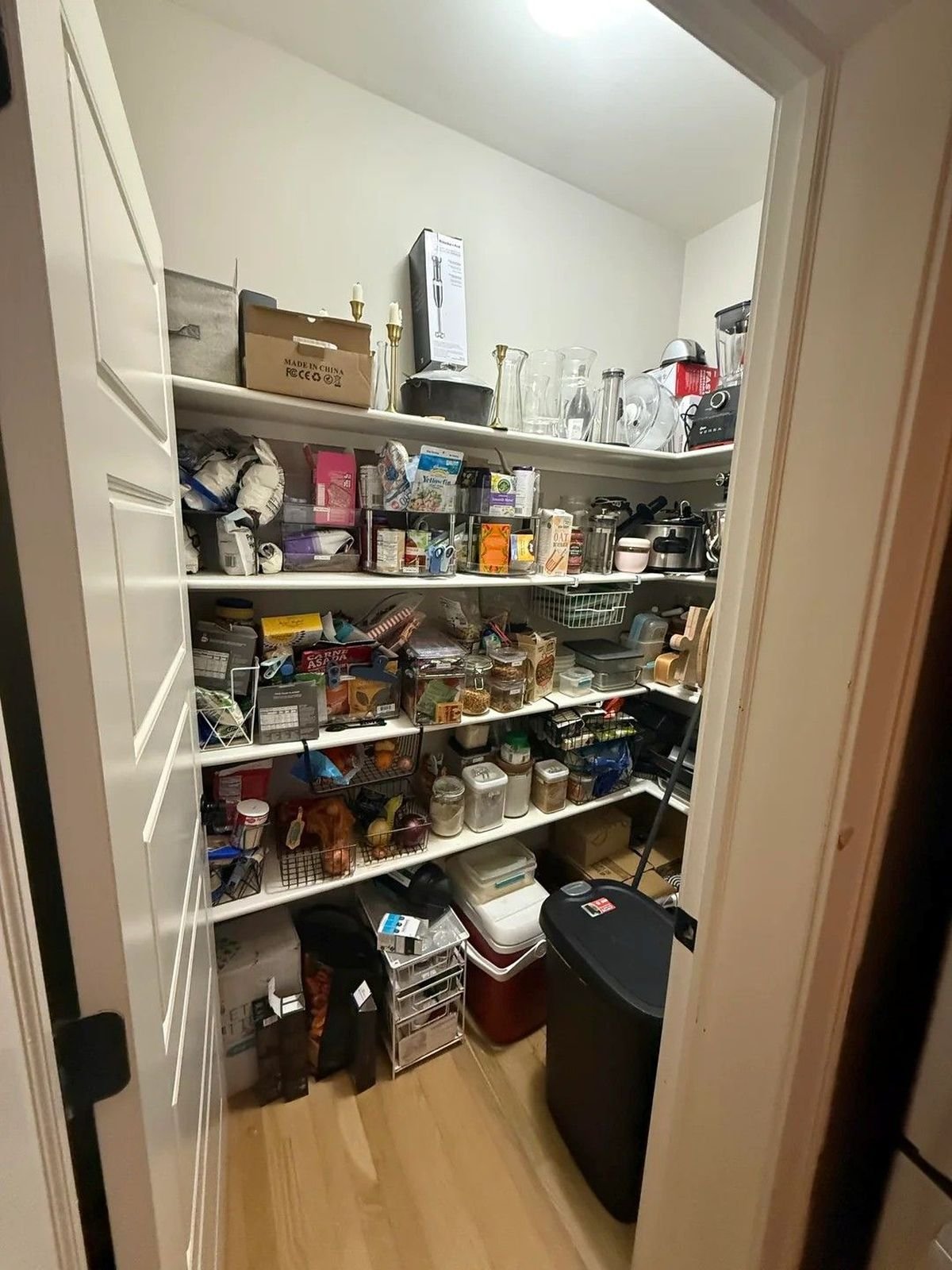
The original pantry had storage but felt packed
Walk-in pantries already had deep shelves and a large footprint, especially for city condos. But once everything was crammed into the open shelves, the room began to feel crowded rather than useful.
Food, appliances, paper goods and cooking utensils remained visible from every angle. The storage worked, but the visual clutter made the pantry look more like a utility closet than part of the kitchen.
The swinging door also blocked part of the entrance, making it difficult to use the little space.

Removing the door changed the entire flow
It was the biggest structural shift.
Instead of installing another hinged door or an expensive pocket-door system, she removed the pantry door entirely. Once the opening was clear, the pantry stopped feeling separate from the kitchen.
From the main cooking area, the room now reads as part of a cabinetry layout rather than a storage room hidden behind a wall.
It also improves movement within the narrow footprint as nothing swings in the walkway anymore.

Shaker cabinets hide visual clutter
Open shelves work for storage, but not for looks.
Adding shaker cabinet fronts changed how the pantry read from the kitchen. Dry goods, appliances and random containers disappeared behind clean vertical panels that matched the surrounding cabinetry.
That shift is important because the eye now sees large architectural shapes instead of dozens of smaller objects competing for attention.
The cream cabinet color also keeps the pantry bright rather than darkening the small room.

Walnut shelves break up the cabinet wall
In contrast, a pantry can look flat.
Dark walnut floating shelves introduce warmth and create a separation between the upper and lower cabinets. They also built in a dark kitchen island that looks out over the pantry.
Open shelves work well here because they display just a few everyday items instead of exposing the entire pantry inventory.
Coffee appliances, bowls and small jars now seem deliberate rather than stored where there used to be space.

A countertop turns the pantry into a work zone
Before the remodel, the pantry only stored items.
After adding matching quartz counters and outlets, the room began to serve as a prep and beverage station. The coffee maker moved out of the main kitchen, freeing up work space next to the stove and sink.
That small change improved how the kitchen functioned day-to-day without expanding the footprint.
The counter also creates a visual break between lower cabinets and shelves, making a narrow pantry feel more balanced.

The remodel reduced storage but improved function
One of the most interesting parts of the renovation is that it eliminated some storage space.
Tall open shelves can hold more items than cabinets and drawers. But the previous setup encouraged stacking, crowding and keeping rarely used devices.
Remodel forced better organization. Items were grouped behind cabinet doors, everyday appliances were moved to the counter, and unnecessary duplicates disappeared from the pantry.
The room now stores less, but functions better.

It stopped looking like a pantry and started acting like part of the kitchen
That changed the renovation.
Previously, the room served as hidden storage behind the door. After the remodel, it became an active kitchen work area with cabinet storage, countertop space, coffee prep, drawers and open shelving connected to the cooking area.
The pantry now behaves more like a compact butler’s pantry than a walk-in closet filled with wire baskets and bulk items.
Renovations almost never happen because of the costs. A local contractor quoted about $12,000 for a pantry remodel, which seemed too expensive for a small condo space.
Rather than abandon the project, she designed the layout herself using custom RTA cabinets for the narrow pantry dimensions, while her father helped handle the installation work. Matching quartz counters, dark maple shelves, drywall repair, paint, electrical work and hardware still kept the final cost well below the original contractor’s estimate.
The total renovation cost, including cabinets, counters, shelving, electrical work, paint and finishing touches, is close to $7,000.
More importantly, the finished space stopped acting as overflow storage and began acting as an extension of the kitchen, with hidden pantry storage, prep space and a dedicated coffee station within the same footprint.
Found on Reddit, shared by u/millenial_pink in r/kitchenremodel.



