
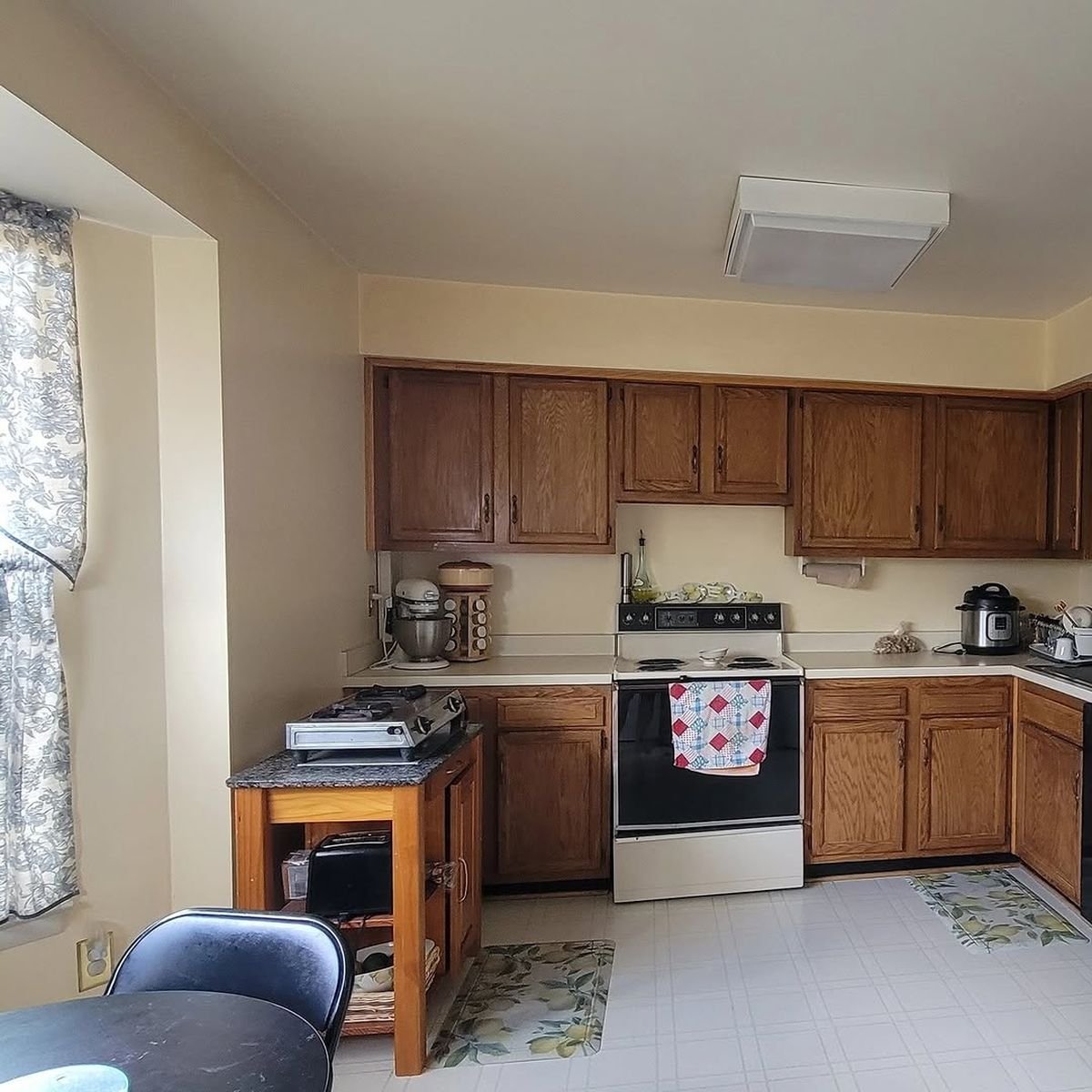

Want a kitchen that feels brighter and more welcoming without tearing everything apart? the creator @studio_dharaesque This dark 1980s kitchen was transformed using paint, fluted wood, DIY marble-look counters, and an unexpected decision that changed the entire atmosphere: a pink ceiling.
Instead of removing the entire kitchen, the project focused on changing how light reflects into the room and how the family uses the space. The result feels softer, brighter and more connected to the large bay window that was underutilized over the years.

The original kitchen felt dark despite the large window
The kitchen already had a large bay window, but the room still felt heavy. Dark oak cabinets, beige walls, old flooring and limited contrast absorb most of the natural light entering the space.
The layout worked, but the atmosphere was dated. The window exists more as background architecture than as an active part of the room.

The pink ceiling became the biggest visual shift
Instead of keeping the ceiling white, the renovation introduced a soft pink tone to the upper part of the room. That one change changed how light moved in the kitchen.
Color reflects warmth downward rather than flattening a space. By combining with bright walls and flooring, the ceiling eliminates the sharp separation that usually exists between walls and overhead surfaces.
The result looks less boxy even though the footprint remains the same.

The bay window began to act like a real gathering space
Before the renovation, the window area felt disconnected from the rest of the kitchen. After the redesign, the corner became one of the strongest parts of the room.
Light flooring, hanging plants, pale walls and simple seating draw attention to the window instead of away from it.
The space now serves as a casual seating area instead of the unused square footage next to the kitchen.

Fluted wood cabinets completely changed the character of the upper wall
The original upper cabinets formed a continuous block of dark wood throughout the kitchen.
New fluted cabinet fronts introduced texture and vertical rhythm without making the room feel busy. Because the wood tone remains light, the cabinet still adds warmth while reducing the visual heaviness of the original design.
The vertical slat detail also helps the upper cabinets feel more custom rather than builder-grade.

Marble-look counters changed the perception of budget
One of the biggest visual upgrades came from the counters and backsplash. Instead of installing real marble, the project used a DIY faux-marble epoxy finish over prefab panels.
The light surface instantly changed the contrast level of the room. It brightened up the lower half of the kitchen and created a clean transition between the cabinets and the walls.
Against the pink ceiling and pale cabinetry, the counters help the kitchen move away from the dark brown-and-beige palette that defined the original space.

The flooring helped reflect more natural light
Old flooring visually separated the kitchen from the rest of the room. New light wood-look flooring creates a more consistent surface throughout the space.
That change is important because the floor now reflects daylight upward instead of absorbing it.
Combined with the large visual focus on the bay window, the kitchen feels more open without changing the actual layout.

The rooms still feel individual rather than over-designed
One of the reasons for the renovation is that it still feels alive. Hanging plants, open shelves, simple decor and a soft color palette keep the kitchen from feeling overwhelming.
Even with the dramatic before-and-after contrast, the room still reads like a family gathering space rather than a staged showroom.
Change did not come from eliminating everything. It comes from changing how the room handles color, light, texture and atmosphere.



