
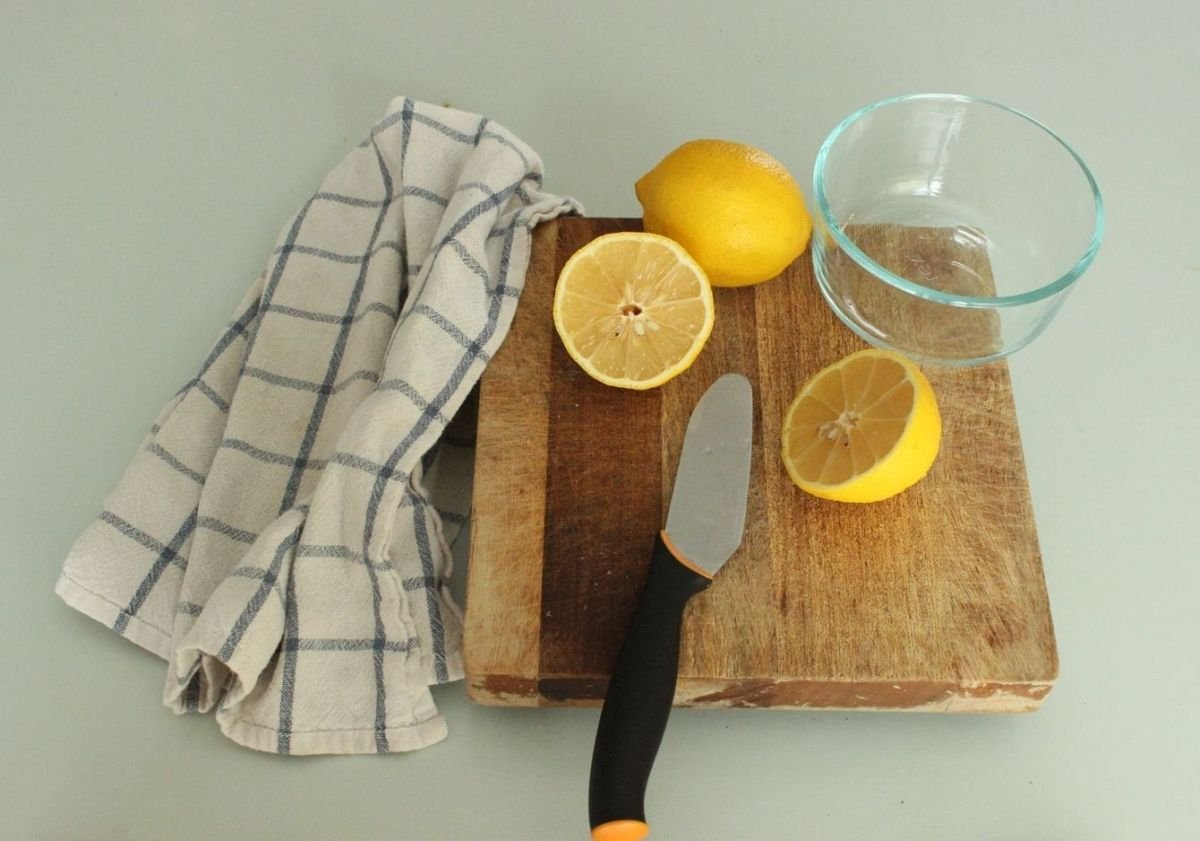

Most cutting board cleaning advice follows a similar pattern. Sprinkle with salt, rub it with lemon, rinse, and you’re done. It is touted as a natural way to clean, remove stains and deodorize in minutes.

I wanted to see what happens if you remove the scrubbing part and give the salt time to work on its own.
Not five minutes.
A whole night.
The general method is recommended by everyone
A common version combines coarse salt with lemon juice. Salt acts as a mild abrasive to remove residue, while lemon adds acidity and a fresh scent.
It is effective for surface cleaning. It removes stains, breaks down food residue and leaves the board smelling clean.
But it is still a short process.
Everything happens on the surface.
What I actually did instead
I used a wooden cutting board that I clean regularly with soap and water. It didn’t look dirty, but it had that musty smell that builds up over time with repeated use.
Instead of washing it, I covered the entire surface with a thick layer of coarse salt.
No lemons. No scrubbing. no water
I left it dry and untouched overnight.

What changed the next day?
By morning, the salt did not look the same everywhere.
Most of it stayed loose, but some areas felt a little heavy and clumped together, especially in the middle where the board gets the most use.
There was no visible moisture on the wood itself.
But the salt had clearly absorbed something.
That was the first difference.
After removing the salt
I removed the salt, wiped the board with a dry cloth, then gently rinsed it and let it dry.
The surface felt more consistent.
Not smooth in a polished way, but more so across the board. Areas that felt different before now feel the same.
The stench was gone.
Not altered with lemon or anything artificial. Just neutral.
That neutral state was more than any fresh scent.

Why salt alone works differently
Salt does not clean like soap, and it does not disinfect like lemon.
On its own, it acts as more of a moisture absorbent.
Wood cutting boards contain small amounts of moisture and odors within the surface layers. Not enough to see, but enough to affect how the board feels and smells over time.
Leaving the salt overnight will leach some of it out.
Not all, but enough to reset the board.
What this experiment actually showed
A cutting board doesn’t just collect residue on the surface. It gradually absorbs moisture and odors with repeated use, even if it looks clean.
The salt and lemon method works well for quick surface cleaning, especially when you want to get rid of visible residue or strong odors right away. But that method depends on scrubbing and acidity, which mostly affects the surface.
Leaving the salt overnight works differently. It does not clean in the traditional sense. It draws out the moisture and subtle odors that sit within the wood, causing the result to smell neutral rather than fresh.
It does not remove stains or replace proper washing, and it does not sanitize the board after handling raw food. But it has changed into something more subtle that routine cleaning doesn’t always notice.
Not by clearing the board.
By resetting how it feels and smells after repeated use.



