
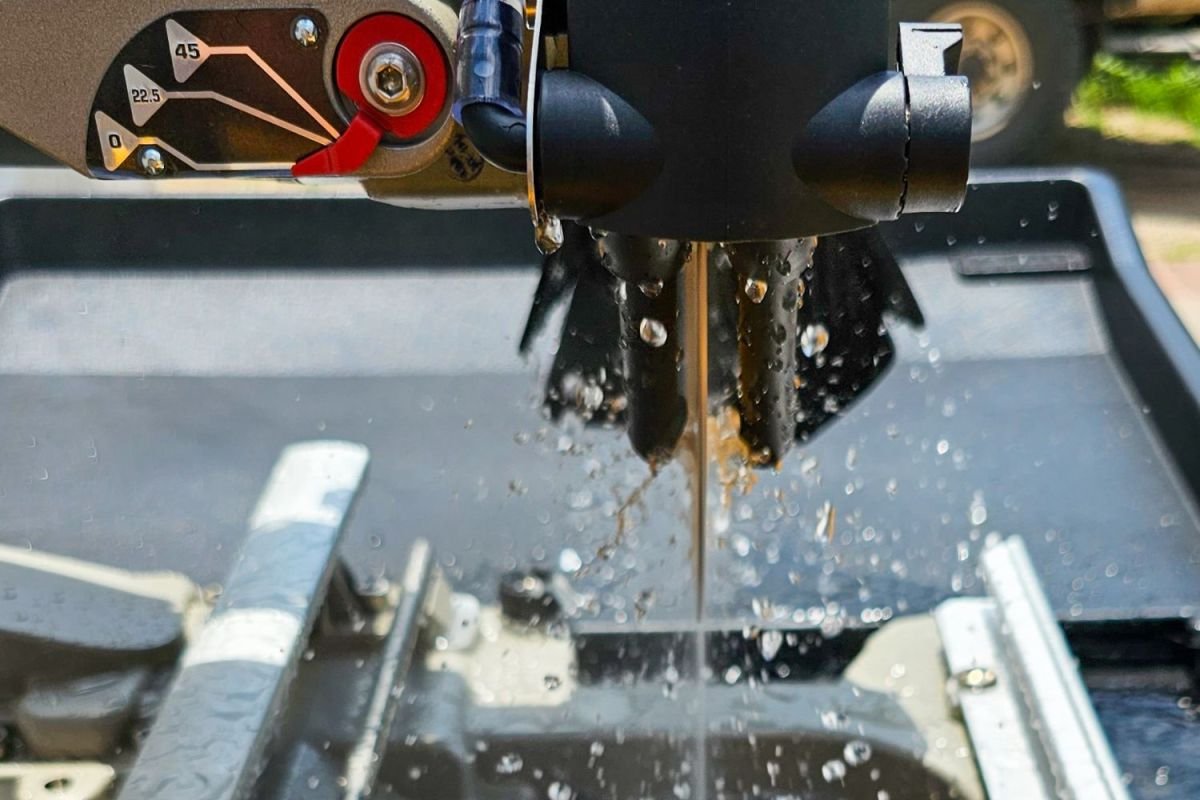

How to use a wet saw to cut tile
A wet saw makes fast, precise and clean cuts in tile, but only if you use it correctly. Here’s how to use tile safely and effectively.
Step 1: Set up the wet tile saw and work area.
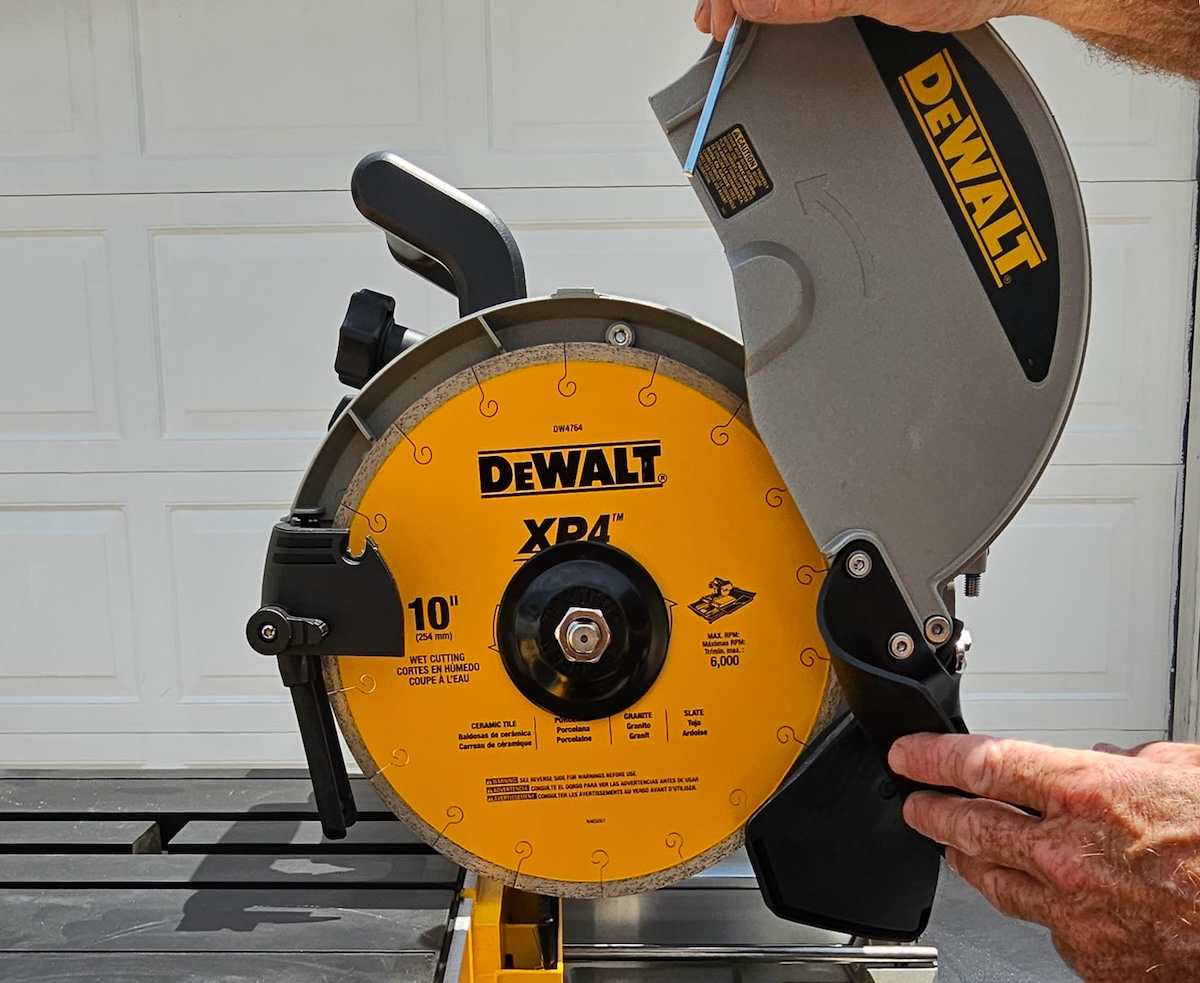
Set wet sand on a flat surface close to your project and place a drop cloth to manage drips and overspray. If the saw has a stand, make sure the body of the saw and the stand are properly attached.
For saws that do not have a stand, use a stable surface such as a foldable work table. Some people may get away with using the ground as a work surface, but this puts the user in an awkward position and the saw is not designed to be used that way.
Step 2: Fill the reservoir.
If the wet saw has a pump, make sure it is properly oriented in the reservoir and that there is enough water in the pan or reservoir. If not, fill it up. There should always be enough water to ensure that the blade stays cool during the cut.
Step 3: Keep water and electricity separate.
Even though wet saws are designed to use water safely, because water and electricity do not mix, there are a few precautions to take before starting.
- For corded wet saws, make sure the cord and extension cord have a drip loop to prevent water from running back to the power source.
- For cordless models, store the battery and charger where they will not get wet. Also, while the energy in the battery is technically contained within the battery pack, chargers don’t like being exposed to water frequently. Wet sawdust creates a mist that can get inside the charger’s vent fins.
Step 4: Proactively manage overspray.
The core of ceramic tile—all the material you don’t see when it’s installed—consists mostly of clay. When this soil is mixed with water and the blade rotating at about 4,000 RPM, it is sprayed out of the body of the saw. If you’ve set up your workspace on a wall, deck, or any other surface that can get stained, you’ll have a real mess to clean up. Use large pieces of cardboard, drop cloth, or other protection to help control overspray.
Step 5: Measure and mark the tile where it needs to be cut.
You may need to trace where the tile needs to be cut, or you may choose to measure and mark your cuts. However, if these marks are made with a pencil, they can get lost when the tile gets wet, so many tile installers use a grease pencil..
Step 6: Adjust the wet saw for the cut.
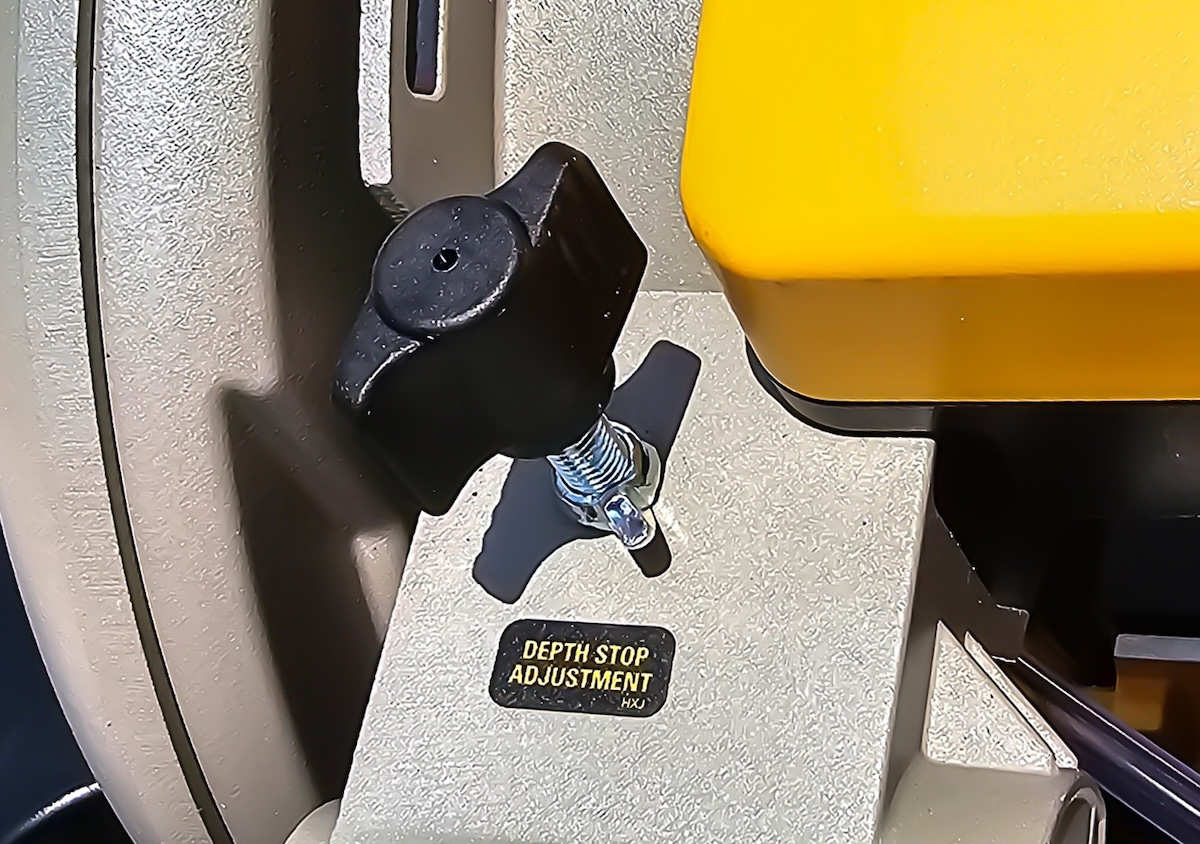
If you are making a straight cut, adjust the fence to the width of the cut and lock it in place. For angled cuts, an angled jig can help guide the tile through the saw blade. Keep the push stick handy to keep your fingers away from the saw blade during the cut.
Step 7: Turn on the wet saw.
If you are using a cordless wet saw, make sure the battery is fully charged before you start. Avoid plugging a wet saw into an extension cord, but if you must use one, make sure it’s a heavy-duty cord that’s rated for the tool.
Step 8: Guide the tile, but let the saw do the work.
For brittle tile, gently guide the tile, shiny side up or down, through the wet saw, but let the saw cut. You may be tempted to push it, especially if you’re in a hurry or just think that more force will speed up the process. But like most tools, forcing it to work can cause other things to go wrong: the blade can defect, the work can jam, or the tile can kick back at the user. Gain experience for the balance between progress and strength.
Step 9: Check the reservoir and fill it as needed.
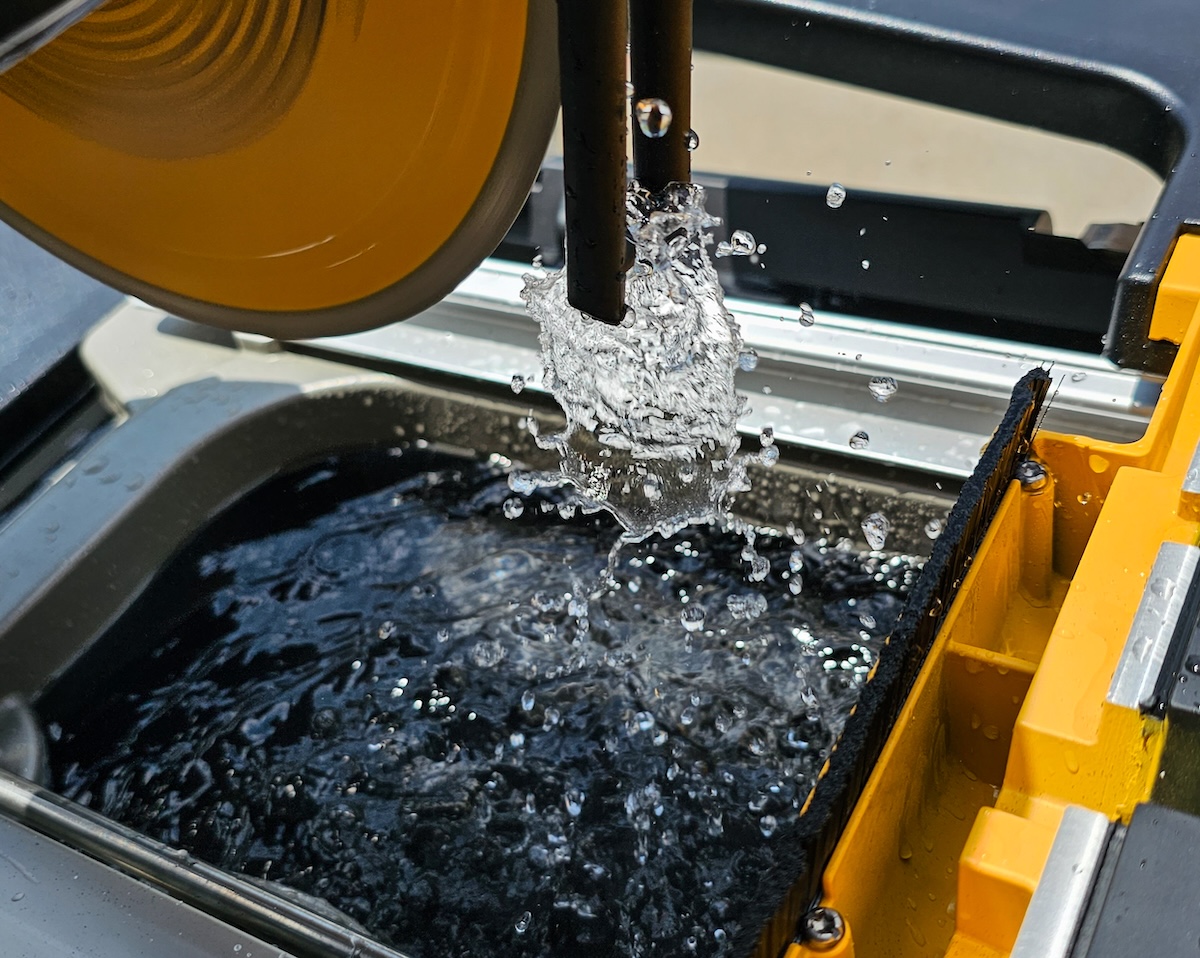
Cutting tile uses water, and the reservoir may need to be filled during the project. Check after every few cuts to make sure there is enough water so you don’t get burned by the blade or cause other problems during use.
Step 10: Empty the water and store the wet saw properly after use.
When you are done cutting the tiles, unplug the wet saw or remove the battery. To keep your wet saw working properly, drain the water and clean the tool with a dry rag at the end of each day’s use.
Tips for using wet saws
Safety Tips
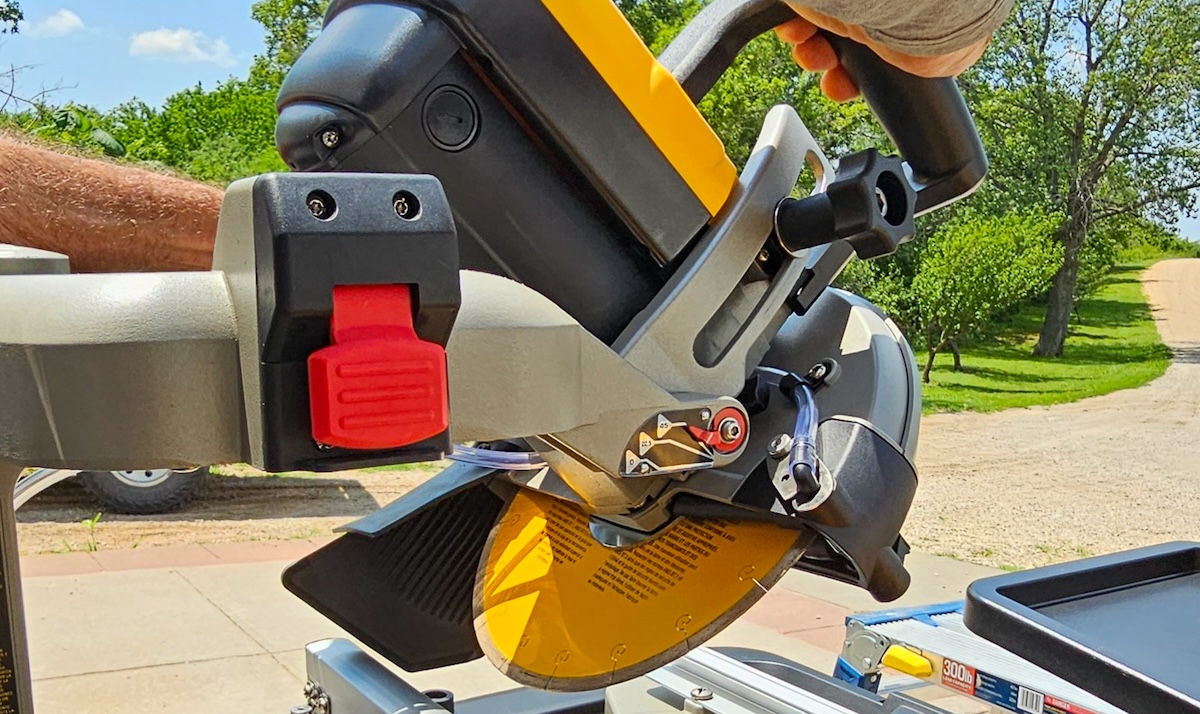
Cutting tile with a wet saw can be difficult, slow, messy, and loud. A wet saw is one of the few tools that combine water and electricity, and whether the saw is corded or cordless, water and electricity do not mix.
- “If possible, set up near a tiled work area for efficiency,” says Doyle. “Tarps or plastic may need to be set up to contain this mess.”
- If you’ve never cut a tile before, practice on a few extra tiles first so you have the technique down before you get to the important pieces.
- For cordless tools, separate the charger from water and overspray.
- Read the directions and understand how the pump needs to sit in the reservoir.
- “Always use a good, sharp blade and the right blade for the tile you’re working with,” says Doyle. If you’re cutting glass tile, for example, “using a standard blade can cause damage Some expensive tiles Or leave you with poor results.
- For corded tools, make sure you have a drip loop in the cord so water drips down the cord instead of into the power source. This also applies to extension cords.
- The best way to cut porcelain tile is because it is harder Ceramic tileThe specialty is with the blade.
- For smaller units that don’t have a stand, use a stable work surface (not on the ground) so you can work accurately and while standing.
- Understand how far the overspray is traveling and make provisions. Once the water gets dirty, overspray can be a real mess.
- “Let the blade do the work and don’t force things. Slow, but pressure is your friend,” says Doyle. After using the saw for a while, you’ll notice how quickly it cuts (and doesn’t).
- “In the winter, if we’re mowing outside, I always try to do a periodic water change with warm water,” says Rob Robillard, owner, general contractor and carpenter. Concord Carpenter. “That’s so we don’t freeze our hands.”
- “Sometimes when Cutting small mosaic tilesYou may need to create zero clearance to make the cut,” says Doyle. “A scrap piece of tile board works most of the time, and you can find an aftermarket insert for your particular saw. There are 3D-printed options online.
- “I always build a rear guard,” says Robillard. “I’ll usually use Zipwall poles and some plastic and create a three-sided space, including the floor, of course, to catch any water spray.”
- Change the water and rinse the pan after each use.
Maintenance Tips
Like all power tools, a wet tile saw will only continue to perform well if it is properly cared for. “Maintain it and keep it clean,” says Doyle. “This can be easily forgotten when you’re in a hurry.” Remember to clean immediately after use – mud that builds up on saw parts can be difficult to remove if you let it harden. Follow the manufacturer’s recommendations for care and cleaning and consider these maintenance tips:
- Run the pump with a clean bucket of water after each day’s use.
- Hose off saw parts.
- Empty the reservoir after use.
Final thoughts
Cutting tile with a wet saw is quick and efficient, but the process requires careful setup, some practice, and attention to safety. (Remember: mixing water with electricity can be dangerous!) However, if you take a few simple precautions, work carefully and keep the reservoir full. Your next tiling projectYou’ll be cutting tiles like a pro.
You can successfully cut tile wet or dry with the right tools. Manual snap cutters do not rely on water for cutting, but wet saws do. If you need to cut a lot of tiles, a wet saw may be a better option because it offers a faster way to cut tiles.
It depends on the type of tile. For glazed tile, you can usually achieve a more accurate cut when the glazed side is facing up. For brittle tile, lay the tile face down to reduce the amount of cracking or chipping on the finished side.
Yes, wet tile saws can be messy. Water helps to reduce the amount of dust but the water is sprayed through the cutting process. It is important to set up a drop cloth and wear protective gear when operating a wet saw.
It depends on the type of wet tile you are using. Small, portable wet saws often rely on a hose to deliver the water needed to cut tile. A large saw has a water reservoir that needs to be filled, but does not require a hose to fill it.
Wet tile saws use rounded diamond blades that cut tile but don’t cut skin as easily as other types of blades because they grind instead of cut. While they ‘cut’ the tile, this type of saw blade actually grinds the tile. However, we still call the process cutting.

Meet the tools of the year 2025



