
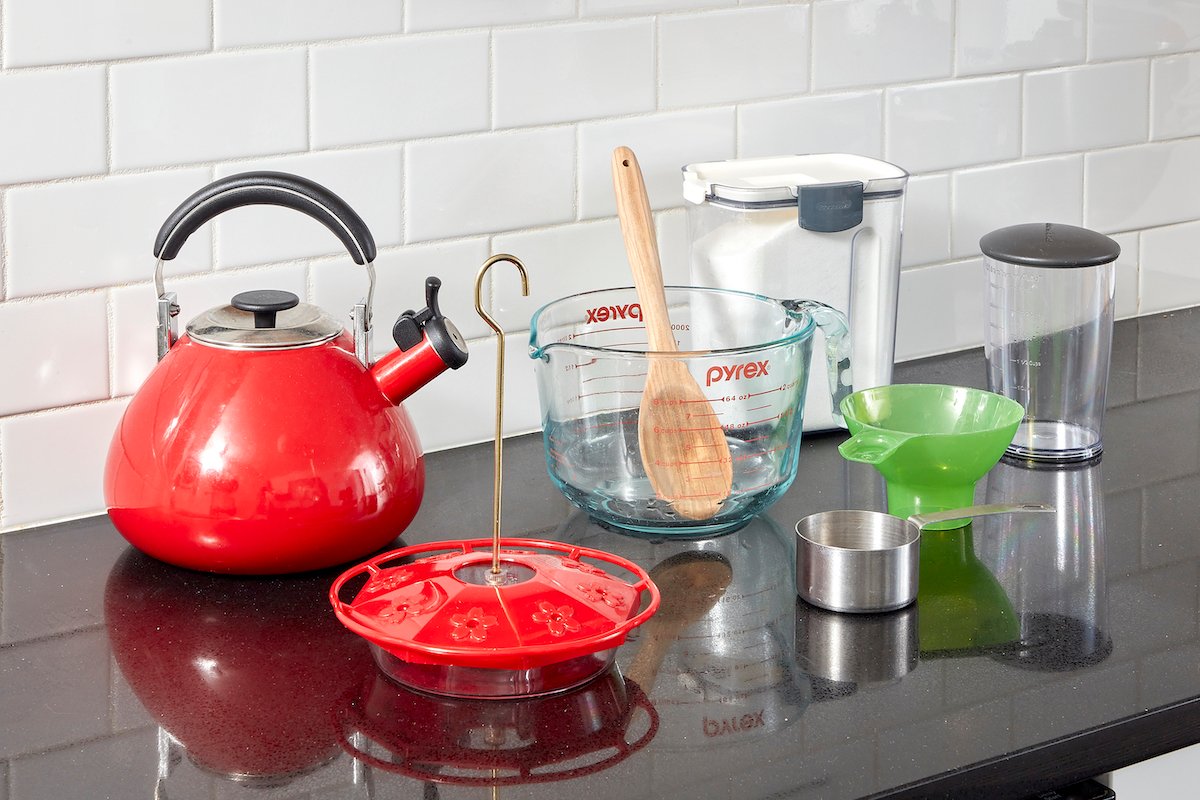

Before you begin
If you live in the eastern part of the US, plan to hang your hummingbird feeder in early May. In the west, aim for April. If you live on the West Coast and regularly see Anna’s hummingbirds in your area, you can leave your feeder up year-round. Elsewhere, take down feeders in late fall so migrating hummingbirds have a place to refuel before traveling south.
Making hummingbird food at home
Step 1: Heat the water.
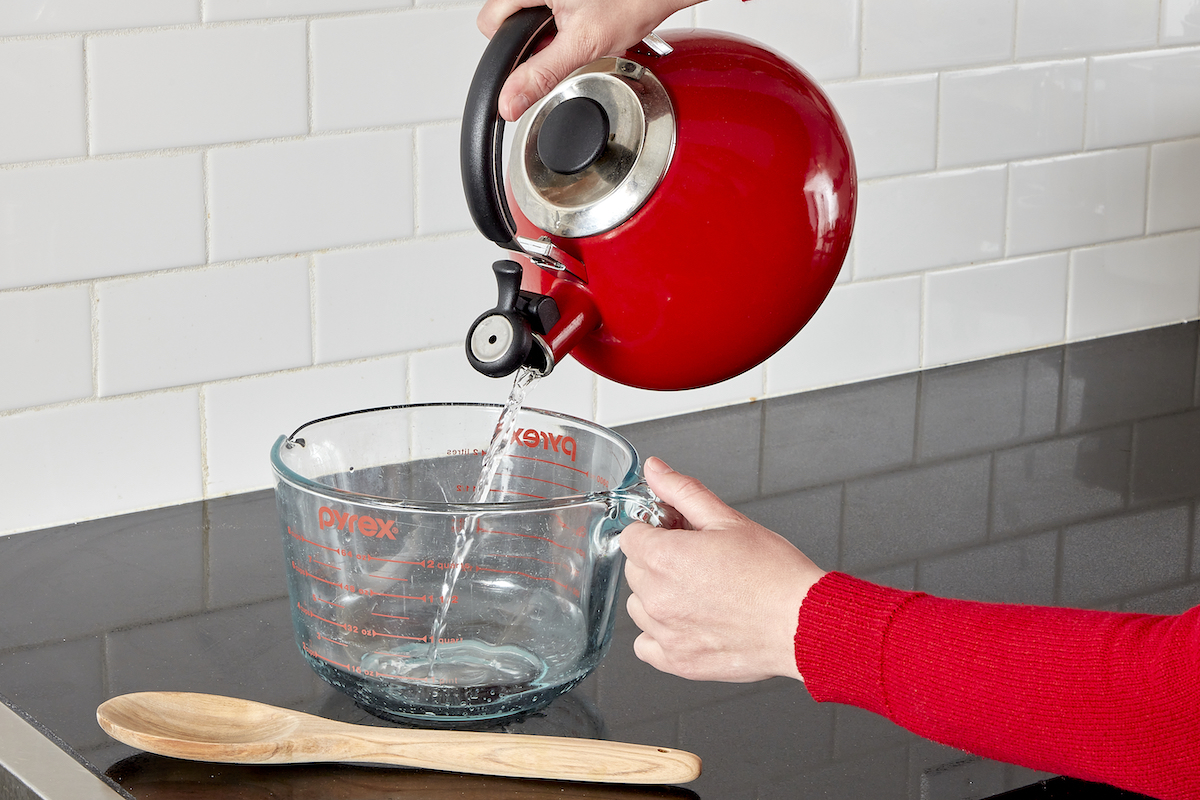
To prepare hummingbird nectar you do not need to boil the water before using it. If the water is safe for you to drink without boiling, it is also safe for the birds. However, if your tap water has a strong taste or smell, indicating added chemicals or other contaminants, it’s best to use bottled or purified water—not distilled water.
Whatever type of water you use, heat it by running the tap or heating the water in the microwave or teakettle until it’s hot enough to dissolve the sugar easily.
Step 2: Add sugar.
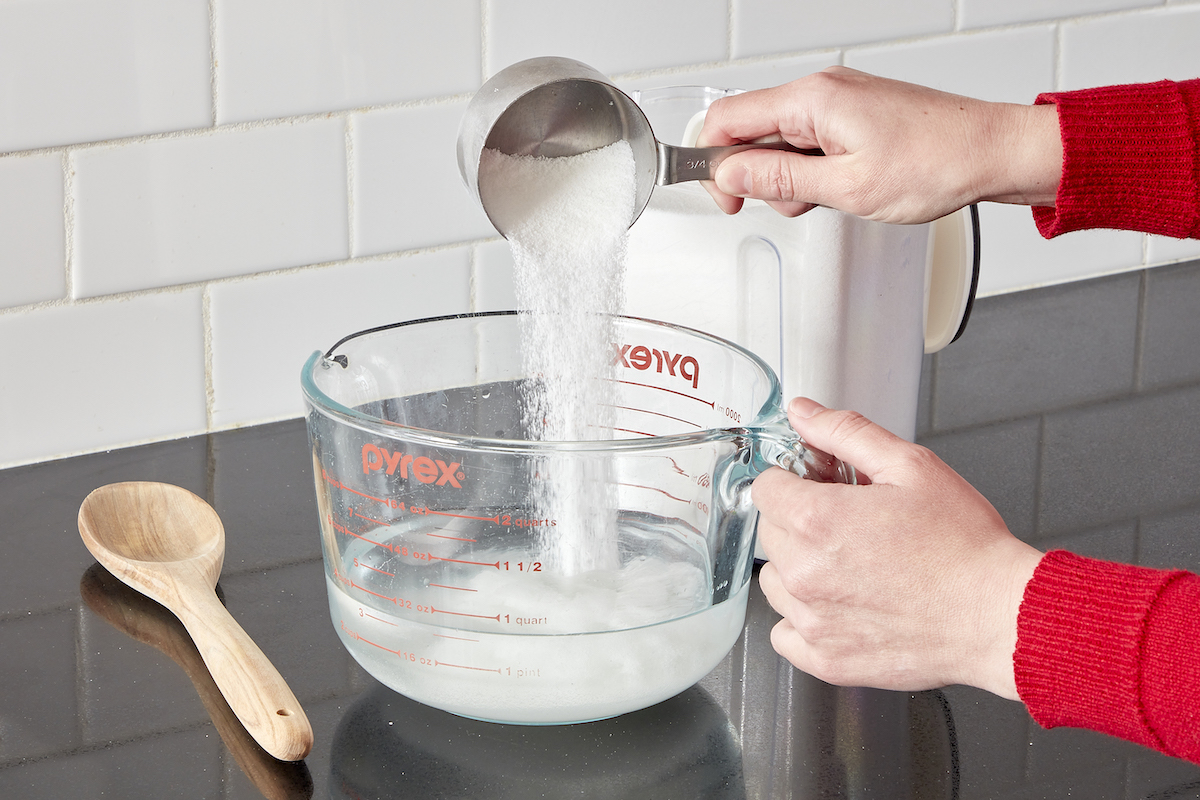
There’s no big secret to how to mix hummingbird food: Once you have your hot water, it’s time to add the sugar. Use regular refined white sugar, not honey, artificial sweeteners, brown sugar or other sugar products, all of which can be difficult for hummingbirds to digest.
The correct ratio of sugar to water for hummingbird food is 1:4Or ¼ cup sugar to 1 cup warm water. Increase or decrease the amount as desired, but make sure you stick to the 1:4 ratio.
No need to add supplemental vitamins or red food coloring to food. Sugar does not have to be red for hummingbirds to find it, and many wildlife and bird experts feel that red color can be detrimental to hummer health.
Mix your nectar solution well until all the sugar is completely dissolved, and allow the nectar to cool to room temperature.
Step 3: Fill the feeder and hang it in the best place.
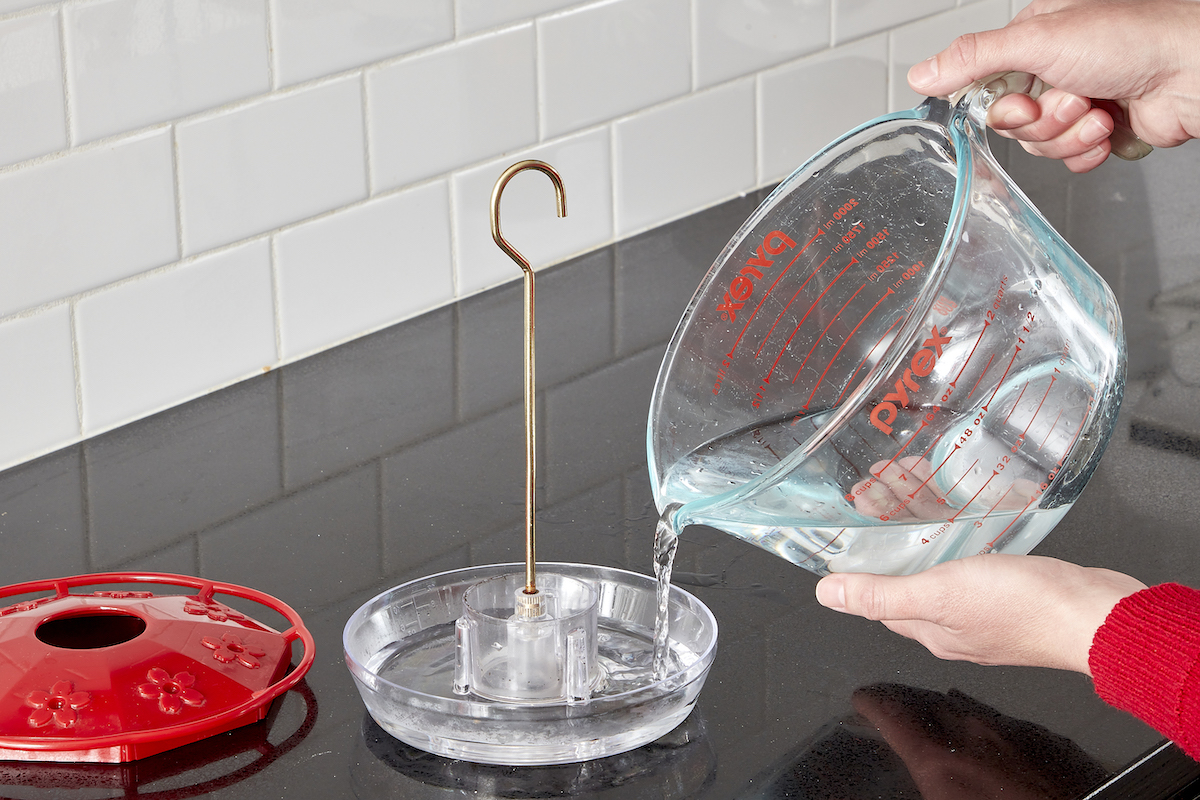
Use the funnel if you need to, to pour the nectar into you Hummingbird feeder. It’s best to pour over the sink to catch any sugary drips. Wipe off any solution from the outside before hanging the feeder outside.
The best place to hang your feeder is a place that’s easy for you to see—you want to enjoy seeing your feathered visitors, but not so exposed that the birds don’t feel safe. Ideally, the feeder should be no more than 10 to 15 feet away from a tree or large shrub that gives hummingbirds space to conserve energy or hide from potential predators.
You want passing hummingbirds to be able to find the feeder, so don’t bury it in a heavily shaded area (some afternoon shade is fine). To attract the most visitors, choose a location that is not too close to others Bird feederHigh enough so cats can’t jump into the hummer and not too close to glass doors or windows. Birds are easily confused by reflections from glass and are often injured or killed flying into windows or doors.
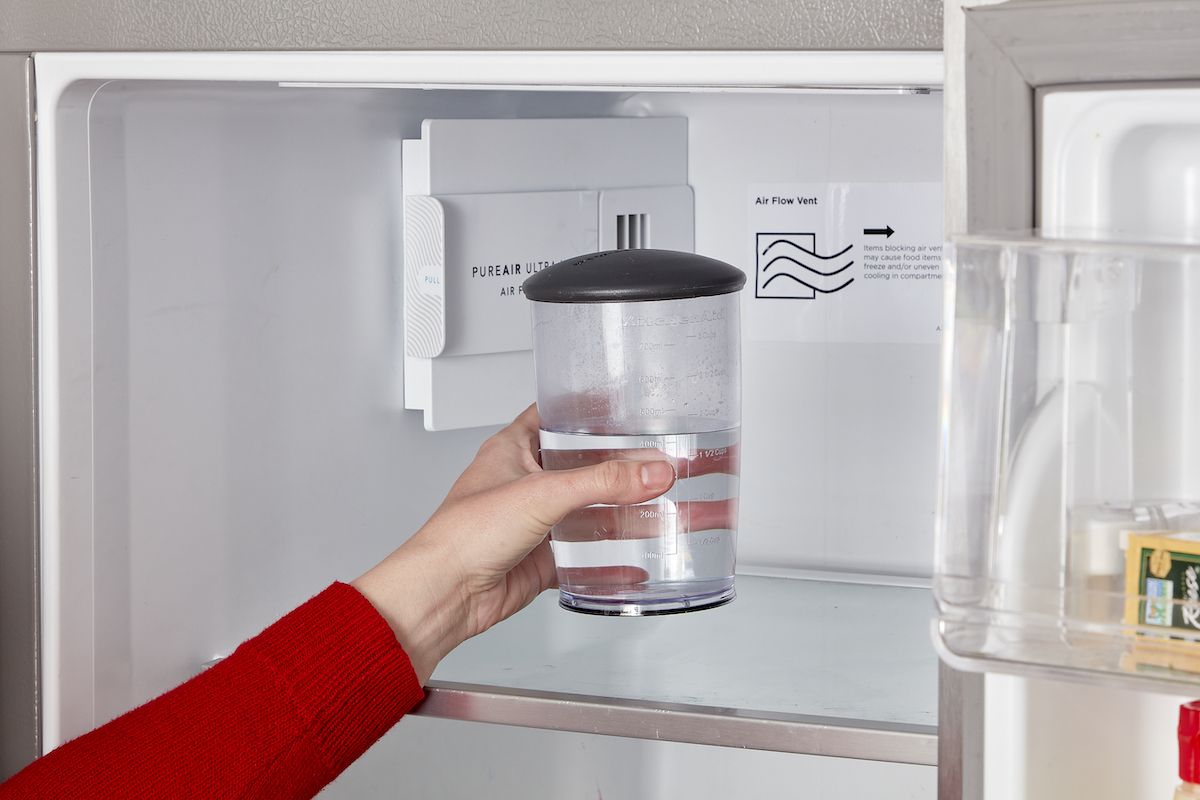
It is convenient to mix up a large batch of hummingbird nectar and store extra in your refrigerator to use as needed. You can store hummingbird food in the fridge for up to 2 weeks. If the nectar becomes cloudy, develops a sour or “off” odor, or has obvious spots of mold, it needs to be thrown away.
Step 5: Clean the feeder regularly.
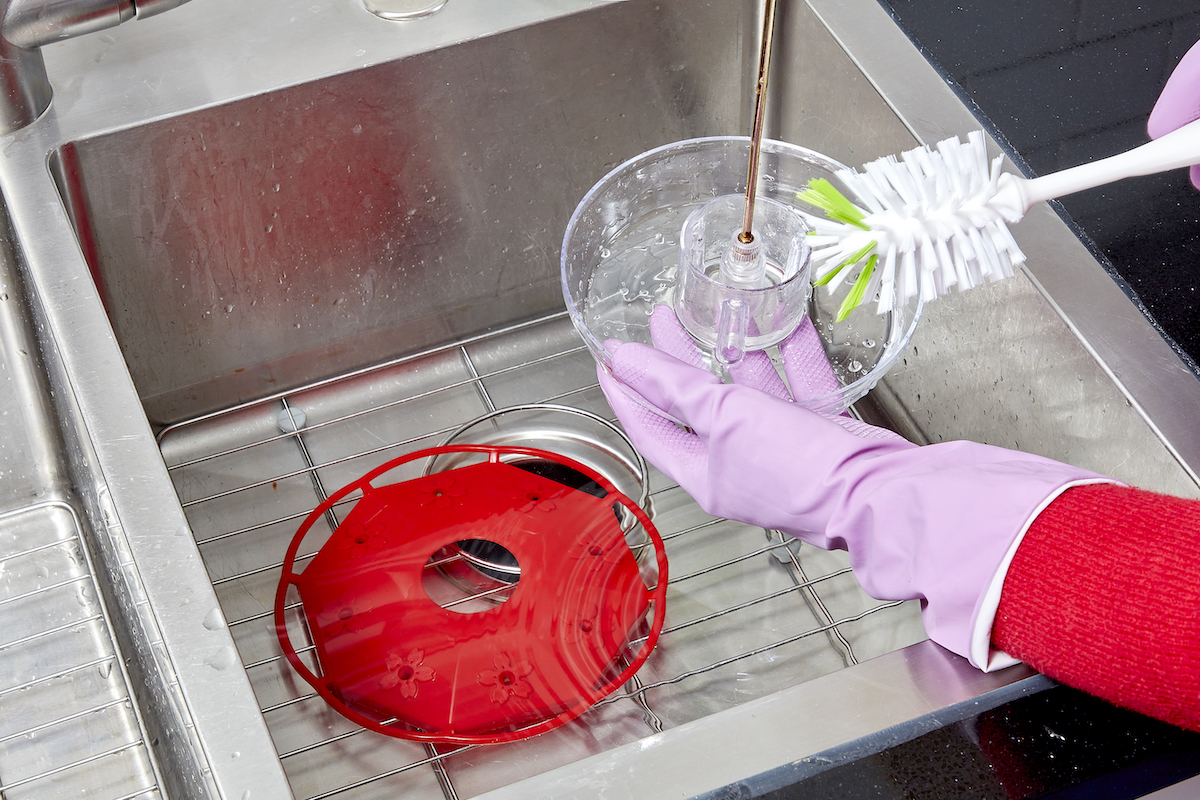
Many hummingbird lovers wonder how often you should change hummingbird food in the summer. It’s a good idea to only fill your hummingbird feeder with as much food as the birds can eat in a day or so, as nectar spoils easily and can even ferment when it’s warm. Even if the feeder is not empty, do not go more than 2 days in hot weather and 5 days when it is cool, remove the remaining nectar and clean the feeder thoroughly.
you should Clean the bird feeder Every time you refill it. Disassemble the feeder—usually the bottom will come off—and wash all parts with warm water and a mild dishwashing liquid. If necessary, the bottle brush makes it easy to reach all the passages inside the feeder. Pay particular attention to the feeding ports, which often become crusty or moldy. If necessary, use a pipe cleaner or an old toothbrush to remove any debris.
Rinse all parts of the feeder thoroughly with clean water until soap residue remains. Allow the feeder to air dry or dry with a clean towel before refilling and hanging it outside. Your feathered friends will thank you for protecting their health by keeping their feeders clean.
Final thoughts
Whether you’re 8 or 88, most of us thrill to the aerobatics, mid-air hovering and soaring flight of hummingbirds. By following the steps outlined above, you can easily mix up your own hummingbird food that will lure these small, beautiful birds into your backyard for an up-close-and-personal viewing. If these little daredevils fascinate you, you’ll want to know more about them How to Attract Hummingbirds to Your Yard.
All you need to do is take care of your lawn and garden



