
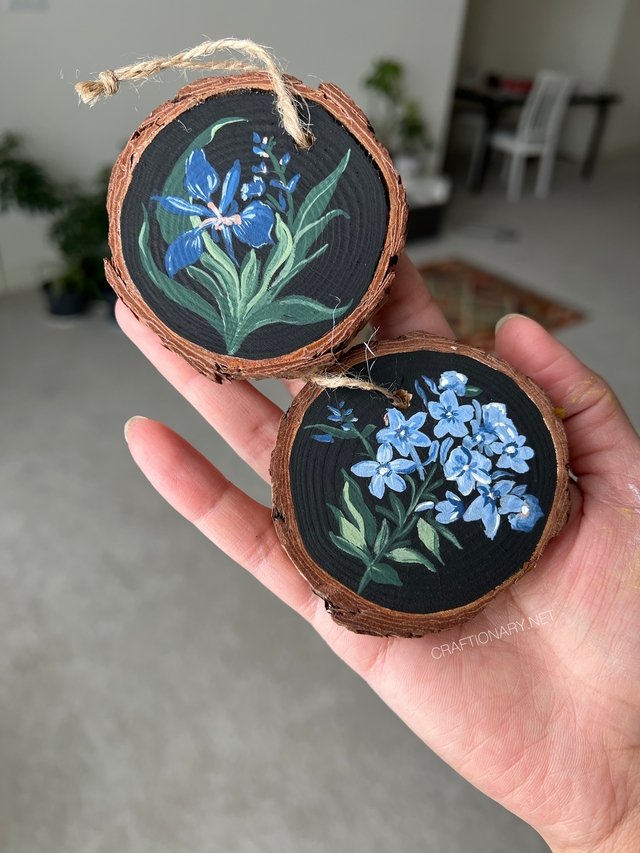

Hand Painted Wood Slices: Transforming a simple piece of nature into a living work of art is one of the most rewarding ways to spend an afternoon.
This guide is designed specifically for beginners who want beautiful, accurate results while using drawing as a form of mindfulness and creative meditation. Many artists – myself included – use a collection of floral reference scrapbooks to inspire designs, improve skills, and enjoy the process without the pressure.
By focusing strictly on wood slices, acrylic paintsand brushes, you can achieve professional-looking results without a cluttered workspace.
Related: Cute owl rock painting Craft from a piece of wood
Why paint flowers on wood?
Natural wood provides a unique, rustic canvas that paper just can’t match. Wood grain adds texture to your floral designs, turning each ornament into a one-of-a-kind masterpiece. It’s a tactile experience that grounds you, making it a favorite for those who practice mental art.
Related: 50 Easy Acrylic Flower Drawings for Beginners
Prepare your mind and inspiration before painting
Before I paint, I often open my scrapbook collection full of flowers, sketches and ideas. This practice helps in two important ways:
- It reduces the pressure to create something perfect
- It helps your mind enter a calm, focused state
This makes painting a meditative experience rather than just a craft. You don’t have to copy exactly. Just use inspiration to guide your brush naturally.
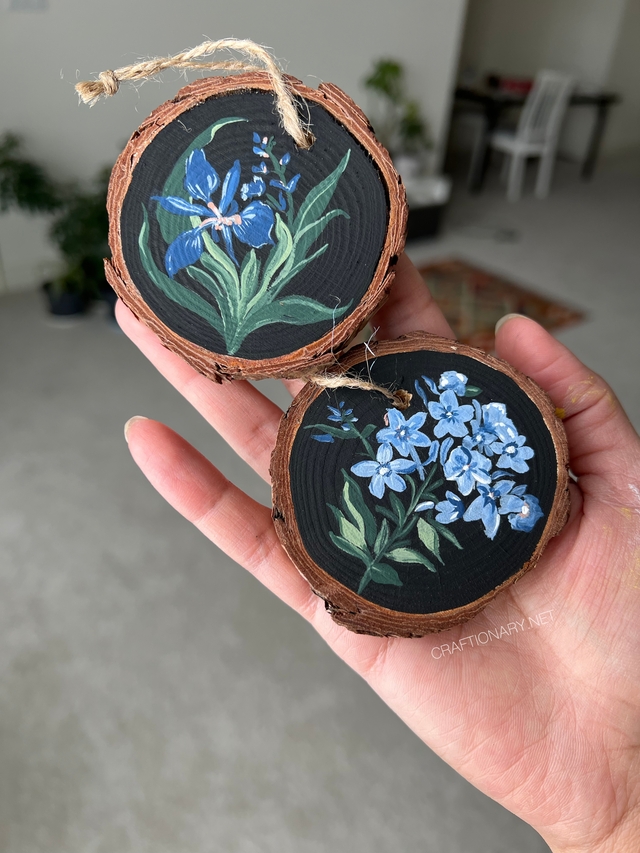
Hand painted flowers Wood slices
Step-by-step instructions: Painted wood slices
1. Prepare your surface
Even if your wood slices are pre-sanded, give them a quick wipe with a dry cloth to remove dust. This ensures that your acrylic paint adheres smoothly to the grain.
You can either paint your art directly onto the surface or set a background color to make the artwork stand out. First I painted the base black.
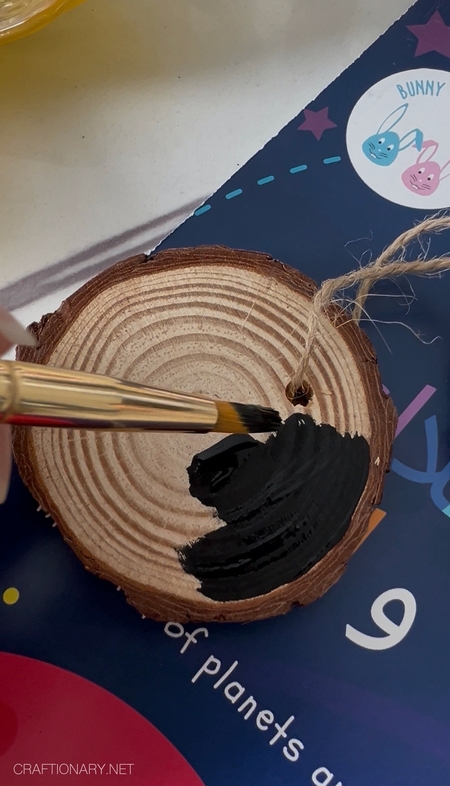
Paint the base of a piece of wood
2. Sketch your layout (optional)
If you are not ready to draw by hand, use a light pencil to sketch your work. Think of your wood slice as a clock face to help with symmetry.
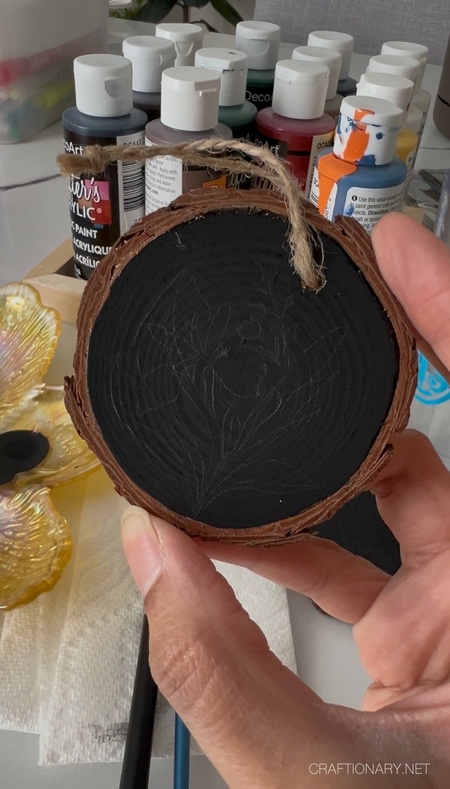
Sketch your design on a piece of wood
3. The base layer technique
- The center: Start by drawing a small circle in the middle if you haven’t sketched your drawing.
- Petals: Using a medium round brush, push the bristles down and pull towards the center. This push and pull motion naturally creates a petal shape. You can preview this technique here.
- Pro tip: Don’t worry about full coverage on the first pass; acrylics are best applied in thin layers.
4. Adding depth and detail
After the base is dry (which takes about 10 minutes), use a smaller detail brush to add small dots of a contrasting color to the center of the flower. This mimics pollen and adds a 3D effect that makes the ornament pop.
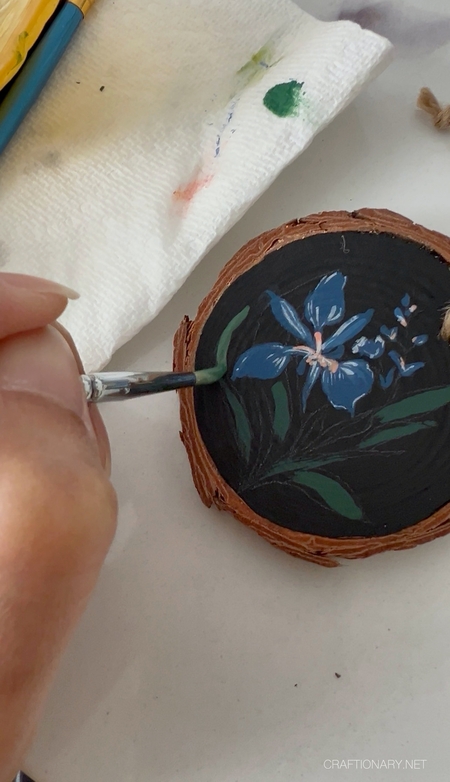
Painting flowers on a piece of wood
5. Finishing touches
Draw small green teardrop shapes around the edges of your flowers to represent leaves. The contrast between the organic wood background and the bright acrylic colors is what makes these ornaments so appealing.
Related: Best Sealer: How to Apply Waterproof Acrylic Paint to Stone, Wood, Glass Crafts
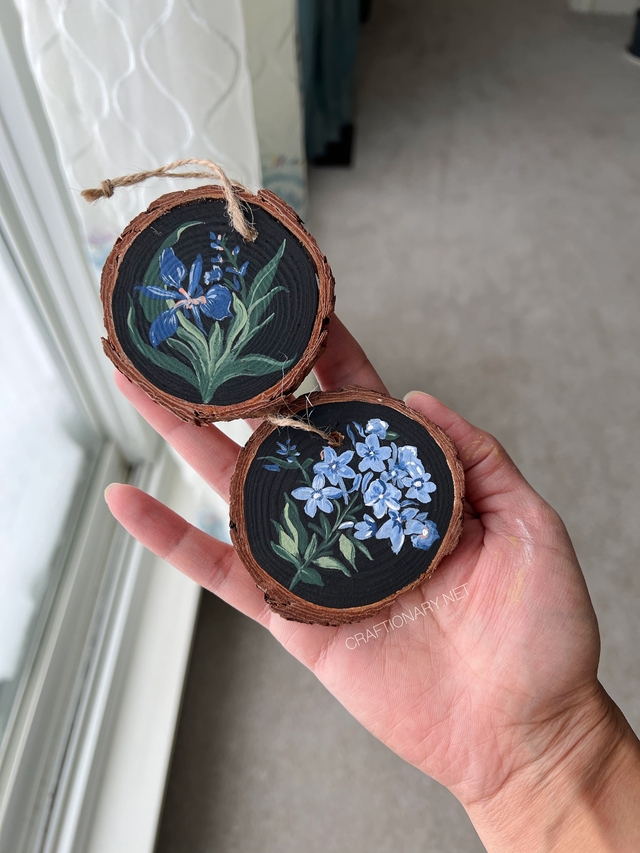
Beautiful colored wood slices
Tips for precision and professional results
- Keep moisture in mind: Acrylics dry quickly. Keep your brush damp but not wet. Too much water can cause the paint to run into the grain of the wood.
- If your color bleeds, just blot with dry paper and redo that spot. Acrylic paints are very forgiving.
- The spin trick: Instead of moving your hand at awkward angles to draw petals, rotate the wood slice itself. This keeps your brush strokes consistent.
- Embrace imperfection: No two flowers are alike in nature. If one petal is slightly larger than the others, leave it! It adds to the authentic, handmade feel.
- Shade Variation: Use 2-3 color variations of the focal color to bring the details to life. For example, I used two shades of blue and green along with pink and white to bring this artwork to life.
Summary: Tools and usage
| TOOL | PURPOSE | CAREFUL BENEFIT |
| Wood slices | Natural canvas | It connects you with the textures of nature. |
| Acrylic paint | Bright, quick-drying color | Allows for quick layering and flow. |
| Paint brushes | Precision and detail | Promotes focus and steady breathing. |
Beginner-friendly flower ideas that always look beautiful
Start with these easy flowers:
- Daisy flowers
- Lavender stems
- Field flowers
- Minimalist roses
- Small scattered flowers
These designs are forgiving and relaxing to paint.
Brush control tips for precise and clean results
These tips make a huge difference:
- Hold the brush gently, not tightly: This improves smooth strokes.
- Use the tip of the brush, not the whole brush: This improves accuracy.
- Paint slowly: Speed causes mistakes.
- Leave your hand: Prevents shaking.
How to make your painted ornaments look professional
Follow these expert tips:
- Use minimal layers of paint
- Keep designs simple
- Allow to dry between coats
- Work slowly and deliberately
- Embrace the natural wood texture
Less is more. Simple designs often look the most elegant.
Mindfulness benefits of drawing wooden flowers
This craft helps with:
- Reducing stress
- Improve focus
- Relaxing the mind
- Encouraging creativity
Using your scrapbook as inspiration takes the pressure off and keeps a calm creative flow. Drawing becomes a relaxed experience, not just a task.
Common mistakes beginners should avoid
- Using too much paint: Causes messy results.
- Trying Complex Flowers Too Early: Start simple.
- Holding the brush too tightly: Decreases control.
- Rushing: Leads to uneven design.
Frequently asked questions
1. What brushes work best?
Small round brushes work best for precision.
2. Why does acrylic paint work well on wood?
The wood slightly absorbs the acrylic, which helps the paint adhere naturally.
3. How do you improve your flower drawing skills?
Practice regularly and use references for inspiration as your scrapbook.
4. What is the best paint for wood slices?
Acrylic paint is the gold standard. It is opaque, dries quickly and stays vibrant on porous surfaces like wood.
5. Do you need to prime the wood first?
It is not necessary for a rustic look. Painting directly onto the wood allows the grain to show through. However, if you want neon brightness, a thin layer of white acrylic first will make the colors pop.
6. How to stop acrylic paint from cracking on wood?
Cracking usually occurs if the wood is damp. Make sure the wood slices are completely dry before starting your careful painting session.
7. Do you need to seal the wood slices after painting?
The sealer will prevent colors from fading over time and prevent damage to your piece. You can apply a coat of mod dodge or acrylic spray.
Written by: Hani Shabir
You’ll also like:
Cute owl rock painting Craft from a piece of wood
Blooming Walls: Creating a Home Art Gallery with Acrylic Paints
DIY hand painted kitchen wood sign using printer paper transfer



