
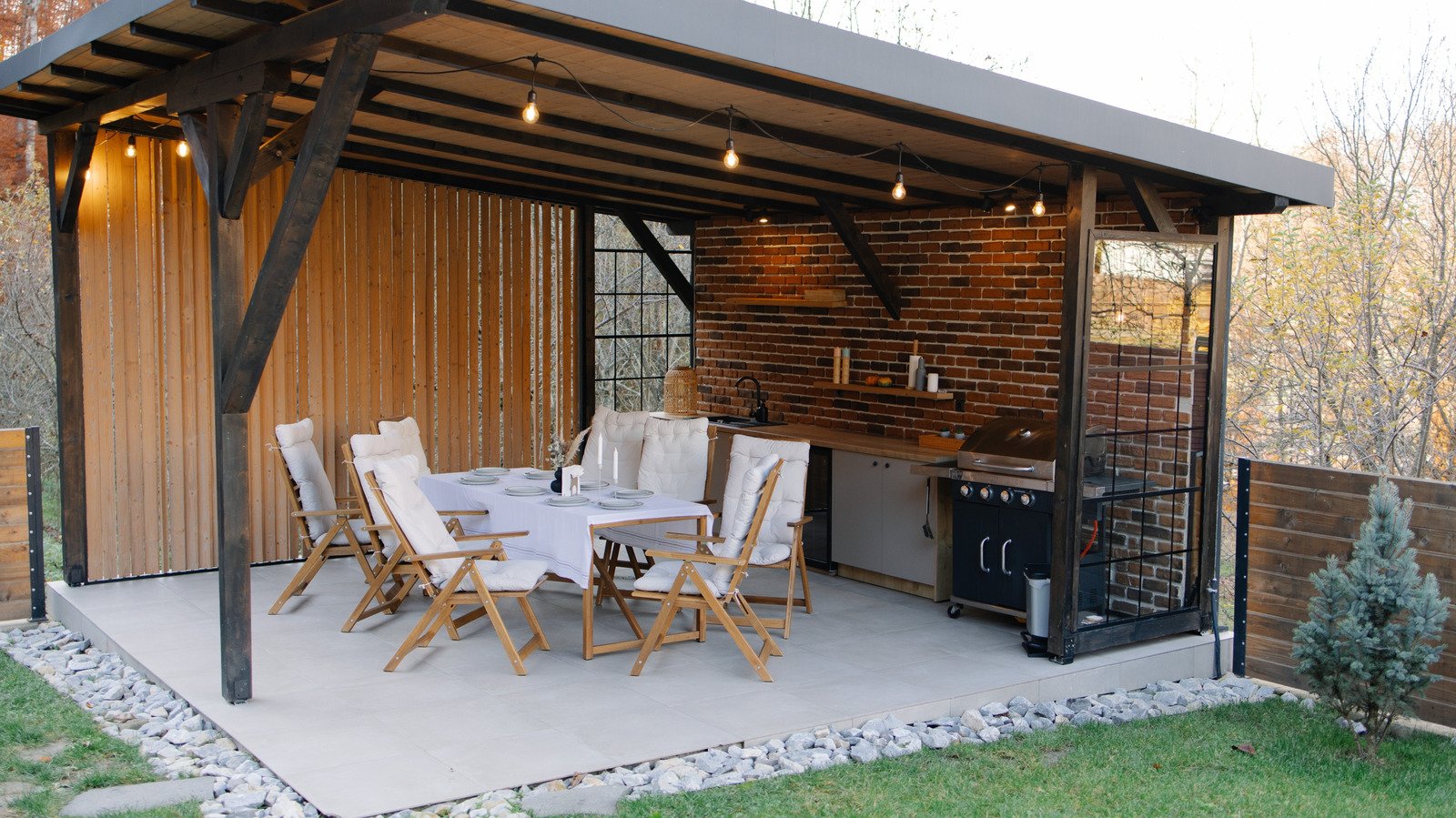

When you’re planning a patio, two things will be on your mind: materials and cost. Concrete is one of the most popular patio paving materials, and it’s easy to see why. It is very durable and can be Stamped in a wide range of attractive designs. However, concrete is also expensive and prone to various defects including cracking. So, if you’d rather leave concrete for your patio, check out decomposed granite for a stylish, quick, and affordable option.
Decomposed granite (DG) is a byproduct of eroded granite rock that has been crushed into 3/8 inch pieces or fine grit. Although DG can mimic the look of gravel, it is more stable and not nearly as much As messy as a gravel patio. DG for patios and driveways can be purchased with a resin stabilizer already mixed in. This will harden and keep the finer grit from moving.
As for style, the DG comes in a range of grey, brown, white, red and gold. It is highly permeable, meaning water will pass through it and drain instead of pooling as it does on concrete. Since granite is one of the strongest building materials out there, DG will be strong enough to withstand the amount of foot traffic you’re planning for your patio. That, and it’s also really easy and quick to install.
How to lay a patio using decomposed granite
Stabilized decomposed granite (DG) costs $185 per ton, which will cover about 90 square feet when laid at a 3-inch depth. The average patio is between 200 and 300 square feet, meaning you’ll spend $400 to $550 in materials for your DG patio. Compared to the average concrete patio cost of $3,200, DG offers huge savings.
Another advantage is that DG can be installed quickly and easily. Mark the edges of your patio with some type of barrier, eg Dynamic pound-in aging. Next, dig to the depth you want — between 2.5 and 3 inches — and compact the earth into a level surface. Pour in your DG, level it and compact it to the desired level. It’s a project that can easily be accomplished in a weekend.
Now, apart from the advantages, there are some downsides to DG. It can stick to shoes and easily travel indoors, where it will scratch your flooring, especially hardwood. As such, when using DG material for a patio, make sure you use a soft edging material as a barrier between the patio and the house and have a doormat where shoes can be wiped before entering. DG will also need to be reapplied after a few years, as it will compact and break down over time. However, as we’ve seen, adding more DGs is exceptionally easy and doesn’t cost a lot of money.



