
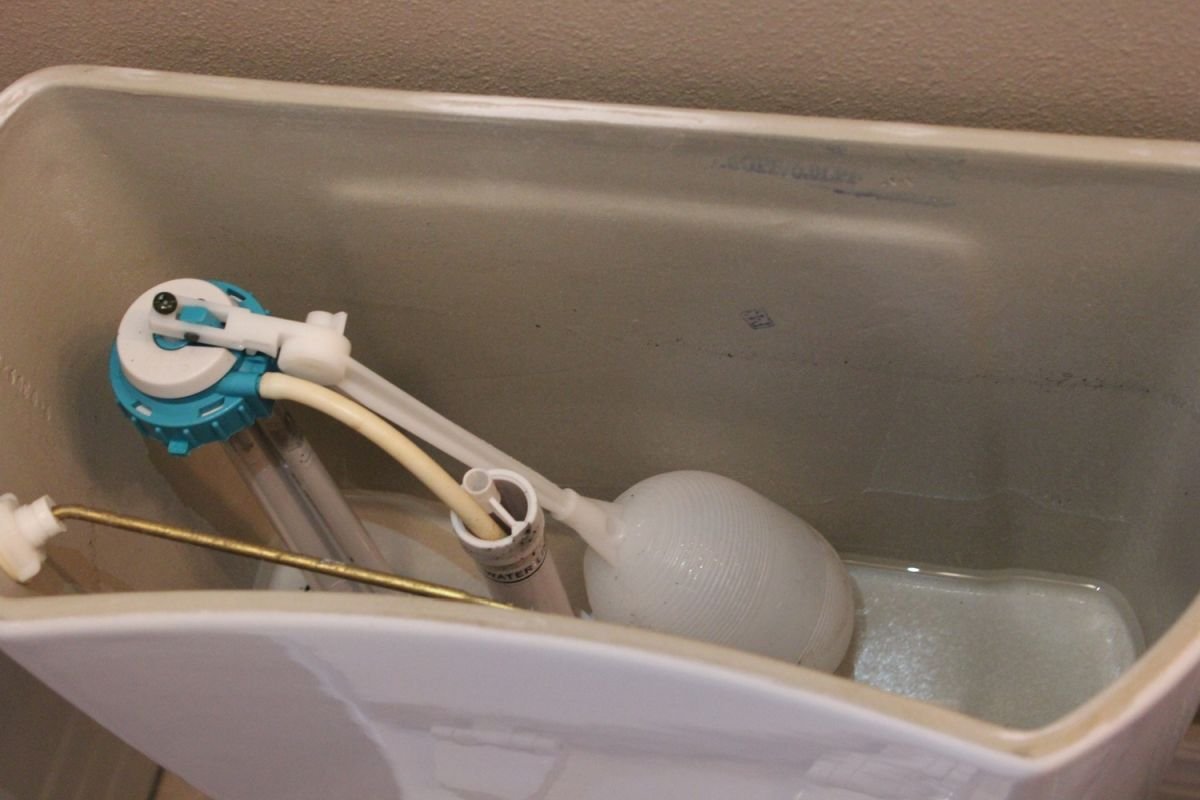

The toilet was still working, which made it easy to ignore the problem. It flushed, refilled and looked normal. But every so often, I’ll listen to it again. Short refill sound, like someone just used it. Except no one had.
At night, it was more out. The tank would refill on its own, sometimes after minutes, sometimes after an hour. Not constantly, just often enough to notice.

That repetition was important. That means water is leaving the tank when it shouldn’t.
The bowl looked clean. There was mostly water in the tank. There were no visible leaks on the floor. Nothing points to an obvious failure, which is why it went unsolved longer than it should have.
Over time, the pattern became clear. After the flush the tank will settle, then lose a small amount of water. Once it dropped below a certain level, the system reacted and refilled it. That cycle repeats without any use.
Why did it happen?
Toilet tanks are designed to fill up to a certain level and close. If it restarts without a flush, something inside is not sealing or closing as it should.
In this case, the issue came from the fill valve.
This part controls how water enters the tank and when it stops. When it moves, it does not stop at a certain point. Even though the tank is almost full, small drops in the water level trigger the valve again.
It clearly does not fail. It goes out of range.
That is why the problem seems incoherent. The toilet is not broken in a visible sense. It reacts to small changes that shouldn’t happen.

What I tried first
I started with the adjustments.
The float controls the water level, so I changed its position. There is an effect where the water stops, but it does not stop refilling. He paused for a moment, then came back.
I checked the flapper next. He looked intact. No visible gaps, no obvious leaks in the bowl.
The tank is filled to the correct level after each flush. Everything seemed fine at that moment.
But the behavior returned. The system kept improving itself.
At that point, it was clear that the problem wasn’t in the settings. It was in the valve.

What I did and what changed
I replaced the fill valve.
The process is simple and requires no experience:
- Turn off the water supply and flush to empty the tank
- Place a bucket under the tank to catch the remaining water
- Disconnect the water supply line from the bottom of the tank
- Remove the mounting nut and pull out the old fill valve
- Prepare a new valve by attaching the refill tube
- Set the height of the valve so that it matches the fill line of the tank
- Insert the valve and hand tighten the mounting nut
- Attach the refill tube to the flush valve clip
- Reconnect the water supply line
- Turn the water back on and test with a flush
The only important detail is setting the correct height. The top of the valve needs to be aligned with the fill line of the tank, and the critical level flush should sit above the valve to prevent backflow.
After that, the system takes care of the rest.
Once installed, the tank was filled once and closed.
No second refill. No sound from behind. A small drop triggers another cycle.
Behavior remained consistent. The water level is kept at the same point every time. The system stopped where it should.
Water consumption also decreased, as the tank could no longer compensate for small losses.
What does this mean?
The toilet looked fine as the problem was not visible.
The issue was a minor loss of control inside the tank. The valve no longer closes at a fixed point, so the system continues to react to small changes.
Changing it eliminated that pattern.
This is why the problem seems easy to overcome. The toilet still works, so it doesn’t need attention. But frequent refilling is a sign that the system is no longer stable.



