
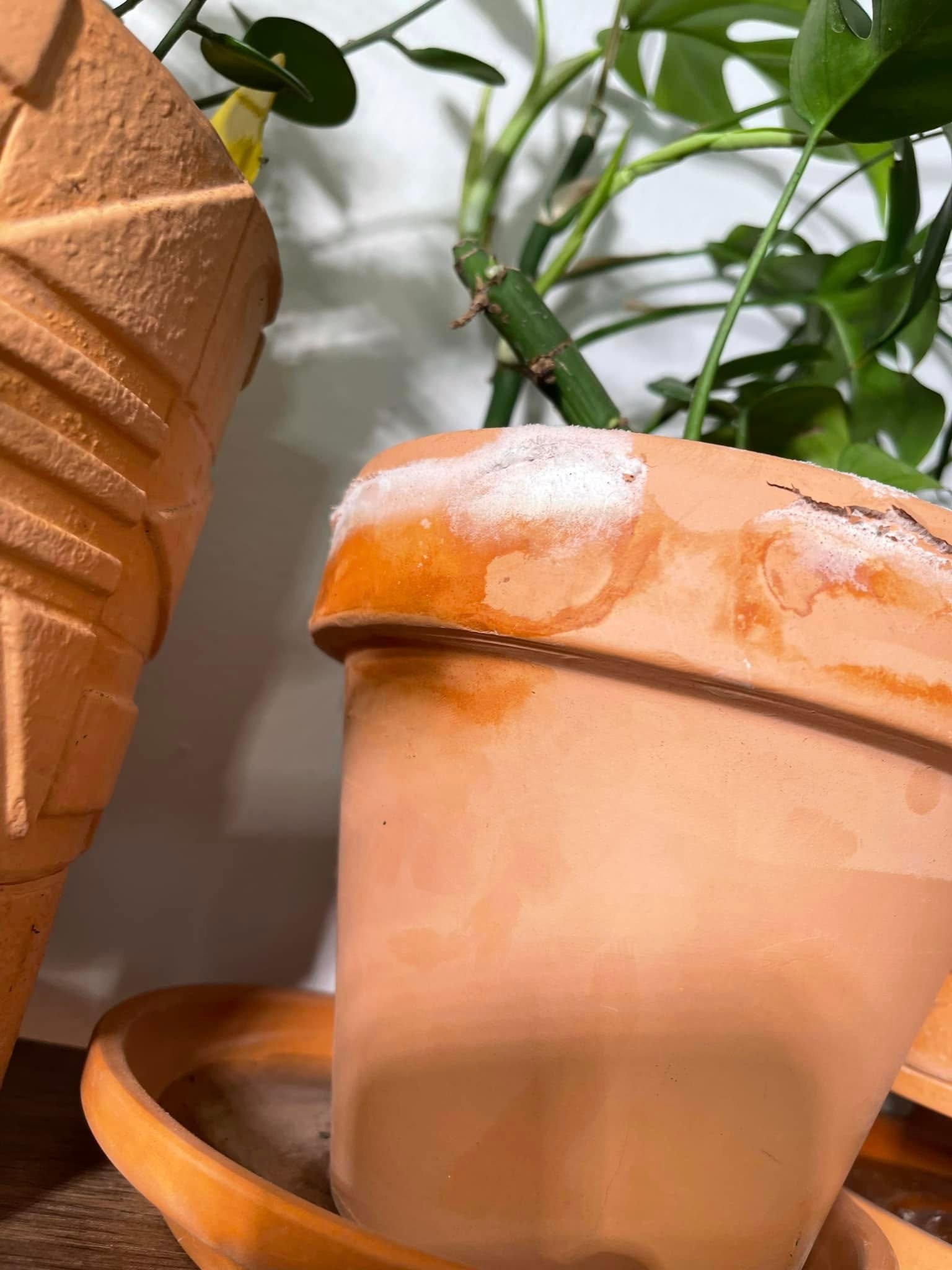

Initially, the white layer that formed around the rim and spread over the terracotta surface did not behave like a simple stain or residue.
Some areas looked dry and tight, others had a soft texture, and bounced back after wiping, making it look like something was building up rather than sitting on the surface.
Plants showed no signs of stress, making the cause difficult to read and easy to misinterpret.

Why did it look like mold?
The composition created confusion.
On terracotta, both mineralization and mold appear in the same place and follow the same pattern. Moisture moves through the soil, reaches the surface and leaves something behind. When that layer looks uneven or slightly soft, it’s easy to assume it’s growth rather than residue.
At the same time, the pot holds moisture longer than it seems, which can support both results depending on the conditions.
That’s what it really was
In most cases, this is mineral buildup.
Terracotta absorbs water from the soil and releases it through its surface. As that water evaporates, minerals from tap water and compost settle on the soil, creating a visible white layer known as efflorescence.
This is why the buildup follows the rim and outer walls instead of forming random spots.
Why does it keep coming back?
Cleaning the surface does not stop the process.
As long as the water continues to flow through the vessel, the minerals will continue to accumulate. If the water contains more dissolved minerals, the buildup becomes thicker and more noticeable over time.
This explains why some pots develop heavy layers while others show very little change in the same space.

While it is rather moldy
There are cases where the layer is not a mineral residue.
If the surface feels soft or develops a fuzzy texture, it points to mold forming on the outside of the pot. This occurs when moisture remains on the surface instead of drying out between water cycles.
Limited air flow and frequent watering create the conditions for that shift.
What exactly is the reason for it?
The build-up depends on how the water is moving through the vessel and how long it has been there.
When the soil remains wet, moisture continues to move through the soil and reach the surface. As it dries, it leaves minerals behind, creating a white layer. In places where the surface has been wet for a long time, it starts to look soft and close to mold.
Allowing the soil to dry out more between waterings reduced the amount of moisture reaching the outside. More airflow helped dry the rim instead of holding that wet ring. Using cleaner water reduced the amount of residue left behind each time.
Once those conditions changed, the level stopped building the same way and didn’t come back as quickly.



