

Want summer containers and flower beds that look colorful by late August without constant trimming, watering and replacing tired plants?
May is usually when garden centers fill up with petunias, but more gardeners are starting to replace them with flowers that bloom longer, tolerate heat better, and thrive in the hottest stretches of summer.

Some spread beautifully over raised beds and containers. Others thrive in intense sun while continuing to bloom deep into late summer without looking tired halfway through the season.
These are the summer flowers I’m planting in May instead of petunias this year, especially for landscapes and containers that need strong color with low maintenance when summer heat hits.
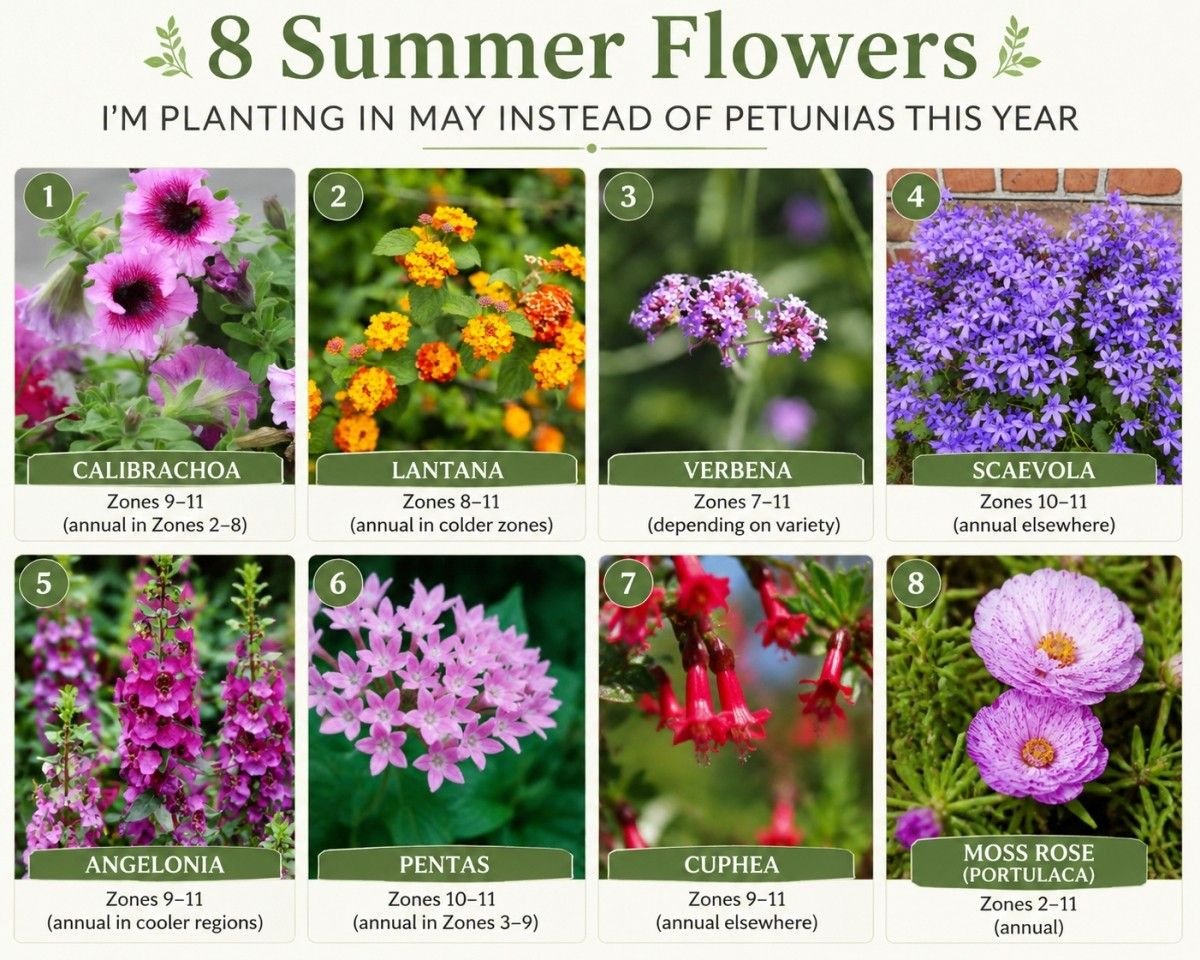
Calibrachoa that gives the perfect petunia look without constant deadheading

Best for zones 9-11 as a perennial, grown as an annual in cooler zones
Calibrachoa is probably the closest true replacement for petunias. The flowers create the same overflow effect that people love in hanging baskets and containers, but the plants are usually denser and cleaner in the heat of summer.
By planting them in May, they establish quickly before temperatures peak. Blooms are also self-cleaning, which means less deadheading and less wilted flowers sitting on the plant mid-summer.
A lantana that thrives in extreme summer heat

Best for zones 8-11 as a perennial, annual in cool climates
Lantana is one of the few summer flowers that looks really happy when the warmest weather arrives. While some annuals slow down in July and August, lantanas continue to produce flower clusters through the heat and drought.
Colors intensify even in strong sun, especially orange, yellow, pink and coral combinations. Butterflies constantly gather around the blooms, making the entire garden seem more active and lively.
Verbena that spreads naturally in beds and containers

Best for zones 7-11 depending on variety
Verbena creates a softer movement than traditional petunias. Instead of dense flower mounds, stems naturally spread across borders, retaining walls and raised beds, giving planting areas a more level and relaxed feel.
Planting in May allows enough time for roots to establish before summer arrives. Once established, the flowers bloom well into late summer with surprisingly little maintenance.
A scavola that cascades beautifully without looking messy

Best for zones 10-11 as a perennial, grown as an annual elsewhere
Scaevola handles heat better than most trailing annuals. Fan-shaped flowers spread evenly over containers and hanging baskets without developing a tangled, stretched appearance.
It flowers continuously even during long hot stretches, especially when planted in full sun in late spring.
Angelonia that stays upright all summer

Best for zones 9-11 as a perennial, annual in cooler regions
Angelonias bring vertical structure to summer planting beds while continuing to thrive in intense heat. Unlike floppy or leggy flowers by August, flower spikes remain clean and straight for months.
That shape makes containers and landscape borders look more balanced, especially when mixed with trailing plants or ornamental grasses.
Pentas that keep pollen moving in the garden

Best as a perennial for zones 10-11, annual in zones 3-9
Pentas bloom when temperatures rise, making May an ideal planting time. Clusters of star-shaped flowers bloom throughout the summer, attracting butterflies and bees almost constantly.
The plant also holds its shape well in landscape beds, making it useful for gardeners who want consistent color without constant distractions.
Cupphea which blooms continuously in late summer

Best for zones 9-11 as a perennial, annual elsewhere
Cufia is one of summer’s most underrated heat-tolerant flowers. Once planted in warm May soil, it flowers continuously throughout the summer without needing much attention.
The smaller blooms create a softer texture than petunias, but the continuous blooms keep containers and borders looking full for months.
Moss Roses that thrive in warm, dry backyard conditions

Best for zones 2-11 as a summer annual
Moss roses, also called portulaca, are perfect for areas where petunias struggle in extreme sun. The succulent foliage stores moisture, which helps the plant continue to bloom during hot, dry weather that quickly exhausts other annuals.
The flowers open fully in direct sunlight and create brilliant color in rock gardens, borders, gravel beds and raised plantings deep into late summer.
Petunias may always have a place in summer containers, but these alternatives often better handle heat, drought, and late summer fatigue when the hottest part of the season arrives. Some spread more naturally, some bloom longer, and others bring robust structure and pollinator activity to the garden without requiring constant maintenance to remain attractive.
The biggest difference is that many of these flowers continue to look fresh well into mid-summer, especially when planted in May and given enough time to establish before extreme heat sets in.
Which will you plant instead of petunias this year?



