

Bathrooms in 2026 are moving away from fixtures that fill empty rooms. Designers are treating vanities, mirrors, tubs, lighting and storage as elements that define the overall composition rather than fading into the background.

These spaces show how a strong feature can completely reshape an environment. Some use oversized illuminated mirrors that stretch across an entire wall, others rely on sculptural tubs, dramatic stone surfaces, floating cabinetry or integrated shelving systems that completely change the traditional layout.
This shift comes from turning functional pieces into architectural statements rather than being treated like standard bathroom equipment.
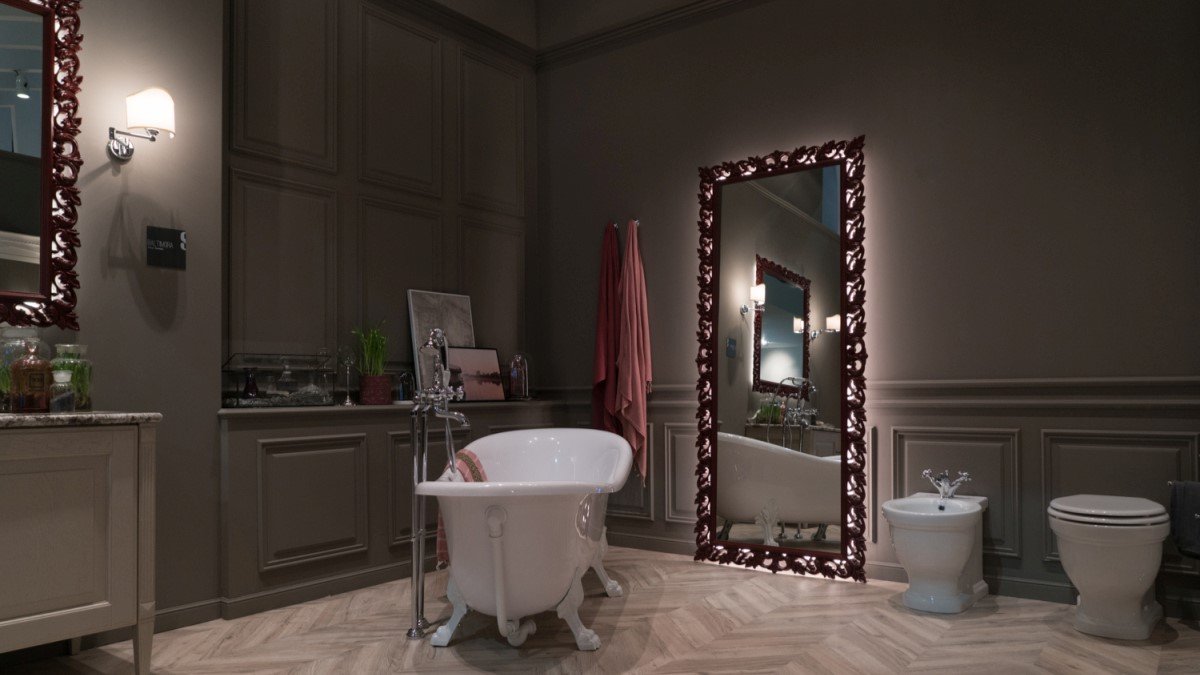
A decorative floor mirror that turns a bathroom into a dressing room

An oversized floor mirror becomes a dominant architectural element rather than a simple vanity accessory. Its carved dark frame introduces contrast against the paneled walls, giving the bathroom the atmosphere of a boutique dressing room rather than a standard washroom.
A clawfoot tub stands out in the middle, allowing the room to feel symmetrical without relying on double vanities or built-in storage walls. Wall molding and muted lighting reinforce the dramatic tone rather than competing with the mirror.
Industrial metal framing that replaces traditional shower enclosures

The black metal shower structure acts as a room divider rather than a transparent glass box. Its grid frame defines the bathing zone while keeping the layout visually open throughout the room.
Concrete-look tub surrounds and wall shelving continue the industrial trend without adding extra material. A pendant light hanging above the vanity softens the stark geometry and keeps the bathroom from feeling cold.
Floating wood vanity system with suspended lighting

A floating wood vanity extends across the wall as an uninterrupted horizontal volume. Instead of upper cabinets, suspended pendants and thin shelves define the structure above the sink area.
A pale material palette removes visual weight from the room. Large open floor areas and integrated lighting make bathrooms feel spacious without increasing footprint.
Indoor tree placement that changes decorative bathroom styles

A large indoor tree becomes the focal point of the entire bathroom, replacing the need for layered decor, artwork or heavy wall treatments. Located next to the vanity, it softens the sharp geometry of the black fixtures and mirror.
The freestanding sink uses a slim black frame, which keeps the furniture visually light. Tall curtains and large windows enhance the connection between the bathroom and the outdoor view.
Double vertical mirrors with suspended globe pendants

Tall round mirrors stretch the wall vertically and become the defining shape in the room. Instead of a horizontal mirror, segmented forms create rhythm above a floating vanity.
Pendant globe lights sit next to the mirrors rather than above them, keeping the upper wall visually open. Dark floating cabinets reinforce the minimal design while leaving the floor exposed.
Brass pendant cluster that frames the freestanding tub

Hanging brass pendants create a vertical structure directly above the bathtub, making lighting the centerpiece rather than tile or cabinetry. Their slender suspension lines emphasize the height of the room.
Minimal wall detailing takes care of the tub zone. Brass fixtures and towel frames repeat the same finish throughout the space, giving continuity to the bathroom without the need for decorative accents.
A stone bathtub replaces the need for an accent material

A dark stone bathtub dominates a room by texture and mass alone. Its veined surface acts as both a sculptural and functional focal point, eliminating the need for statement walls or patterned flooring.
The surrounding palette is restrained with soft gray walls and warm wooden furniture. A leaning towel rack introduces vertical balance without adding bulk around the tub.
Backlit mirror wall with full black fixture integration

An illuminated mirror creates a shimmering horizontal strip across the vanity wall, separating the sink zone from the textured wall surface behind it. Lighting eliminates the need for decorative sconces or additional wall features.
Black fixtures, dark cabinetry and framed shower glass establish a consistent material system throughout the room. The contrast between warm textured walls and sharp black lines defines the entire layout.
Floating cabinet composition with offset wall storage

Vanity and storage units avoid symmetry by spreading across the wall in separate floating volumes. Rather than using one large cabinet block, the layout breaks storage into smaller architectural pieces.
A single globe pendant introduces soft light next to the mirror, while open side shelves keep the composition lighter than a full-height storage wall. A neutral palette allows proportions and spacing to define a room.
Horizontal wall cabinets that replace traditional vanity towers

Bathrooms use long horizontal storage pieces instead of tall linen cabinets, keeping the room visually wider. Floating cabinets and wall-mounted shelves create layered depth without closing the space.
A textured wall finish acts as a continuous backdrop behind each element. Dark wood cabinetry contrasts with light flooring and rugs, allowing the storage system to anchor the room without overwhelming it.
A full wall mirror strip that replaces traditional vanity lighting

A continuously lit mirror extends across the entire vanity wall, eliminating the need for separate sconces or decorative lighting fixtures. The thin horizontal light band becomes part of the architecture rather than being added after the accessory.
Dark cabinetry and open shelving create a layered storage system that blends into the walls rather than standing out as furniture. A marble backsplash introduces contrast without disrupting the long horizontal structure.
An indoor tree corner that softens a minimalist bathroom layout

A large indoor tree fills the empty corner between the vanity and the bathtub, replacing the need for artwork or decorative shelves. Its organic shape breaks the rigid geometry of the concrete-style wall panels behind it.
The vanity remains visually light with an exposed black metal frame and floating wooden shelves. A freestanding tub stands out against a textured wall, keeping the room open rather than overcrowded with storage.
Separate vanity cabinets that replace a continuous double sink unit

Instead of using one large vanity, divide the bathroom sink area into two independent cabinet pieces. This creates a gap between the sinks and gives the wall a more structured rhythm.
Round mirrors reinforce symmetry without making the room feel oversized. Dark wood flooring and brass hardware introduce warmth, while paneled walls make the composition formal and tailored.
Sculpted white tile walls instead of a flat subway tile layout

The bathroom uses three-dimensional geometric tiles instead of a flat wall surface, turning the shower enclosure into the dominant structure of the room. Light reflects differently on each angled surface, creating movement regardless of color variation.
Black trim lines frame the shower and wall edges, giving definition to bright white surfaces. Brass fixtures and a pedestal sink reinforce the retro-inspired direction without overwhelming the compact layout.
Freestanding tub with brass tray stand instead of side table

A slim brass tray next to the bathtub replaces bulky storage furniture surrounding the soaking area. Its open frame keeps the floor visible, helping the room feel lighter and less crowded.
The black outdoor tub contrasts sharply against the pale flooring and white paneled walls. Large tropical plants behind a glass partition turn the bathing area into a semi-indoor garden rather than a sealed bathroom corner.
A floating black vanity that disappears into the wall

The floating vanity blends into the black wall behind it, reducing the visual weight usually created by large bathroom furniture. Only an illuminated mirror strip separates the sink zone from the background surface.
The composition is intentionally sparse. A white vessel sink and subtle underlighting provide contrast without introducing additional materials or decorative elements.
Vertical open shelving towers form an oversized mirror

Tall open shelving towers extend upward on either side of the mirror, turning the storage into a vertical architectural frame. Instead of upper cabinets, bathrooms use narrow display compartments that emphasize height.
A blue-lit wall strip introduces depth between the concrete-style panels and the mirror surface. A dark wood vanity and copper faucet maintain a restrained material palette with a focus on texture and lighting.
Dark marble walls that turn the entire bathroom into one surface

Eliminating visual separation between surfaces, marble-look wall and floor finishes continue on nearly every visible plane. This creates the feeling of a carved stone room rather than a bathroom assembled from different materials.
Matte black floating fixtures appear suspended against a reflective stone background. A solid white bathtub becomes the brightest element in the space, sharpening the contrast throughout the room.
Offset cube storage that replaces standard medicine cabinets

Wall storage uses staggered cube compartments instead of mirrored cabinets or floating shelves. Different depths and finishes create a structure that looks more like wall architecture than functional storage.
Warm wood interiors within some of the cubes break up the white surfaces and visually connect with the floating vanity top. An illuminated mirror introduces another vertical element that balances the asymmetrical cabinet arrangement.



