

Want to open up your home to light and fresh air without exposing everything inside? Dutch doors solve that with simple partitions. The top half opens for airflow and daylight, while the bottom half remains closed, keeping privacy, pets and movement under control.

In 2026, this detail moves beyond the farmhouse style and becomes a functional design choice used in entryways, kitchens and utility spaces. It creates a controlled connection between inside and outside, where visibility, ventilation and separation work at the same time. These ideas show how color, material and placement can turn a classic door into a feature that shapes how your home looks from the first step.
Soft neutral dutch door with black frame contrast

Vertical panel siding creates a calming backdrop, while dark door frames sharpen the entry and split doors give a defined outline. Paired wall lanterns amplify that symmetry, turning a simple porch into a built-in focal point. Dutch doors read as part of the architecture, not an add-on.
The lower half remains closed, keeping pets and airflow in check, while the upper half opens to light and greenery. The balance between function and visual order makes this setup work in a compact entry zone where every detail needs to have weight.
Deep green Dutch door inside screened entry

The muted green shifts the mood from the standard white trim to something grounded and calm. The front screen door adds another layer, creating depth and a transitional zone before entering the home. Hardware remains visible and tactile, reinforcing everyday use.
The upper opening allows air movement without losing isolation from the outside. This setup works well in humid or hot climates where ventilation is as important as privacy, turning the door into a functional element rather than a static surface.
Classic interior Dutch doors with traditional millwork

Traditional trim, patterned flooring and layered moldings create a setting where Dutch doors become part of a larger structure. Soft green paint combines with ceiling details and wallpaper tones, keeping the palette consistent across surfaces.
The open top section frames the view into the next room, acting as a controlled display. This approach works in formal homes where separation between spaces is important, yet visual connection remains important.
Pale sage dutch doors in tight utility entry

The compact layout benefits from the light color of the doors which reflect light and keep the space open. A small window grid adds structure without obstructing visibility, allowing the door to integrate into narrow corridors.
The split function becomes practical here, allowing air flow without exposing the entire space between rooms. Ideal for laundry zones or side entries where movement and control need to work together.
Bright blue Dutch doors as an exterior accent

Board-and-batten siding remains neutral, allowing the door to carry the color statement. The blue finish stands out against the white walls and stone flooring, giving the entry a clear focal point from the street.
Upper glass panels reflect light and surroundings, adding movement to the entire facade. This approach turns a simple entry into a recognizable feature without changing the rest of the exterior content.
Light blue dutch door framed by brick and garden

Painted brick and soft landscaping create a leveled entry where the door acts as a calming focal point. The blue tones remain soft enough to blend with the greens, even breaking the white facade.
The open top half pulls the garden into the interior, making the threshold seem less defined. This setup works in homes where the outdoor connection plays a central role in daily use.
Soft blue Dutch door with built-in storage wall

The color of the doors extends to the cabinetry, creating a continuous visual line that ties storage and entry together. Brass hardware adds contrast and prevents the palette from flattening.
The upper part opens to the external light while the lower part remains separated from the storage zone. This layout fits the mudroom where circulation, storage and access all overlap.
Half dutch doors to utility spaces

The lower panel acts as a barrier for laundry or service areas, containing visual clutter. Upper openings allow communication and air flow between rooms without complete exposure.
Clean white finish blended into the trim, making the door almost disappear when closed. This approach focuses on the first task using the Dutch format as a practical separator.
Dark green dutch door with patterned wall backdrop

A strong color choice anchors the space against patterned wallpaper and classic wainscoting. The door becomes a visual stop that balances the details on the surrounding walls.
The top section frames the exterior greenery, creating a direct visual link outside the interior pattern. This contrast between the restrained interior details and the open exterior view adds depth.
Dutch doors in bright entrance with full-height light

Tall windows and glass panels flood the space with daylight, turning Dutch doors into part of a larger light system. The cross mutton detail adds structure without obstructing the openness.
A split door function supports airflow across the entry while keeping the bottom half closed for control. This setup works in large foyers where scale and light define the experience.
Soft cream dutch door with warm hex tile base

Shiplap walls and built-in storage set a calm backdrop, while Dutch doors add movement to the end of the room. A small glass grid in the upper panel draws in daylight and prevents the entry from feeling closed. Warm toned hex tiles ground the space and introduce texture underfoot.
The top section is open to the exterior, allowing light to wash across the floor and cabinetry. The bottom panel stays in place, keeping the room contained while still being connected to the outside.
Neutral Dutch doors paired with vertical panel walls

Vertical wall paneling extends into the entry and stair detail, creating a continuous surface that frames the doorway. Slim side windows bring in filtered light and soften the solid door mass. Dark hardware adds contrast without breaking the neutral palette.
The split door format acts as a controlled opening between interior and exterior. The upper section allows airflow, while the lower half remains separate from the entry zone.
Arched Dutch doors in narrow hallways

A curved top edge turns a door from standard to an architectural feature. A black finish anchors the end of the hallway and contrasts with the white walls and patterned flooring. The repetition of the pendant light above creates a clear axis towards the door.
The upper portion opens to the outside view, framing the light and landscape at the end of the corridor. This setup turns a tight track into a defined visual sequence.
Classic kitchen Dutch door with garden view

White cabinetry and stone surfaces keep the kitchen clean, allowing Dutch doors to act as a connection point to the outdoors. A glass upper panel forms the greenery, creating a daily view of the exterior.
Opening the top half while keeping the bottom closed lets in air, useful in kitchens where separation is important. The door becomes part of the workflow, not just a boundary.
Natural wood Dutch door with full glass upper panel

Wood grain adds depth and variety, contrasting with dark cabinetry and metal accents. A large glass section in the upper half captures the expansive exterior view and visually expands the space.
The lower panel maintains structure and privacy, balancing openness above with solidity below. The choice of material here reads the door as furniture, not just as an entrance.
Interior Dutch doors framed by black window grids

A surrounding glass wall turns the Dutch door into part of a larger structure. The light wood finish softens the contrast with the black frames, creating a balanced palette between warm and cool tones.
The upper half opens directly to the exterior space, with the living area extending outwards. The lower section contains the threshold line, keeping the interior defined.
Coastal porch dutch door with shingle backdrop

Cedar shingles and painted trim create a layered exterior where Dutch doors fit into the facade’s composition. The multi-pane upper section echoes traditional coastal detailing.
Opening the top half connects the porch with interior air and light, reinforcing the transition zone. Doors become part of the porch experience rather than a barrier.
Rustic Dutch doors with stone and timber contrast

An exposed stone wall and wooden ceiling beams set a heavy material palette, while Dutch doors introduce a lighter painted surface. Cabinet fronts echo the tone of the doors, maintaining consistency throughout the room.
The upper opening frames the outer stone surface, connecting the interior and exterior materials. This approach works in renovation projects where texture carries the design.
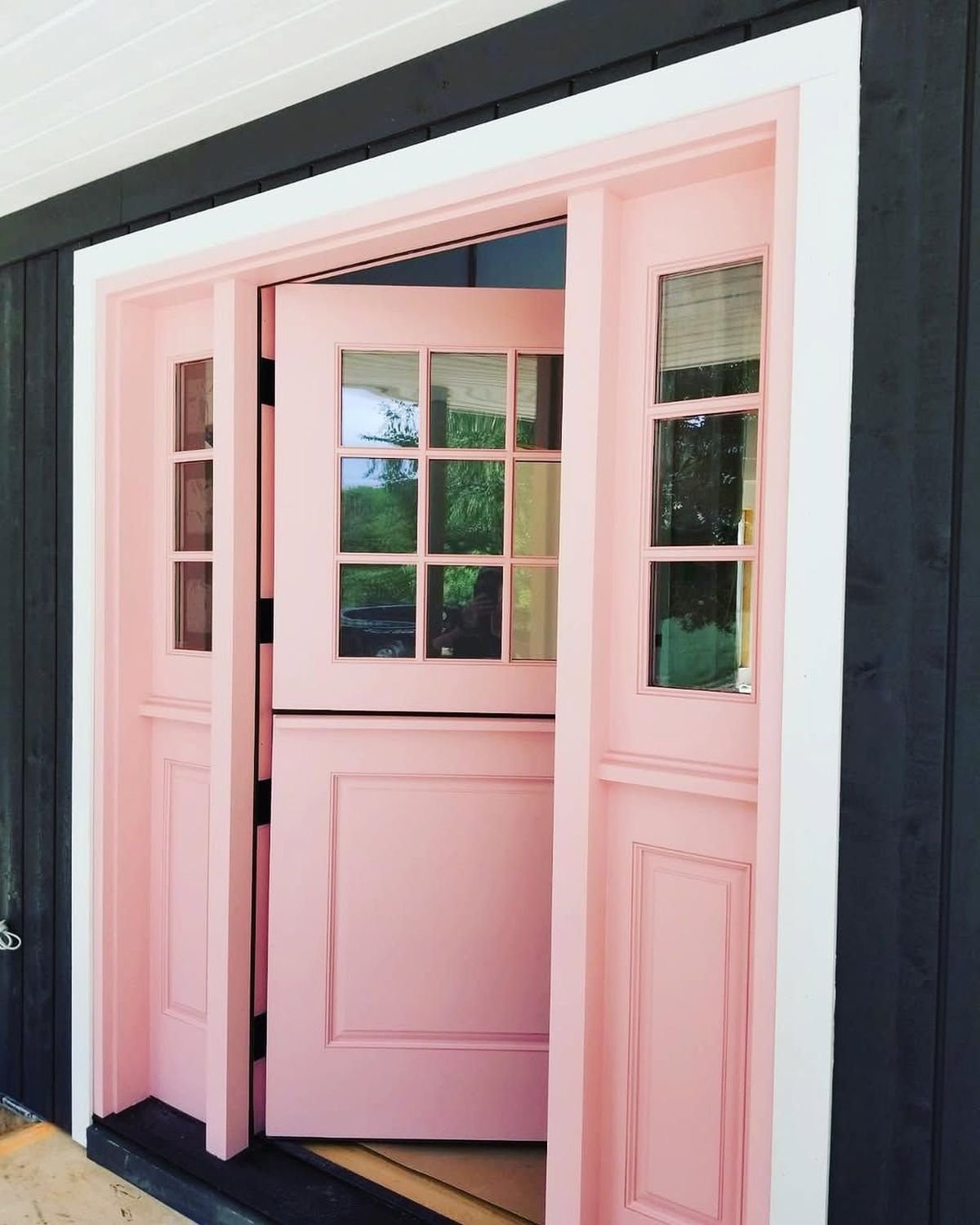
A pink Dutch door as a statement entry

A soft pink finish makes the Dutch door a focal point against the dark exterior cladding. White trim frames the color and keeps the composition clean and defined.
An upper panel with a glass grid reflects the surroundings and adds depth to the darker color choices. The split format keeps the design playful while being efficient for daily use.



