

Want a bathroom that feels more open without making the room look bigger? In 2026, bathroom design is moving away from the heavy cabinet blocks that have dominated sink walls for years.

Instead of large vanities that stretch from wall to floor, designers are using floating counters, open frames, pedestal forms, furniture-style consoles, sculpted stone blocks, and open shelving that keeps the floor and wall more visible. This shift is changing how the bathroom looks visually. Sink areas look lighter, cleaner and more architectural.
Content is also playing a big role in conversion. Glass structures, floating wooden surfaces, marble slabs, slim metal frames and integrated lighting are replacing the oversized storage boxes that once made bathrooms feel closed.
These bathroom vanity ideas show how designers are completely rethinking the area under the sink. Some setups almost disappear into the room, while others turn the vanity into a sculptural center through shape, lighting and material contrast.
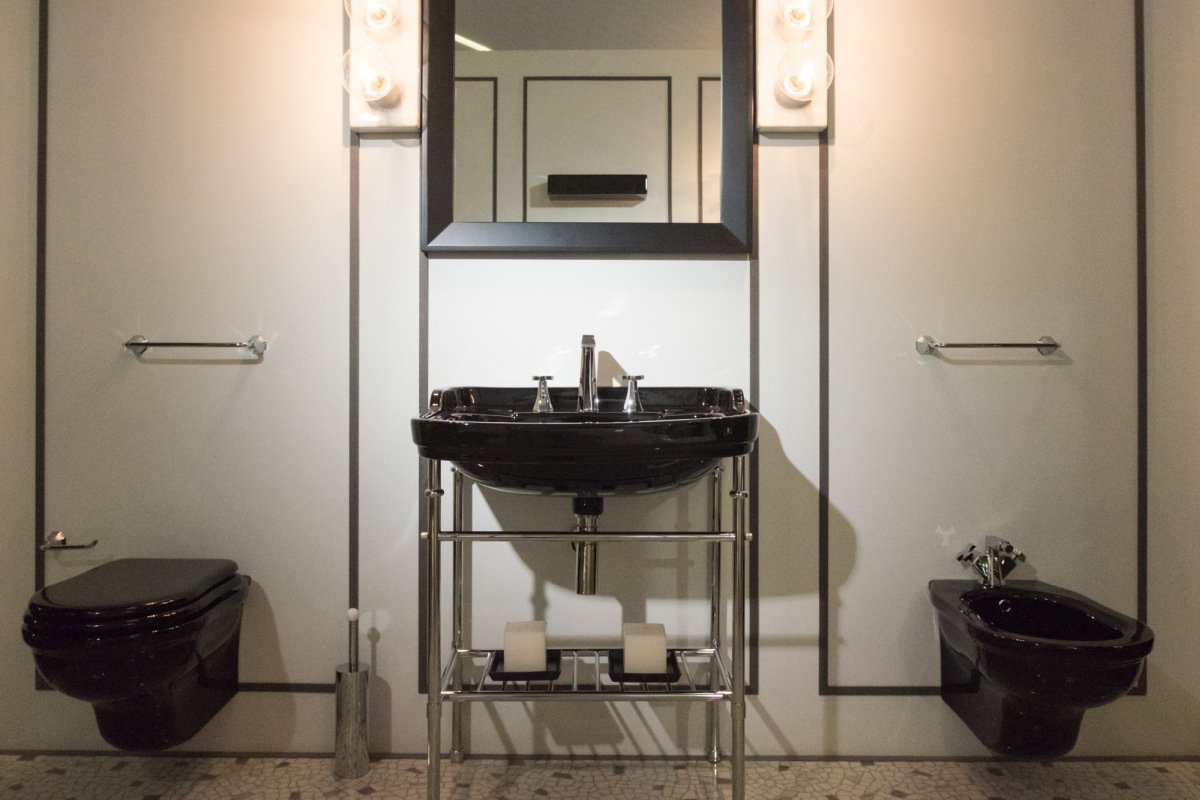
Vintage black basin vanities with exposed chrome frames

This vanity setup completely rejects bulky built-in cabinets and leans in a more furniture-inspired direction. Glossy black basins sit on exposed chrome frames, which keep the floor visible and give the room a light structure despite the dark color palette.
The wallpaper becomes part of the vanity composition rather than acting as a background detail. Ornate mirrors, black sconces and reflective metal legs create a layered contrast between vintage decor and exposed modern plumbing.
Wood wall vanity with floating sink and circular backlit mirror

The vanity wall reads almost like a furniture panel that is integrated directly into the architecture. A floating pedestal sink rests against a full-height walnut surface, while an illuminated circular mirror presents soft shapes against the vertical wood grain.
Instead of using lower cabinetry, wall-mounted accessories and slim floating shelves keep the composition visually open. The result looks cleaner and less bulky than a traditional vanity block.
Chrome leg vanities against sculpted subway tile walls

This bathroom keeps the sink area visually light by using an open chrome-leg vanity instead of a closed storage cabinet. Open bottom shelves provide practical storage while maintaining openness under the countertop.
A dimensional subway tile wall becomes the dominant texture in the room. Paired with globe sconces and a slim chrome frame, the vanity wall feels closer to a boutique hotel setup than a standard residential bathroom.
Matte black bowl sink with minimal open frames

These vanities strip the sink area down to its most minimalist design. A thin black metal frame supports the circular basin sink while almost the entire wall and floor remains exposed.
Tall round mirrors reinforce the room’s vertical proportions and soften the sharp geometry from the black fixtures. Open towel rails mounted directly on the wall continue in a lighter, less closed direction.
Monolithic marble vanity that eliminates visible cabinetry

This vanity approaches the sink as a sculptural block rather than a storage cabinet. The marble wraps continuously around the sides and top surface, creating the appearance of a single carved volume from the floor.
A wall-mounted faucet removes visual clutter from the countertop, while an integrated sink basin keeps the marble surface uninterrupted. The whole setup looks architectural rather than furniture based.
Open wood vanity table with shelf storage below

Instead of relying on deep cabinetry, this vanity uses an open table structure with lower shelves for towels and accessories. A thick wood countertop introduces warmth while exposed chrome legs lighten the texture below.
An illuminated mirror becomes the strongest vertical element on the wall. Large industrial-style lighting and horizontal wall paneling reinforce the contrast of layered materials between wood, metal and ceramic.
Floating wood vanity with extended bench surface

This vanity extends beyond the sink and transforms into a floating bench, changing the entire function of the wall. An elongated wooden platform keeps the room visually horizontal and avoids the boxed feeling created by traditional vanities.
A suspended round mirror presents a soft focal point above the sink area. Dark walls and subdued lighting make floating wood surfaces stand out more dramatically.
Compact open vanity with Scandinavian wood details

This small vanity setup uses thin white framing and pale wood shelves to avoid visual heaviness. An open lower shelf keeps towels accessible while maintaining ventilation under the basin.
A round mirror with integrated lighting becomes the main decorative element. Wood accents on a nearby towel stand help the matching vanity feel connected to the rest of the room rather than isolated against the wall.
Floating console vanity with wall-mounted storage

The vanity extends across the wall like a suspended console rather than a boxy cabinet. Long wooden drawers float below the sink while open shelves above introduce vertical storage without adding bulk below.
Illuminated mirrors and wall-mounted faucets reinforce clean horizontal lines. Everything feels integrated into the wall structure rather than placed as separate pieces of furniture.
Stone counter vanity with soft integrated storage

This vanity combines a stone-look countertop with soft integrated storage below. Open shelving sections break up the cabinetry and keep the lower half from feeling visually solid.
A rounded vessel sink softens the sharp lines from the counter and drawers. Muted top cabinetry and hidden storage create a quieter, more architectural look than a standard vanity block.
A curved glass vanity that almost disappears into the room

This vanity almost completely eliminates visual heaviness by using bent transparent glass as the main structure. The sink appears suspended within the frame, while the exposed plumbing becomes part of the composition rather than something hidden behind the cabinetry.
A tall mirror reinforces the vertical line of the setup and reflects light through transparent surfaces. Because there is no solid vanity block below, the entire bathroom feels more open and architectural.
Sculptural black pedestal sink with halo mirror lighting

The vanity zone here becomes sculptural rather than furniture based. A monolithic black pedestal sink stands independently against the wall, eliminating the need for any lower cabinet structure.
An oversized illuminated round mirror creates a sparkling focal point behind the sink and softens the dark stone texture. Wall-mounted fixtures keep the floor area visually clean and reinforce the effect of floating around the pedestal form.
Furniture-style wood vanity with open glass shelf

This vanity takes inspiration from mid-century furniture rather than standard bathroom cabinets. Slim tapered legs lift the entire structure off the floor while an open glass shelf below prevents the section from feeling visually dense.
The dark vessel sink contrasts with the warm walnut surface and textured wall covering behind it. Combined with the freestanding stool and framed mirror, the entire vanity area feels closer to a designed furniture vignette than a traditional bathroom setup.
Angled wood vanities stay away from boxy cabinet shapes

This vanity completely changes the silhouette usually associated with bathroom storage. Instead of vertical cabinet sides, angled wood forms create a faceted shape that feels lighter and more sculptural.
Open shelving integrated into the side panels introduces storage without relying on bulky drawers under the sink. Against dark textured walls, wooden surfaces stand out while floating mirrors reinforce the clean geometric structure.
Floating metal vanity against mosaic statement walls

This vanity uses a slim black metal frame instead of a traditional cabinet base, keeping the sink area visually light against the large mosaic wall surface. The open floor plan allows the colorful tile installation to be the dominant feature in the room.
Industrial pendant lighting and black mirror framing reinforce the graphic contrast throughout the vanity wall. An asymmetrical cabinet next to the mirror also introduces storage without visually weighing down the sink zone.
Open chrome vanity with black ceramic basin contrast

The exposed chrome frame beneath this vanity eliminates the solid cabinetry typically found under sinks. The structure feels close to vintage hotel furniture, especially with the glossy black ceramic basin and matching wall-mounted fixtures.
Thin black trim lines on the walls create a structured backdrop that emphasizes symmetry around the vanity. Because the floor is completely visible under the sink, the room feels more open despite the darker palette.



