

Want a space that feels structured instead of flat? In 2026, the hex tile is replacing the traditional rectangular layout that fades into the background. Designers are using geometric patterns on floors, shower walls, backsplashes and accent surfaces to create strong contrast and more movement within a room.

Shifts aren’t just about adding patterns. How the hex tile surfaces connect varies. Dark floors define the open layout, oversized wall tiles sharpen the shower zone and mixed color mosaics break up the long uninterrupted walls. Even small spaces feel more layered when geometry starts to wrap around the room.
This interior shows how hex tile goes beyond decorative accents. Some use matte black flooring to ground white walls, others use oversized hex tiles throughout the shower enclosure or backsplash walls. Each one replaces the traditional rectangular tile with a layout that has more visual structure.
Black hex floor tile that defines the entire galley kitchen

Black hex tile turns this narrow kitchen into a stronger visual corridor. Instead of blending into the cabinetry, the floor creates a bold graphic base that draws the eye through the entire length of the room. White grout lines sharpen the pattern and tie in with the white upper cabinets and backsplash.
What makes this layout work is the contrast. Black lower cabinets, black floor tile and white walls create contrast without adding extra materials. The hex pattern at least keeps the kitchen from looking flat.
White hex backsplash that wraps the entire sink wall

Hex tile continues across the entire wall rather than stopping at a short backsplash strip. This gives the kitchen a clean architectural surface around the window and upper cabinets while keeping the palette light.
Thin grout lines prevent the pattern from overwhelming the space. Warm wood cabinetry below balances the geometric tile and keeps the kitchen from feeling cold.
Deep blue hex floor tile that grounds the freestanding tub

The dark hex floor becomes the heaviest visual element in this bathroom. It anchors the freestanding tub while connecting with a patterned vanity wall and dark ceiling accents.
Large hex tiles give the floor more texture than standard stone slabs without overwhelming the room. The blue finish adds depth against the white walls and natural wood ceiling beams.
A split black and white hex floor that separates the bath zones

The hex tile transitions from black to white across the entire bathroom floor instead of being one color throughout the bathroom. This creates a visual separation between the tub area and the rest of the room without adding walls.
The transition works because the grout stays consistent. Black fixtures and black shower framing reinforce the darker side of the floor while white walls keep the room open.
A matte black hex floor that sharpens the white subway walls

Oversized black hex floor tile gives this small bathroom more structure than traditional square tile. A matte finish keeps the pattern restrained while the white subway wall tile brightens the narrow layout.
Black hardware is repeated in the towel bar, faucets and window trim, anchoring the floor in the rest of the room. The hex shape breaks up the straight lines from the subway tile.
Soft pink hex backsplash that breaks straight counter lines

The backsplash uses an unfinished hex edge instead of a straight tile border. This creates a soft transition against the painted wall and gives the small kitchen more movement.
The pale pink tone completely changes the look from the standard white subway tile. Combined with gray cabinetry and white counters, the hex pattern becomes a key decorative feature.
A vintage penny-and-hex floor that frames a clawfoot tub

The floor combines small hex sections with dark penny tile accents, creating a pattern that feels connected to older homes without looking dated. A tile layout adds texture under the freestanding tub and combines with green wall paneling.
What stands out is the contrast between the soft curtains and the graphic floor pattern. Black detailing gives definition to the light tile surface.
Oversized black hex floor tile that extends into the shower

The same black hex tile runs continuously from the bathroom floor to the shower base. This eliminates visual interruptions and makes the room feel larger.
White vertical wall tile contrasts against the dark flooring while black shower trim ties everything together. A large hex format gives a room a cleaner look than a small mosaic pattern.
A gradient hex accent wall that varies throughout the tub area

The wall tile gradually changes from lighter hex pieces to darker tones behind the tub. Instead of using a random accent wall, the gradient creates movement across the surface.
The geometric transition works because the surrounding walls remain plain. Chrome fixtures and a simple tub shape let the tile pattern be the main focus.
White hex shower walls that replace standard subway tile

Large white hex tiles cover the shower walls from floor to ceiling, giving the room more depth than traditional rectangular tile. Black grout lines sharpen the pattern and tie in with the black fixtures and shower frame.
A floating vanity and dark wood floor keep the bathroom from looking too white. Every black detail is repeated throughout the room to keep the palette consistent.
A hex mosaic border that cuts through the bathroom floor

Instead of covering the entire floor in one pattern, the design uses black hex mosaic stripes on a white hex base. This creates direction in the room while breaking up the large white surface.
A black vanity and matte black faucets reinforce the dark tile stripe. A small hex format adds detail without cluttering the layout.
Marble hex floor tile that softens the wood vanity

A marble-look hex floor adds pattern without competing against a warm wood vanity. Brass hardware and framed mirror details bring more texture to an otherwise light bathroom palette.
Hex tile works here because the grout lines remain subtle. A floor keeps a neutral room from looking flat while preserving a soft finish.
A full hex shower wall that follows the entire walk-in layout

Large hex tiles continue on each fountain wall, including the angled side sections. This creates an enveloping effect that makes the shower feel built into the architecture rather than added later.
Black shower hardware sharpens the white tile pattern while wood-look flooring warms the room. Larger hex formats look cleaner than smaller mosaics.
Sloped ceiling shower wrapped in oversized hex tile

A hex tile follows an angled roof line rather than stopping at a standard wall height. This helps the shower feel integrated into the attic-style design of the room.
Larger tile patterns reduce visual clutter on sloping surfaces. White grout keeps the geometry visible while chrome hardware reflects light into the compact space.
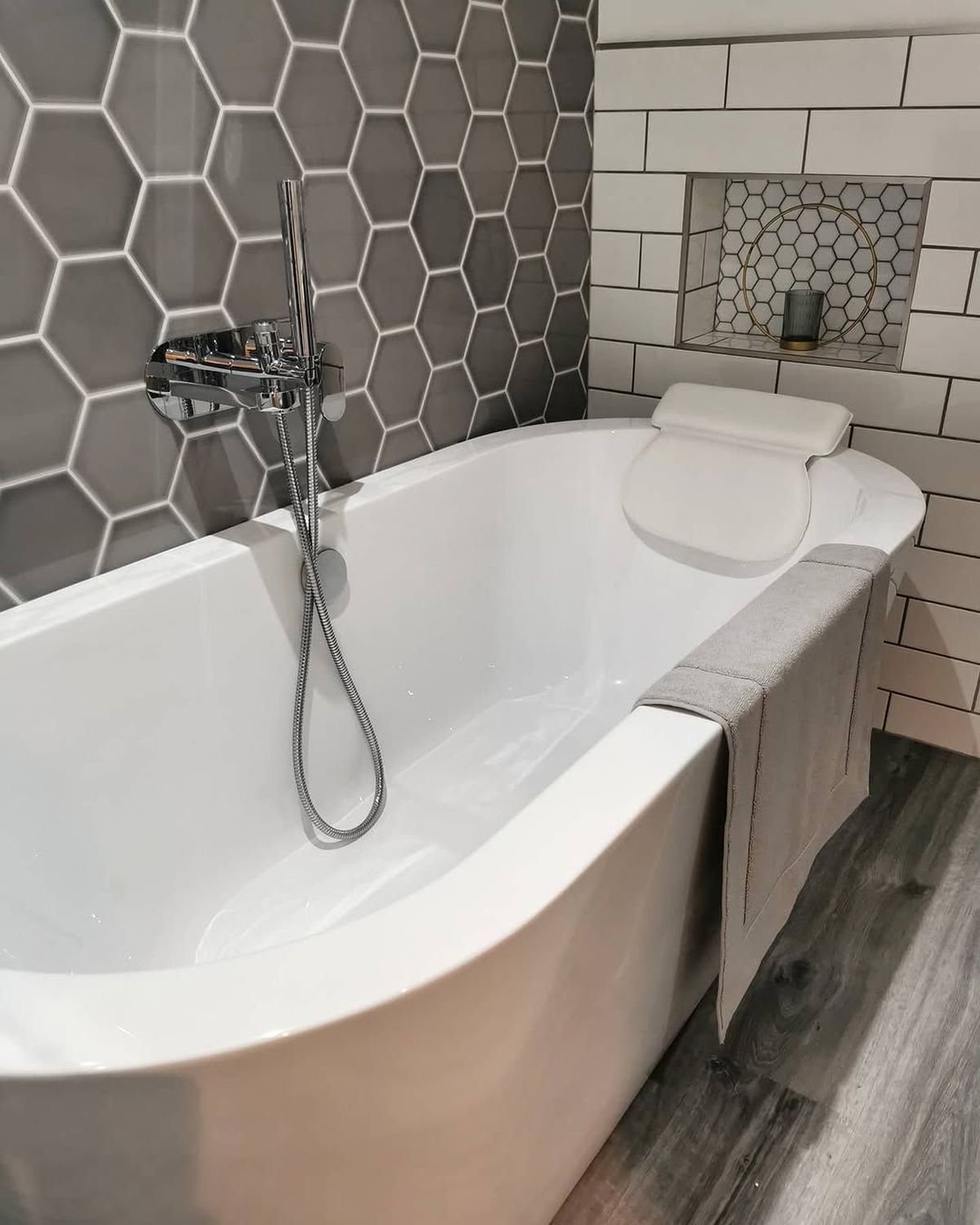
Glossy gray hex tile that adds depth behind the tub

Dark gray hex wall tile color introduces texture through reflection rather than contrast. Light catches the glossy surface differently on each tile, creating movement behind the freestanding tub.
Subway tile balances the distinctive wide hex pattern while gray wood-look flooring keeps the palette connected. The combination looks heavier and more architectural than plain painted walls.