

Want a farmhouse dining room that feels warm without looking cluttered with signs, baskets and distressed furniture? In 2026, farmhouse dining rooms are moving away from overly themed decor and focusing more on proportions, textures and materials that really shape the room.

The dining table becomes heavier and more architectural. Curved wooden legs, oversized tabletops, woven seating and built-in storage create structure rather than relying on small decorative pieces scattered everywhere. Light walls, layered neutrals and soft lighting keep these spaces calm while dark woods and vintage details add contrast where it matters.
This farmhouse dining room shows how the style is changing. Some lean rustic and traditional, others blend farmhouse with modern organic or French-inspired details. The way they combine furniture, lighting and layout makes the dining area feel intentional rather than simply decorated.
A wood farmhouse table with black Windsor chairs and collected wall decor

The bent wood legs instantly give this dining table more presence than a standard farmhouse setup. Instead of relying on oversized decor, the room creates warmth through composition. Woven baskets, layered florals and dark vintage-style cabinets contrast the light walls without overwhelming the space.
I love how the black Windsor chairs sharpen the soft neutral palette. A chandelier also keeps the room from leaning too rustic. It presents a more traditional silhouette that balances the casual farmhouse style around the table.
A two-tone farmhouse table with black chairs and a sunflower centerpiece

White curved legs lighten a heavy tabletop, especially against dark flooring. This type of two-tone farmhouse table keeps the room from feeling visually crowded while holding the larger dining area together.
Black spindle chairs echo the dark accents from the lighting and wall clock, helping to connect the dining area to the open living room outside. I also love how the sunflower arrangement brings height to the center of the table without crowding it.
Rustic farmhouse dining room with built-in hutch and vintage wood chairs

A built-in hutch changes the whole ambiance here. Instead of treating storage as a separate piece of furniture, it becomes part of the wall itself. Open shelves filled with old scales, bowls, pitchers and baskets give the dining room a collected farmhouse feel rather than a stage.
A heavy wood table anchors the room through thickness and tone. Matching spindle-back chairs reinforce the old farmhouse character while light flooring keeps the dark wood from taking over the space.
A farmhouse dining table with white cross-back chairs in an open layout

This dining setup works because the table feels connected to the kitchen rather than detached from it. Soft gray wood tones continue throughout the flooring, cabinetry and tabletops, keeping the open-plan layout calm and coherent.
White cross-back chairs brighten up the dark tabletop and prevent the dining area from blending into the flooring. I also love how the oversized orb chandelier defines the dining zone without the need for walls or ceiling beams.
Dark wood farmhouse table with black Windsor chairs and vintage cabinets

Dark wood tones make this farmhouse dining room feel more grounded and mature compared to lighter farmhouse palettes. The vintage cabinet becomes part of the architecture as it fills the wall vertically and introduces texture through the aged wood and glass.
Black Windsor chairs visually sharpen the room and create a strong contrast against the light walls and shiplap panelling. Layered rugs also help soften dark flooring without competing with furniture.
Farmhouse dining nook with bench seating and woven pendants

Built-in bench seating completely changes how this dining room functions. Instead of needing extra chairs around the perimeter, benches keep the layout compact and make small rooms feel deliberate rather than crowded.
I love how the woven pendant softens the sharp vertical lines from the wall paneling. Pale wood flooring, neutral cushions and simple open shelving keep the farmhouse style understated rather than overloaded with rustic accessories.
A traditional farmhouse dining room with white chairs and paneled walls

Wall molding gives this farmhouse dining room a more formal feel without losing warmth. White chairs and pale walls reflect natural light throughout the room, while a dark wood tabletop keeps the setup from feeling too delicate.
A black chandelier creates contrast in the center and draws attention upwards. I also love how the mirrored wall decor echoes the shape of the chandelier and adds depth to the room without the need for large artwork.
Farmhouse dining room with cane chairs and oversized flower arrangements

This room feels softer than most farmhouse dining spaces because the palette stays almost entirely within warm natural tones. Cane dining chairs, pale wood and textured fabrics create variety through materials rather than strong color contrast.
An oversized floral arrangement becomes a focal point against a paneled white wall. Paired with sculptural pendant lights, the setup feels closer to modern organic design than traditional farmhouse styling.
European farmhouse dining room with rustic wood table and woven pendants

The farmhouse table carries most of the visual weight here with its thick wood top and dark finish. Knitted chairs and layered linen textures soften heavy materials and help the room feel more relaxed.
I love how the woven pendant lights echo the natural texture from the chairs and placemats. The muted cabinetry and warm brick flooring also bring the room closer to European country-house style rather than classic American farmhouse decor.
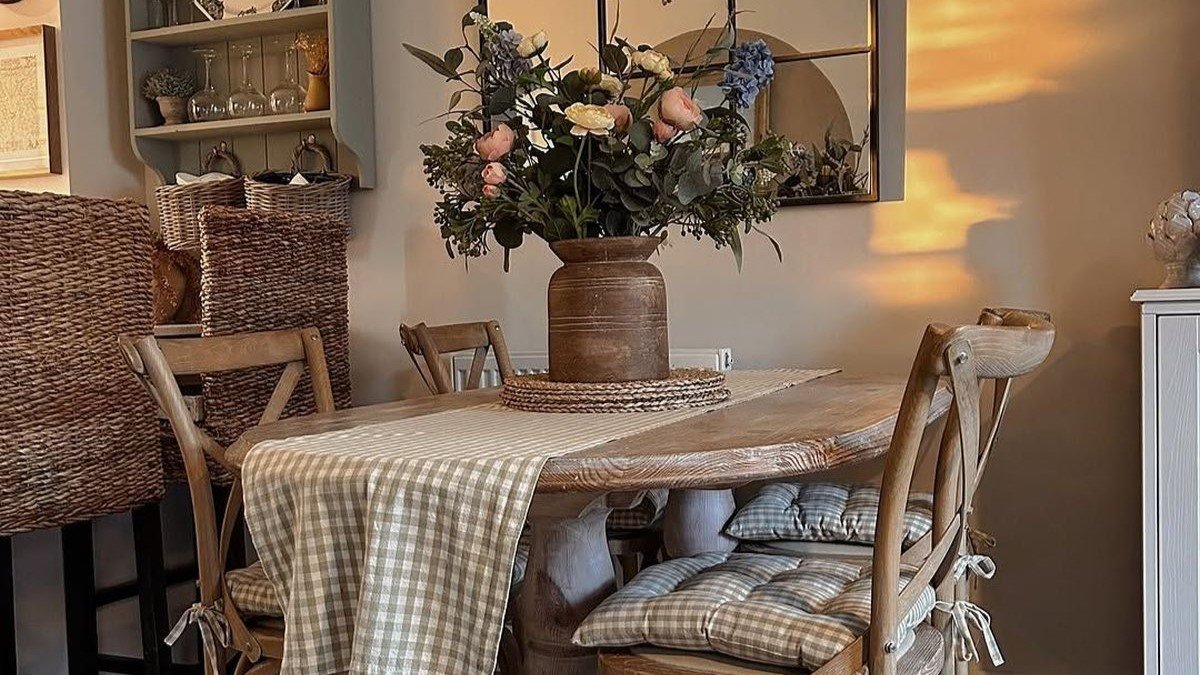
Farmhouse dining area with pedestal table and gingham textile

A pedestal base gives this farmhouse dining table a softer shape than the traditional four-leg version. Combined with curved dining chairs, the room feels more intimate and less austere.
Gingham fabrics, woven baskets and muted wood finishes keep the farmhouse style warm without looking overly themed. A large black framed mirror also reflects light back into the room and makes the small dining area feel more open.
Farmhouse dining room with coffered ceiling and sliding antique doors

The ceiling becomes the strongest design feature in this dining room. Wood inlays within the coffered ceiling add overhead texture and make the dining area feel more architectural before you even notice the furniture.
I love how the antique sliding doors introduce age and character against the clean white shiplap walls. The farmhouse table remains simple, allowing the ceiling treatment and oversized chandelier to carry the room visually.
Farmhouse dining room with bench seating and pale wooden table

This setup feels lighter and calmer than a traditional farmhouse dining room because almost every surface stays within the same pale neutral range. Bench seating also keeps the room casual and improves the flow around a narrow table.
A large floral centerpiece adds scale to a dining table without the need for additional styling pieces. I also love how the round wall mirror softens the straight lines from the shelves and table edges.
Farmhouse dining table with cross-back chairs and layered neutral textures

Turned table legs give this farmhouse dining table more visual detail, without the need for a dark finish or ornate carving. Cross-back chairs and soft linen textures make the room lighter and more relaxed.
Natural light becomes part of the design here. Pale curtains, woven rugs and light wood tones reflect sunlight throughout the room, helping the farmhouse style feel fresh rather than overly rustic.
French farmhouse dining room with upholstered chairs and distressed hutch

A distressed hutch instantly gives the room a layered farmhouse character. Instead of matching everything perfectly, the space mixes carved details, soft upholstery, woven textures and dull finishes that accumulate over time.
I love how the chandelier adds softness through beaded detailing instead of heavy metal framing. Combined with muted wood flooring and an oversized table centerpiece, the room feels closer to French farmhouse style than modern farmhouse minimalism.
Farmhouse dining area with mixed seating and oversized black lighting

This farmhouse dining setup feels connected to the kitchen rather than separate from it. A long rectangular table sits directly between the living and cooking areas, keeping the entire layout open and social. Large black linear lighting above the table creates a strong frame that visually anchors the dining area without the need for walls or heavy architectural dividers.
I love how the room mixes chair styles instead of matching everything exactly. Woven end chairs add texture and warmth, while light cross-back chairs keep the center of the room bright and less heavy. A patterned rug also helps define the dining space against the wooden flooring, placing the table deliberately within the large open-plan layout.



