

Dreaming of a coastal home that feels calm and collected rather than overflowing with obvious beach decor? In 2026, coastal interiors are moving towards brighter spaces shaped by soft textures, pale layered colors, woven materials, weathered wood and natural light.

The shift is less about anchors and seashell icons and more about atmosphere. White walls, linen fabrics, wicker lighting, muted blues, sandy tones, vintage coastal accents and soft architectural details now define the style. The rooms feel open, airy and connected with natural materials without looking themed.
These coastal decorating ideas show how to create that relaxed look through texture, lighting, furniture, layered neutrals, and subtle ocean-inspired color in kitchens, bedrooms, bathrooms, dining rooms, and living spaces.
A wicker vase with citrus branches on a bright coastal kitchen island

A woven vase introduces natural texture against a polished stone island and white cabinetry. Citrus branches add color without overpowering the neutral palette, while brass pendants warm up the bright room.
This coastal look relies on balancing crisp white surfaces with woven materials, greenery and soft natural accents. Keep the style open and avoid clutter so that the island remains part of the airy layout.
Pale blue fireplace wall with vertical paneling and driftwood texture

Light blue paneling extends to the vaulted ceiling and makes the room feel taller. A rough wood coffee table and woven baskets bring a weathered texture that fits into a coastal interior without looking themed.
This style combines washed out colors, soft fabrics and raw natural materials. White walls and ceiling boards help bounce light throughout the room.
A sculptural white mirror frame inspired by coral forms

A textured mirror frame becomes the focal point of a soft white bathroom interior. Mosaic tile behind the mirror adds depth while chrome fixtures keep the palette clean and minimal.
To recreate this style, use organic decorative shapes instead of obvious nautical objects. White-on-white layering makes a coastal bathroom feel calm and bright.
A collection of vintage sailing decor layered in coastal corners

Model ships, framed ocean artwork, weather books and bamboo furniture create a lively nautical display rather than a staged arrangement. The striped ladder detail presents a stronger contrast against the decor.
This look comes from mixing vintage maritime pieces with aged wood and woven textures. Coastal interiors look more authentic when accessories are gathered over time.
An oversized woven pendant that anchors a coastal breakfast area

A wicker pendant draws attention upwards and softens the white paneled ceiling. Woven chairs and pale wood flooring continue the light texture palette throughout the room.
This coastal style works best with natural materials repeated at different scales. A large woven light fixture creates a stronger impact than many smaller accessories.
A white coastal living room with pale wood and woven layers

Soft white seating, pale wood tones, woven textures and large windows keep the room flooded with natural light. Woven pendants and textured rugs keep the space from feeling flat.
To achieve this style, layer linen upholstery, pale woods, wicker details and neutral fabrics instead of relying on strong colors.
Coastal dining table with shell pattern and seafoam accents

Shell-inspired plates, woven chargers and pale aqua glassware create a coastal tablescape without being overly decorative. White hydrangeas keep the arrangement soft and balanced.
This look relies on a restrained color. Soft blues, sandy textures and white ceramics create a light coastal palette that still feels elegant.
A statement mirror woven with soft blue ceramics

An oversized woven mirror introduces texture while a pale blue lamp softens the neutral palette. The room stays bright because the accessories stay light in tone and natural in materials.
This style can be recreated with layered woven embellishments, muted coastal colors and soft fabric textures instead of glossy finishes.
A vaulted coastal bedroom with woven lighting and pale wallpaper

A woven pendant breaks up the texture of the white ceiling while the pale textured wall behind the bed presents a subtle contrast. Upholstered furniture and soft bedding keep the room relaxed.
A coastal bedroom works best when the palette is muted. Light blue-grey tones, natural fibers and layered white help maintain an airy atmosphere.
A coastal dining nook with woven textures and soft linen tones

Woven pendants and wicker dining chairs warm up the otherwise white room. Light wood flooring and soft linen fabrics keep the space visually open.
This look relies more on texture than color. Wicker, washed wood and soft white fabrics create a relaxed coastal feel.
A blue coastal stool that adds contrast to a white kitchen

Blue stools create a sharp coastal accent against white cabinetry and warm wood flooring. Glass cabinet doors and polished surfaces help reflect light into the room.
To achieve this style, keep the room mostly neutral and introduce blue through small pieces of furniture or textiles.
A sage green vanity paired with warm brass accents

A sage vanity softens the bathroom while brass mirrors and fixtures add warmth against the white walls. Pale floor tile continues the muted coastal palette.
This style works by combining soft ocean-inspired colors with warm metallic details and minimal countertop styling.
Coastal bedroom furnished with plantation shutters and pale blue fabrics

White shutters create architectural detail while pale blue rugs and pillows introduce a subtle beach color. The room feels open because the palette is light from floor to ceiling.
This look can be achieved with white furniture, pale fabrics and layered neutral bedding.
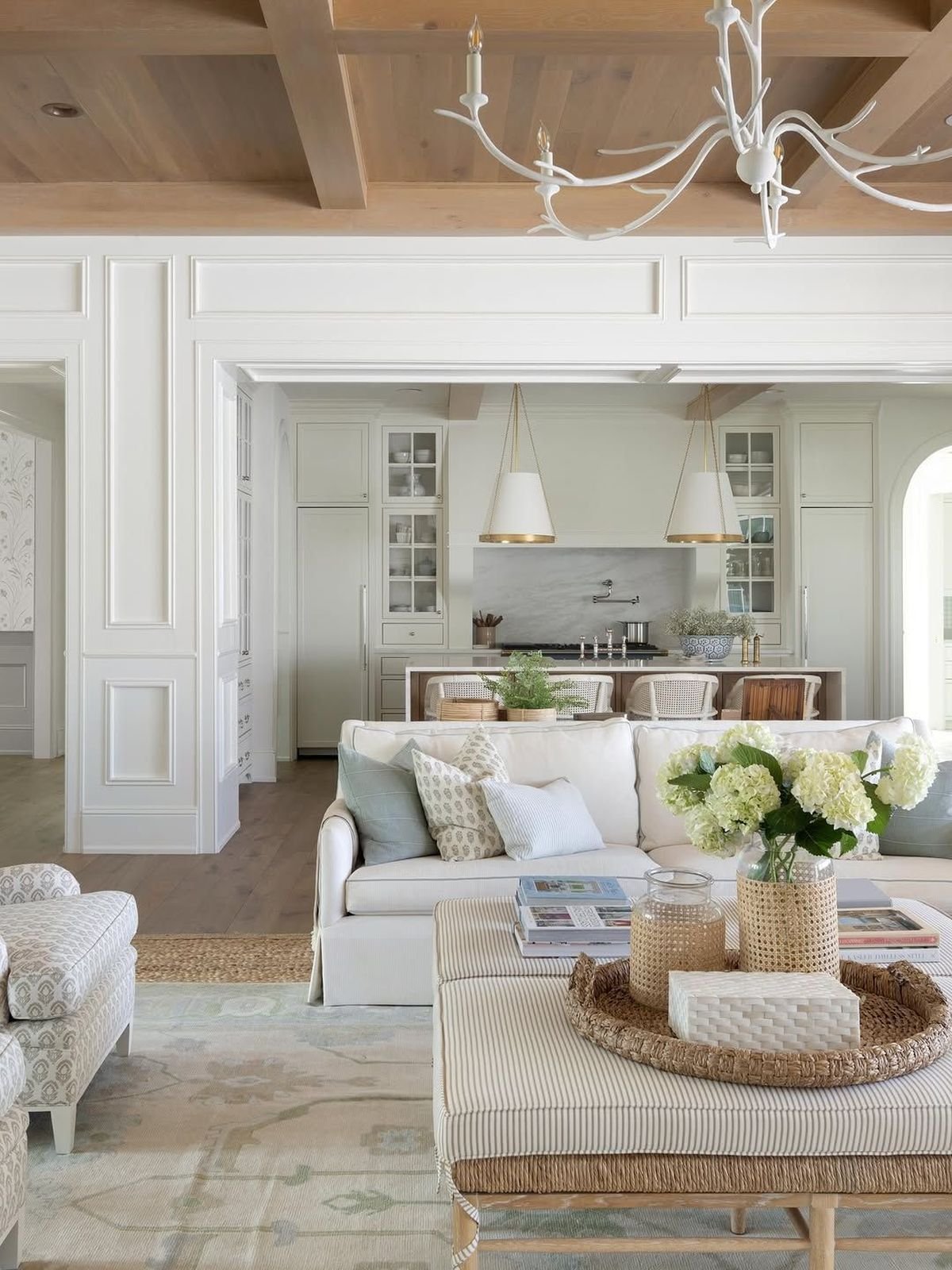
Open up a coastal living room with layered woven and linen textures

Woven trays, pale upholstery, natural wood beams and soft greenery connect the living room with the bright kitchen behind it. The room remains harmonious as the materials are repeated in the open layout.
This coastal style structure depends on continuity. Linen, wicker, light oak and muted greenery help make large spaces feel relaxed rather than formal.
A navy island that creates a bright coastal kitchen

The navy island creates a contrast against the white cabinetry while the woven stools soften the dark base color. Globe pendants and beadboard ceiling panels reinforce the coastal architecture.
The design balances a crisp white finish with a darker coastal anchor tone. Navy works well because it adds structure to a room without feeling overwhelming.



