

Want a backyard that stops turning into mud every time it rains? In 2026, low spots will no longer be patched with grass that never grows properly. They are reshaped into dry riverbeds that move water, define the layout and give the yard a clear structure.

The change here is not decoration but function. Instead of hiding the drainage underground, these setups bring it to the surface and make it a visible part of the design. Stone channels, gravel beds and stone borders guide water into the yard while keeping the surface stable and usable.
Each example shows how the problem area becomes the element that organizes the entire space. The flow of water sets the direction, the material defines the edges, and the result feels intentional even when dry.
1. A gravel channel between fence lines creates a controlled drainage path

This setup turns a narrow side yard into a drainage corridor that handles runoff without turning the lot into a mudslide. A gravel base interspersed with large stones directs water from the center while keeping the edges stable, and the slight slope ensures that runoff flows away from the structure rather than pooling near the foundation.
It turns out how the layout uses structure rather than planting to solve the problem. Clean edges, mixed stone sizes and open channels keep maintenance low while still giving the space a finished look that doesn’t look like the rest of the yard space.
2. Natural rock dry creek beds that blend into the planting zone

This dry river bed uses mixed river rock to create a natural flow that appears to belong to the landscape rather than being added later. Irregular stone sizes slow the movement of water, while surrounding plants soften the edges and absorb overflow during heavy rains.
The design works because it integrates drainage into the planting layout rather than separating the two. The bed becomes part of the garden structure, not a technical improvement, and continues to look perfect even when it dries out.
3. Curved gravel paths with stepping stones that double as drainage

This layout combines circulation and drainage in one move by shaping a gravel path into a shallow channel. Stepping stones allow movement across the space while the gravel base manages water flow, preventing pooling along the walkway.
Curves break up the rigid backyard layout and guide both movement and flow. It eliminates the need for separate drainage solutions and keeps the garden usable even after heavy rains.
4. Front yard dry creek with boulders that replace lawn problem areas

Instead of trying to maintain grass in a low location, this front yard uses dry creek beds to redirect water through the landscape. Large boulders anchor the layout and create variation in the flow, while the channel moves water away from the house.
The result turns the front yard from maintenance-heavy to controlled. The creek bed becomes a central element that defines the layout, rather than a patch of grass that never performs well.
5. White stone drainage bed designed for high water volume

The design uses large white stones to control strong runoff and prevent soil erosion in a forested setting. The depth and width of the bed allows it to handle heavy water flows without clogging, and the bright stone makes the channel easy to read across the landscape.
It serves as a structural solution rather than a decoration. Scale and choice of materials show that the space is designed to control volume, not just light drainage.
6. River bed with wooden bridge connecting both sides

This setup turns a drainage feature into a functional landscape element by adding a small bridge across the channel. The white gravel center directs water, while the dark stone edges keep the shape intact and prevent spillage.
Resolves bridge access by keeping the channel constant. It allows the yard to stay connected without hindering how water moves through the space.
7. Garden creek bed integrated into seating area layout

The design follows a dry creek bed through a planted seating zone, using rocks and stones to define the flow without detracting from the feature. A channel runs through the center of the space, guiding water while allowing the area to function for use.
It works because the drainage feature becomes part of the experience, not something hidden away. The layout shows how problem areas can structure the yard rather than limit it.
8. Compact rock basins for local drainage control

Here, a small gravel basin collects water from surrounding surfaces and allows it to slowly flow into the ground. The included shape keeps the solution focused, making it effective for smaller problem spots like patio edges or lower corners.
Simplicity is strength. It avoids major interventions and still fixes the problem, while the stone finish keeps the area consistent with the rest of the yard.
9. Narrow gravel channel with deck edge control runoff

This layout uses a thin gravel channel to direct water near the deck, preventing pooling along the structure. The border keeps the gravel contained, while the depth allows water to move without spilling into adjacent planting areas.
It keeps the deck usable and protects the foundation from water damage. The solution remains subtle but solves common edge conditions that are often overlooked.
10. Walk through a sloping yard in a dry creek bed

The design follows the natural slope of the yard, using winding stone channels to channel water downhill. A mix of large and small rocks slows the flow and reduces erosion, while surrounding plantings absorb excess moisture.
The shape is not random. It directs water in a controlled path while visually breaking the slope, turning the problem into a defining feature of the yard.
11. A structured gravel drainage channel in a woodland setting

The channel uses consistent stone sizes and clear edges to create a controlled drainage line through the forested landscape. The layout keeps the water flowing in one direction avoiding spreading into the surrounding soil.
The clean structure contrasts with the natural setting and makes the function clear. It reads as a deliberate element rather than an improvised fix.
12. Front yard creek bed that replaces lawn strip near entry

Instead of maintaining a narrow lawn strip that struggles with water, this front yard uses a stone channel to lead away from the entrance. Edging keeps the form consistent, while small plantings soften the transition to grass.
It solves both appearance and performance. The entrance looks cleaner, and the water problem disappears without adding hidden systems.
13. A dry river bed passing through a flower garden

This layout integrates drainage paths directly into the dense planting scheme. A gravel bed runs through the center, allowing water to move while the plants on either side benefit from improved drainage.
The contrast between stone and foliage creates depth. This feature remains visible without influencing the planting design.
14. Stone channel with raised edges for better flow control

The design uses large stones along the edges to accommodate small river rocks in the middle, creating a stable channel that holds its shape over time. Raised edges prevent overflow and keep water within the intended path.
The structure simplifies maintenance and keeps the facility consistent. It avoids the common problem where gravel spills into surrounding areas.
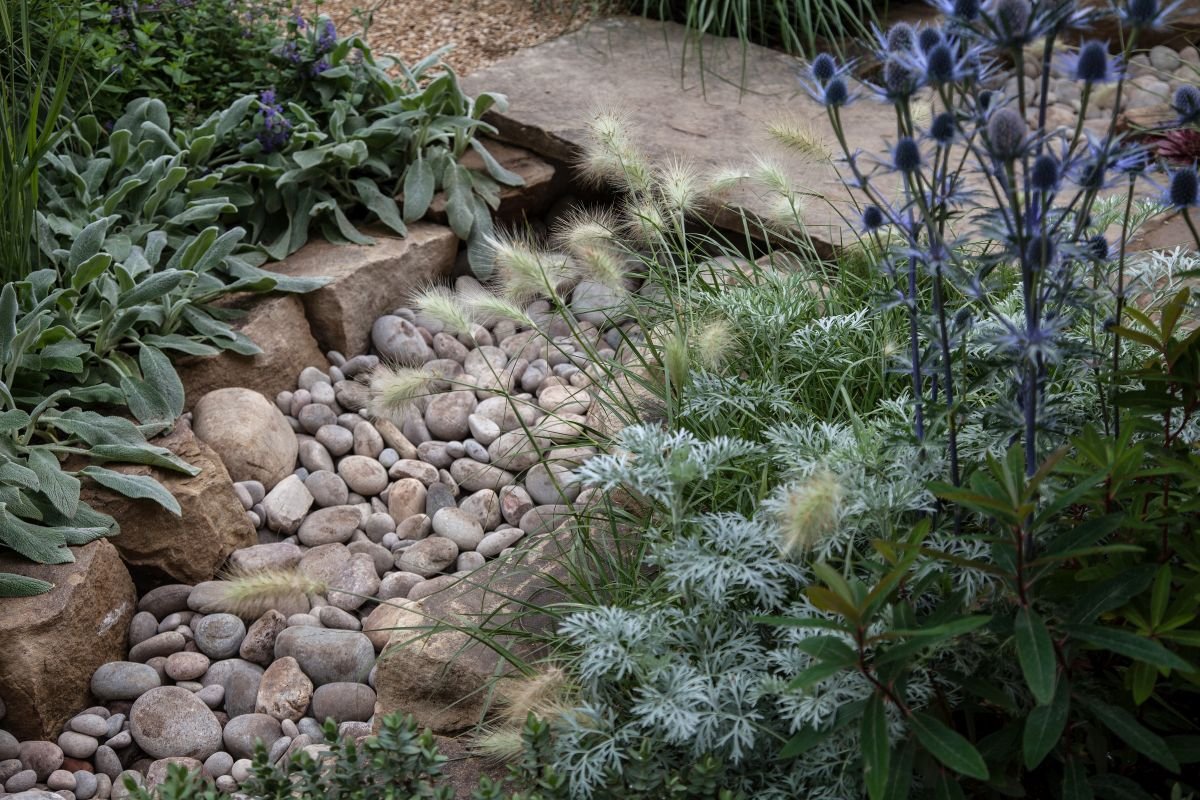
15. Layered stone channel framed by dense planting softening drainage edges

In this dry river bed, rounded river stones between large, flat rocks are used to create a clear waterway without harsh transitions. The channel sits in a slight recess, allowing runoff to collect and move to the center while the surrounding soil remains stable and useful.
What makes this setup work is the planting strategy around it. Dense, textured foliage closes the gap between hard rock and soft soil, so the drainage feature blends into the garden rather than standing out. The result reads as part of a planting design, not just a wet spot solution.



