
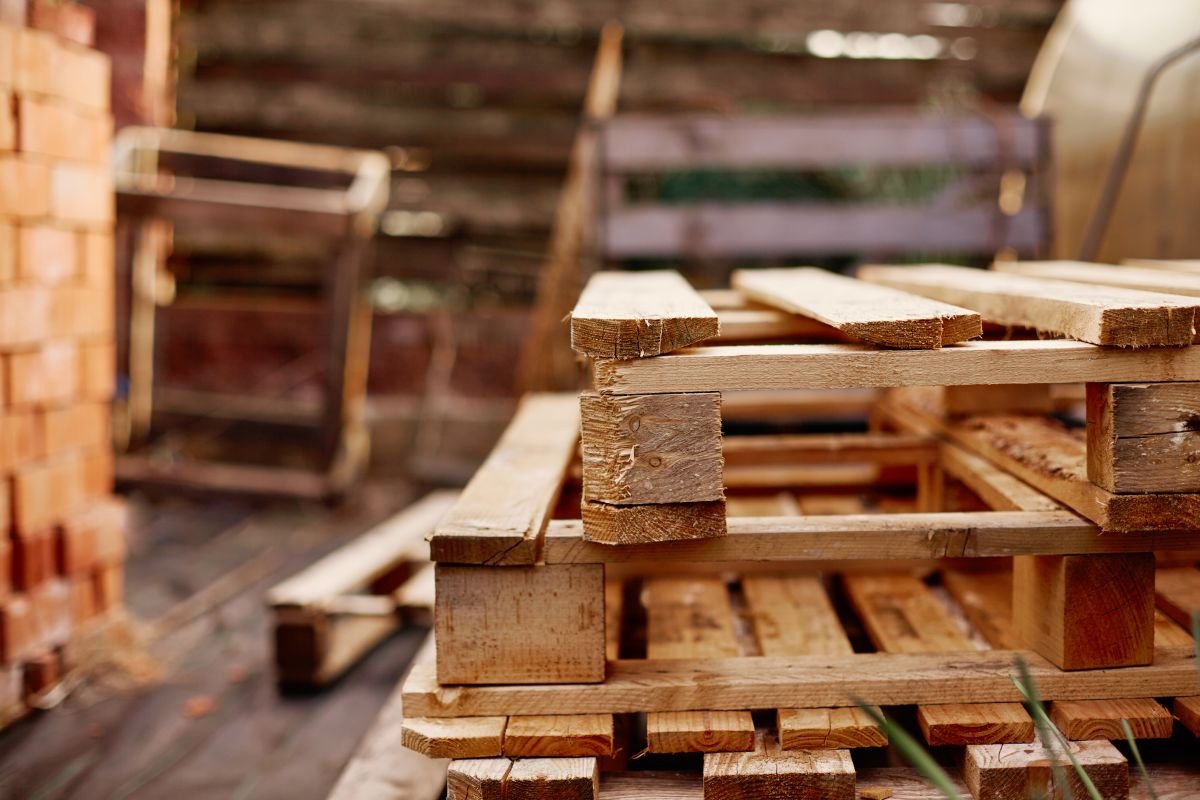

Wood pallets are often stacked in garages or thrown away after delivery. Most people see them as scrap wood, but their structure already creates useful sections. Instead of breaking the pallets entirely, this project modifies the frame and turns it into a vertical vegetable garden.

The idea is simple: a pallet becomes a planter.
How a pallet herb garden works
Pallets act as vertical frames with built-in rows for planting.
The design consists of three main parts:
- A pallet frame that supports the structure
- Modified rows that hold the soil
- A lined interior that keeps everything contained
Because the pallets already have spacing between the boards, the layout requires only minor adjustments.
Easy build process
This The project uses the full palette and reshapes it into planting layers.
- Remove the selected slats – take out the inner boards to open up the space and define where the planting rows will sit.
- Restoring and securing boards – attach boards horizontally to create a clear planting layer and close the leading edges.
- Create a bottom support for each row – add or keep a lower board so that each section can hold the soil without falling.
- Reinforce the structure – Once filled, secure all joints with nails or screws to keep the frame stable.
- Apply paint or finish – coat the wood to protect it from moisture and visually define the rows.
- Line each section – add a plastic liner inside each row to hold the soil and prevent leakage.
- Fill with soil – add potting mix to each row section, pressing it evenly across the rows.
- Plant Herbs – Insert basil, thyme, parsley and rosemary into each layer.

Where this type of garden works best
Because the structure is vertical, the pallet does not take up much ground space. This makes it perfect for areas where traditional garden beds won’t fit.
It can be placed:
- Against the outer wall
- On the balcony or terrace
- In small backyards with limited planting space
- Near the kitchen door for quick access
The upright format keeps everything visible and within reach, making daily use easier than ground-level planting.

What can you grow in each row?
The shallow depth of each section works best with plants that don’t need deep roots.
Good options include:
- Herbs like basil, thyme, parsley, and rosemary
- Leafy greens such as lettuce or spinach
- Small companion plants or flowers
Each row can hold a different type of plant, making it easy to arrange and rotate depending on the season.

Why Vertical Pallet Gardens Work
A vertical garden solves two common problems: lack of space and lack of structure.
They allow multiple plants to grow in a compact footprint while keeping everything organized. Pallet frames already create separation between rows, so plants don’t compete for the same space as in flat beds.
With proper watering and placement, the structure supports continuous use without requiring a large garden area.



