

Cabinet design in 2026 is moving beyond the idea that everything should look perfect on the outside. What is changing happens behind the doors. More builds are starting to prioritize structure, ease of installation and long-term performance rather than just finish.

Plywood and MDF still dominate cabinet construction, but they are no longer considered interchangeable. Each solves a different problem. This change comes from understanding where each material works best and where it starts to cause problems.
Understanding the Core Difference
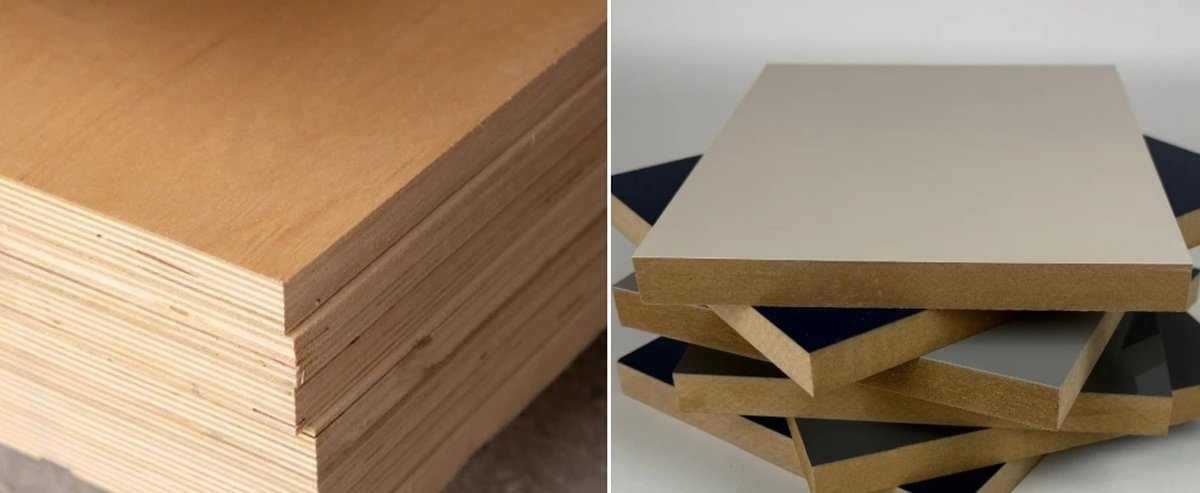
Plywood is made from thin layers of wood, glued together with alternating grain directions. That cross-layered structure gives it strength and resistance to movement.
MDF is made from compressed wood fibers mixed with resin. The result is a dense, uniform panel with no grain and no internal layers.
Both can be used in cabinets. The difference is visible after cutting, fastening and long-term use.

That’s where plywood makes more sense
Plywood is used for cabinet boxes, shelves and load-bearing parts because it handles stress better.
It grips screws more confidently, especially along edges. When cabinets are mounted, adjusted or filled with weight, that strength becomes important. Installers also prefer plywood because it allows more margin during assembly.
For the interior, many prefer Prefinished cabinet-grade plywood. It’s ready to use, which eliminates sanding and finishing the inside of the cabinet and keeps everything consistent.
Another advantage is weight. Plywood is lighter than MDF, which helps when moving full sheets or installing upper cabinets.

Where MDF has an advantage
MDF stands out when a smooth, even surface is the priority.
That is why it is used for painted cabinet doors, trim panels and decorative elements. Without grain, the paint sits evenly with no variation.
It also cuts cleanly with smooth edges and no splintering. It makes it ideal for detailed profiles or routed designs.
But MDF has limitations. The screw holding power is low, especially after repeated adjustments. Fasteners may loosen if over-tightened.
Humidity is another concern. MDF absorbs water and can swell, making it a poor choice in areas with spills or high humidity.
Installation differences that are important on site
This is where the choice becomes clear.
Plywood can show small variations from sheet to sheet, which needs attention during layout. In turn, it gives strength and reliability during mounting.
MDF remains consistent throughout each panel. Everything is clean, but heavy and can damage edges if not handled with care.
For cabinet boxes, plywood reduces risk during installation. There is less flex, stronger fastening and more confidence when securing the walls.
MDF works best where finish is more important than structure.

Cost vs Long Term Value
MDF costs less initially, making it attractive for larger builds.
Plywood costs more, especially higher grades. But it tends to reduce problems over time. Fewer adjustments, stronger joints and better performance under load.
For many shops, the real question is not the cost per sheet, but how many problems appear after installation.

What most shops actually use
In real projects, the answer is not a material.
Most builds combine both:
- Plywood for cabinet boxes and structural parts
- MDF for doors, panels and painted surfaces
This approach uses each material where it performs best rather than forcing it to handle everything.
So, what works better?
There is no single winner.
For strength, durability and easy installation, plywood comes out ahead.
For smooth painted finishes and detailed surfaces, MDF takes the lead.
The difference is not about choice. It’s about using the right materials in the right place so that the entire cabinet performs as expected over time.



