
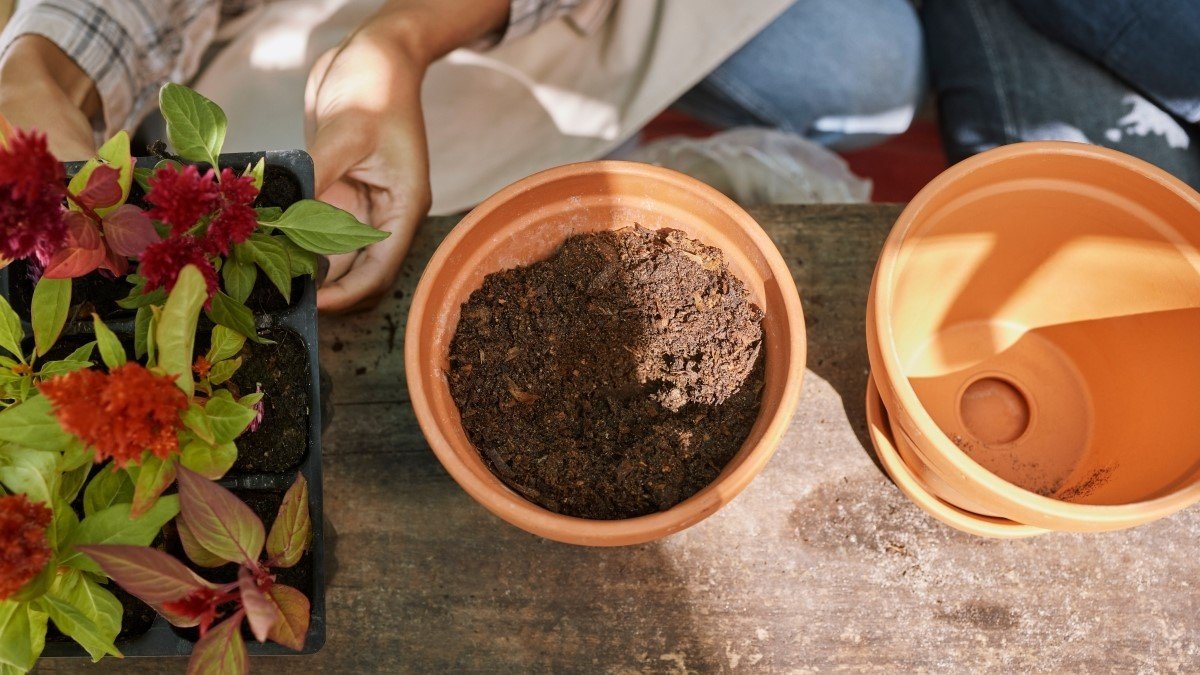

For years, I filled each planter the same way. Potting soil from top to bottom. It felt right, even if it added cost, weight and excess moisture.
Once I saw how plants grow, that approach stopped making sense. Most of the roots remain near the top. The lower section often contains excess water and adds weight without helping growth. That’s where I started testing the options.
The shift came quickly. Kitchen scraps can replace part of the bottom layer without affecting the plant. In many cases, they improve drainage and reduce weight.

What I do first every time
I never add the scraps directly to the planter without checking. Wet materials break down very quickly and retain moisture. I let everything dry or use a small amount depending on the material.
If the base layer remains wet, the entire setup fails.
I also separate the layers. The top section contains the potting soil where the roots grow. Scraps stay on the bottom, not mixed in.
Peanut shells have changed how I fill large pots
Peanut shells became the first replacement. They are light and create air gaps that allow water to pass through. This solved the main problem of water.
I fill about a third to half of the pot with shells, then add soil. The roots remain in the upper layer, while the base supports drainage and reduces soil use.
Pots are easy to move, and water drains quickly. I also stop using clay where it has no purpose.
I avoid salted shells, and I consider this layer only as a supplement, not a fertilizer.

Eggshells work better in small amounts
Eggshells do not work as a perfect base layer. I crush them and add a thin layer or mix them to the bottom.
They break down over time and improve air flow in dense soils. When well crushed, they help prevent compaction.
I also put a small amount near the surface for some plants. They support the soil, not replace it.

Coffee grounds taught me what not to do
Coffee grounds require control. I never use them wet and never in thick layers.
When over-applied, they hold moisture and compact the soil. It leads to poor drainage and risk of mold.
I stopped using them as filler. I compost them or use very small amounts in well-draining soil.
They have value, but not as a base layer.

Other Scraps That Really Work
Some materials work well because they hold shape and allow water to pass through.
- Pinecones or dried plant debris – hold air space and don’t break down quickly
- Pieces of cork or wine cork – reduce weight and resist moisture
- Broken terracotta or ceramic shards – create gaps that improve drainage
- Layers of cardboard or paper – fill space and break down over time
Each works for the same reason. They take up space without trapping water.
What surprised me the most
Water control and weight changes were observed. Water stopped accumulating at the bottom, and the top layer remained usable.
Larger pots made it easier to move, and I used less soil without affecting growth.
what do i do now
I no longer just fill the plants with soil. I start with a base layer that allows water to pass through, then add soil where the roots grow.
The peanut shells go into a large pot. Eggshells are used sparingly. Coffee grounds go into compost.
Setup remains simple and works better than filling the entire pot with soil.



