
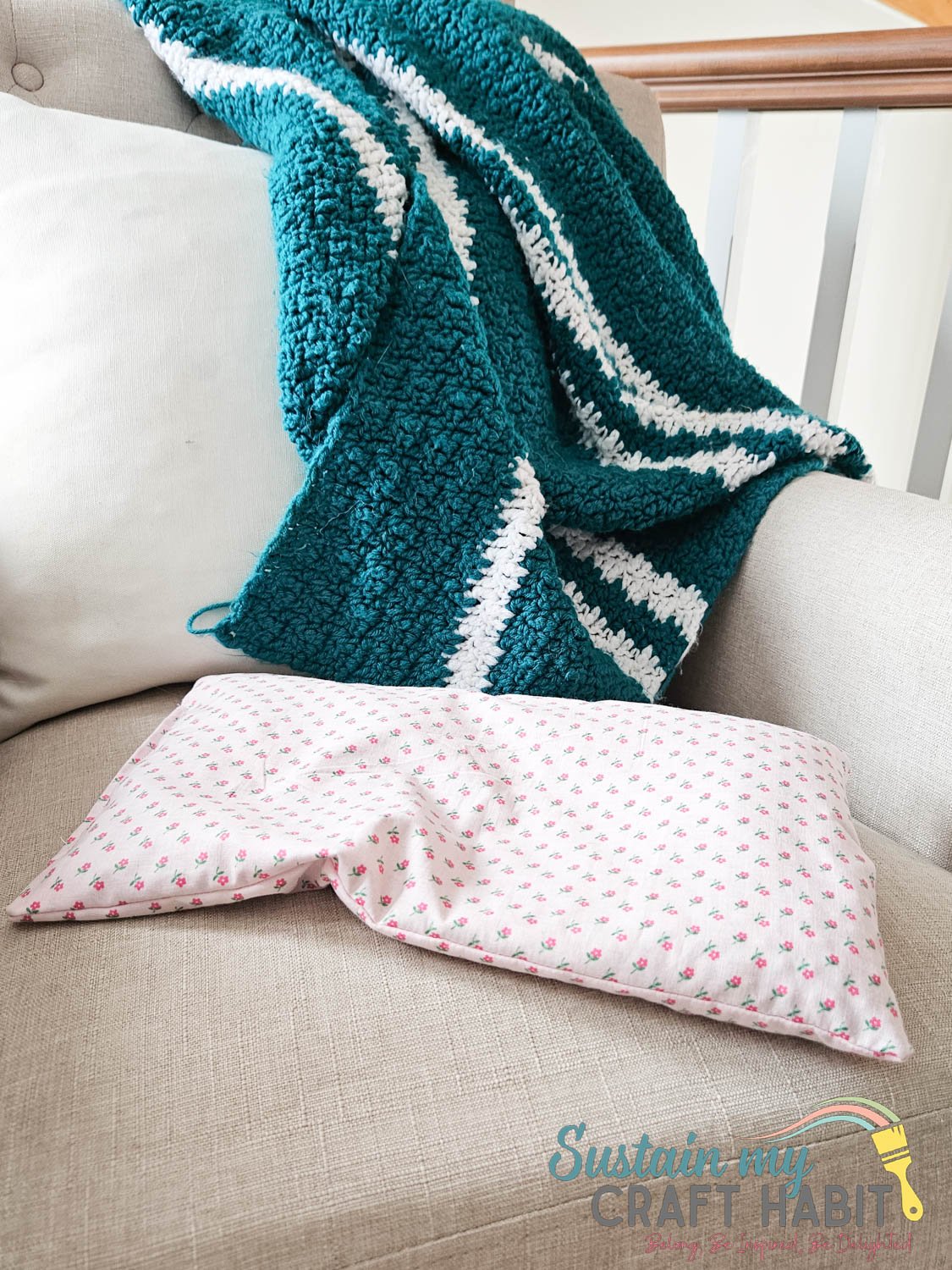

Some days it feels like we carry the weight of the world on our shoulders (or my back). Whether it’s a stiff neck from a long day at the computer, a sore back from gardening or just the winter chill settling into your bones, there’s nothing like the weight of a warm heat bag.
A DIY therapeutic heat bag is simple to make and yet really useful and has honestly become a staple in my self-care routine.

Why You’ll Love DIY Therapeutic Heat Bags
- No fancy tools or expensive fabric needed – just a few basic naturals, materials and a little time.
- They’re eco-friendly, budget-friendly, and infinitely more aesthetically pleasing than anything you’ll find at the drugstore.
- A quick sewing project that’s perfect for beginners!
- A thoughtful handmade gift for anyone in need of pain relief. Download our free printable that says ‘Heat with Love’ to prepare a bag for gift giving.
- Fully customizable with different fabrics, sizes and fillings – see below for a list of options to choose from
Once you make one, you’ll want a few more as cozy home items year-round (even my teenage daughter has a few of her own to use).
In this guide, I’ll take you through the process step-by-step, with several natural filler options and helpful tips to ensure your heat bag is safe, long-lasting and looks great. Let’s get started!
Let’s keep in touch! Subscribe For our latest sewing patterns, tutorials and tips.
Materials needed
- Use fabric made from 100% natural fibers such as 100% cotton, linen or hemp fabric
- Why natural fibers? Because synthetic fibers (such as polyester, nylon, or “poly-blend”) can melt or even spark in a microwave, creating a fire hazard.
- Sewing machine and matching 100% cotton thread
- Fabric scissors
- 6 cups filling (we used dried cherry pits other options include cooked rice, flaxseed, whole corn or wheat berries – see below for more information on the best heat bag filler to use)

How to make a heat bag
Cut 2 rectangular pieces of fabric 8” high x 15” wide.

In my case, my fabric felt a bit thin (or light) so I doubled the fabric to give it more weight and durability.
With right sides facing, I sewed the layers with a 1″ seam allowance. But you can do the standard ½” seam allowance if you prefer.

Leave a 2” gap opening on one side.

Turn the piece right side out and then stuff the inside with dried cherry pits (or whatever filling you have).


Stitch the opening closed with an edgestitch. Be sure to backstitch at the beginning and end of your stitches to prevent the threads from tangling.


Heating instructions
Microwave power varies, so always start with less time and increase in small increments.
- Initial heat: Start with 60 seconds.
- Shake and rotate: Remove the bag, shake the contents to redistribute the heat and feel for “hot spots”.
- Extra Time: If necessary, heat 30-second bursts until it reaches your desired temperature.
- Maximum Time: Never too much 3 minutes Total for a standard size bag.
Pro tip: Place a small, microwave-safe cup of water in the microwave next to your heat bag. This adds a touch of moisture to the air, preventing natural fillers (such as cherry pits or hemp) from drying out or burning over time.
Safety precautions
- Never leave unattended: Always stay close to the microwave when heating.
- Check before use: Always test the bag on the inside of your wrist before placing it on sensitive areas on the face or baby.
- Avoid overheating: If you smell anything burnt or “toasty”, stop heating immediately and let the bag cool completely on a non-flammable surface.
- Age of Users: Do not use heat bags on infants or individuals who cannot move themselves if the bag becomes too hot.

Heat bag size options
You can make different sizes depending on how you plan to use it:
- Small squares for hand or pocket
- Long rectangles for neck and shoulders
- Large square shaped bag for back pain relief or stomach pain relief
Heat bag filling options
As mentioned above, there are many natural heat bag filler options with different benefits depending on your preferences.

Also, consider adding dried lavender buds or eucalyptus leaves to the filler for a spa-like aromatherapy DIY.
Regardless of the filler you choose, make sure everything is completely dry before filling to prevent moisture problems.
Sewing and durability tips
Double stitching your seams helps prevent leaks over time. If you are making a long heat bag, consider sewing channels (straight lines on the bag) to keep the filling evenly distributed.

Adding health and wellness to your home with a DIY heat bag
Once you learn how to sew a DIY heat bag, it’s the kind of project you’ll come back to again and again. It is quick, practical and easy to customize for different needs or seasons.
Try a few variations, experiment with fabrics and create a set for your home or as a gift. If you enjoyed this project, save or pin it so you have it ready for your next sewing session.
More self care DIY at home

Join our crafting community To find more nature-inspired DIY and upcycled craft ideas. It feels good to reuse, upcycle and create with nature!
like? Pin it for later!

How to sew a heat bag
Learn how to sew a reusable, all-natural heat bag and discover the best natural fillers blends for a truly therapeutic experience.
- 100% Cotton woven Medium weight (such as poplin or other tightly woven fabric)
- Sewing machine and matching thread
- Fabric scissors
- 6 Cup to fill such as dried cherry pits, uncooked rice, flaxseed, whole corn or wheat berries
-
Cut 2 rectangular pieces of fabric 8” high x 15” wide.
-
In my case, my fabric felt a bit thin (or light) so I doubled the fabric to give it more weight and durability. So in other words, I cut 4 rectangular pieces instead of 2.
-
With right sides facing, I sewed the layers with a 1″ seam allowance. But you can do a ½” seam allowance if you prefer.
-
Leave a 2” gap opening on one side.
-
Turn the piece right side out and then stuff the inside with dried cherry pits (or whatever filling you have).
-
Stitch the opening closed with an edgestitch. Be sure to backstitch at the beginning and end of your stitches to prevent the threads from tangling.
-
Heat in microwave on high for 2 minutes.



