


While the trails usually climb towards the view, this one goes into the dark instead. A reversal is the thrill of underground tourism in Arizona.
A conduit carved by molten lava snakes about three-quarters of a mile down. The air gets close to freezing in a matter of minutes, so a jacket is important even in July.
Deeper, the darkness grows so your own hands disappear.
Headlamps become the whole world, and footfalls echo off ancient rocks. First-timers and experienced hikers alike get a jolt of surprise.
Because it’s hidden beneath the forest floor, the crowds thin out quickly. A few hikes send you deeper instead of higher.
How are lava tubes formed?
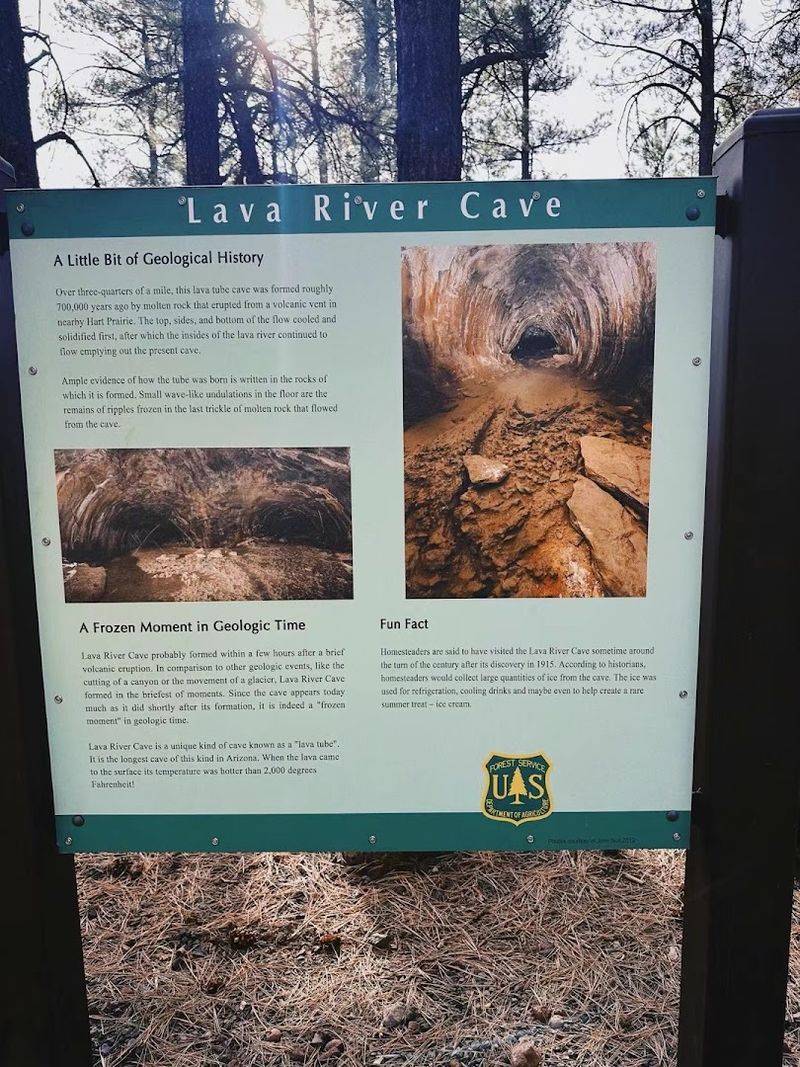
About 675,000 years ago, something extraordinary happened beneath what is now northern Arizona.
A huge flow of lava swirled across the ground and as the outer edges cooled and hardened, the molten rock within moved forward. Eventually, the lava erupted completely, leaving behind a hollow tube of rock.
That tube is a lava river cave. The geology inside tells the whole story if you know what to look for.
Current ripples line the walls like standing waves. Lavacicle formations stop at places where lava once dripped and cooled in mid-motion.
Cooling cracks run along the roof in long, jagged lines.
At its peak, lava flows through this channel at 2,000 degrees Fahrenheit. Standing inside today, with temperatures near freezing, it seems almost impossible to picture that history.
The contrast between then and now is part of what makes this place so mind-blowing to explore in peace. The cave sits near Flagstaff, managed by the Coconino National Forest, and can be found at 171B Forest Rd, Flagstaff, AZ 86001.
Getting there is part of the fun
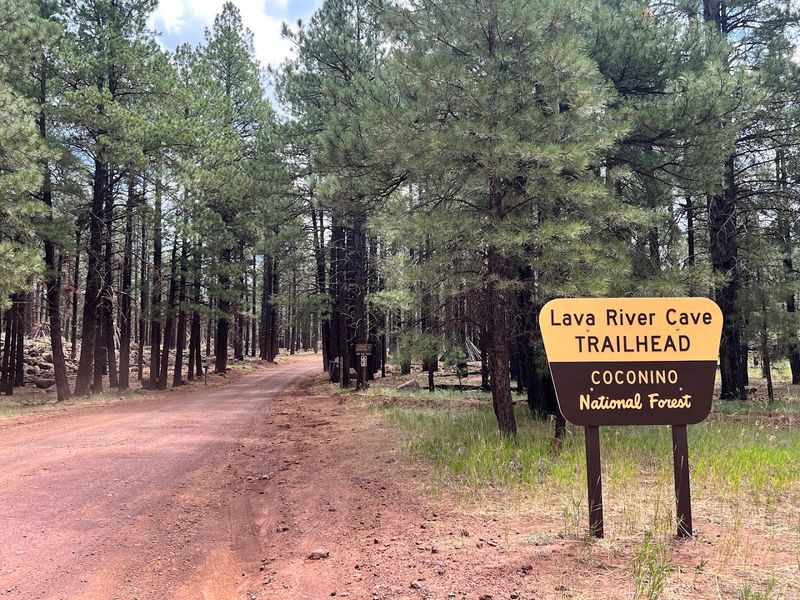
The road to this cave is not a highway at all.
You’ll leave the main road and head down a rough, unpaved Forest Service road that winds through cattle pastures and stands of tall ponderosa pine. If your GPS sends you on this route, trust it, but slow down and enjoy the scenery along the way.
There are a few cattle gates to pass on the drive. Always close them behind you.
The road is generally manageable for most standard vehicles, although a car with decent clearance makes the experience smoother.
A sedan can generally cruise with caution, but a vehicle with a bit more clearance handles rougher sections more comfortably. Once you reach the parking area, the walk to the cave entrance is short and flat.
There are picnic tables along the path, and portable toilets are available at the trailhead. Cell reception is weak here, so download any maps before you head out.
This corner of Arizona has a way of making you feel off the grid, which honestly adds to the whole adventure before you reach the cave entrance.
The cave entrance will surprise you
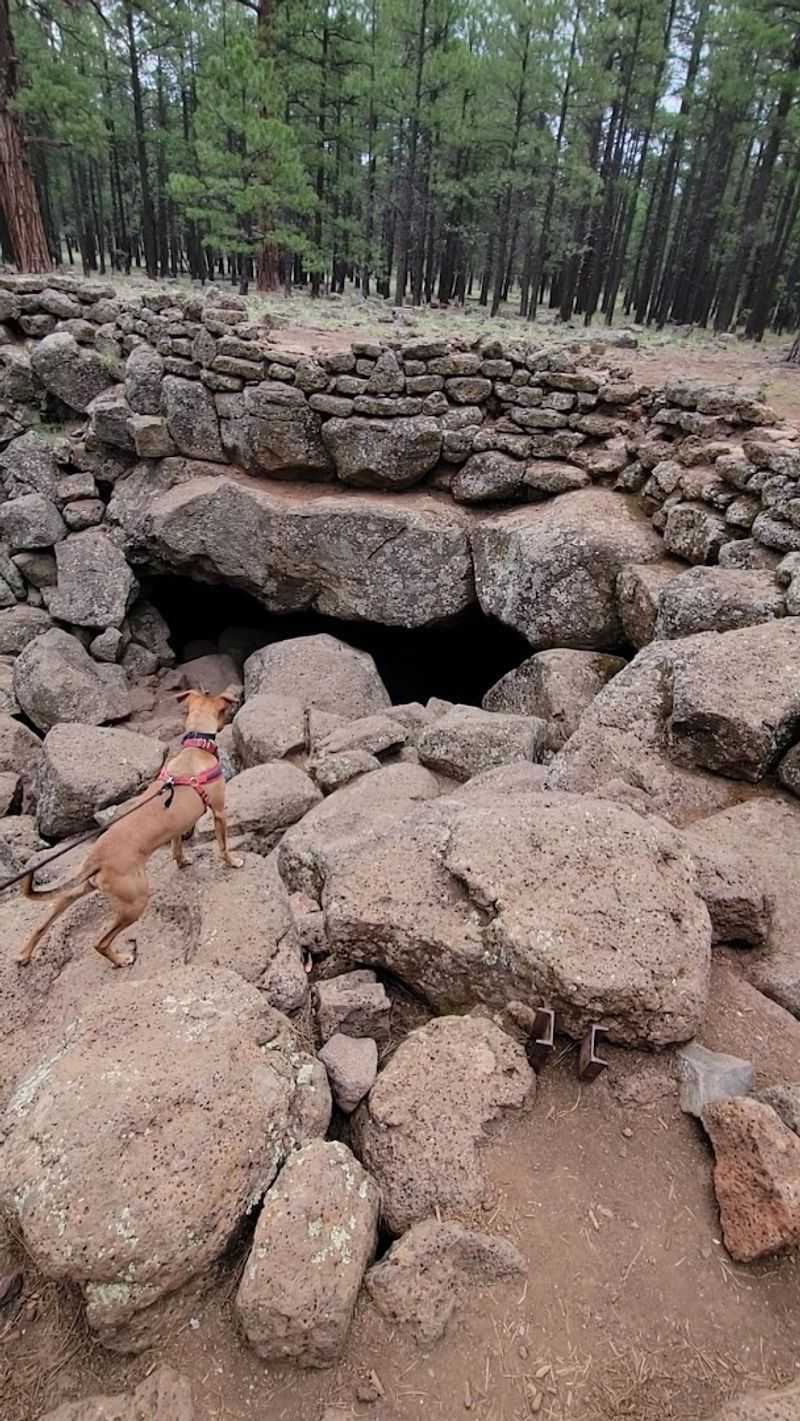
Nothing prepares you for your first look at the cave entrance.
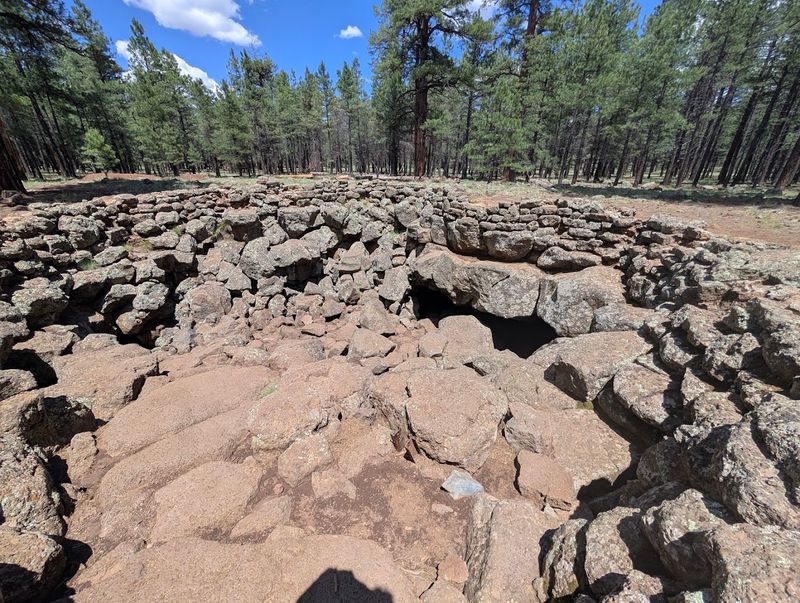
A circular stone wall marks the spot, and when you peer over the edge, you see a wide, stone-filled mouth descending rapidly into the dense darkness. It looks dramatic, and honestly, it earns the reputation.
The first section of the descent is the most physically demanding part of the entire experience. You’re essentially rolling down a pile of large, uneven rocks at a steep angle.
It doesn’t require ropes or technical gear, but it does demand your full attention and both hands. Headlamps are strongly recommended here to keep your hands free.
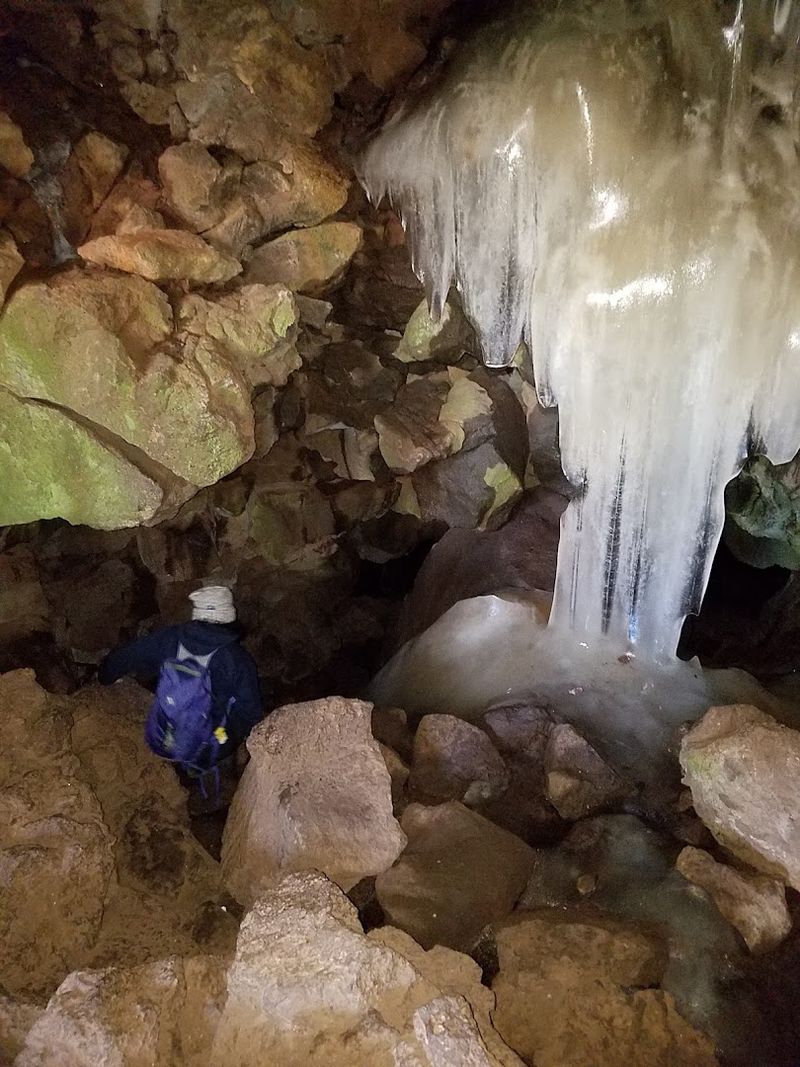
During the winter months and even in the spring, ice forms near the entrance. The temperature drops significantly the moment you pass the stone wall, shifting from the warm Arizona air to the sharp, cave cold below.
Hit the opposite quickly. Once you get past that initial rocky descent, the cave opens up and the terrain becomes more manageable.
What to expect inside the tube
After passing through the entrance, the cave opens up into a large, cathedral-like passage that stretches out before you.
Ceilings soar in spaces giving the space a surprisingly spacious feel. The floor is covered in broken lava rock with large flat slabs to small loose fragments, so every step requires purpose.
About three-quarters of a mile underground in Arizona, the tunnel finally narrows and ends. Along the way, there is a fork in the road.
Taking the left fork will keep you in the higher section where crouching is minimal. The right fork descends significantly, requiring a belly crawl in some places, which some explorers find thrilling and others get a hard pass.
The darkness inside the lava river cave is complete and utter. If you turn off your light, you can’t see anything, not even your hand. That level of darkness is rare and a little humbling.
Temperatures inside can drop to around 32 degrees Fahrenheit, so a light jacket or extra layer makes a real difference.
The gear that makes or breaks a trip
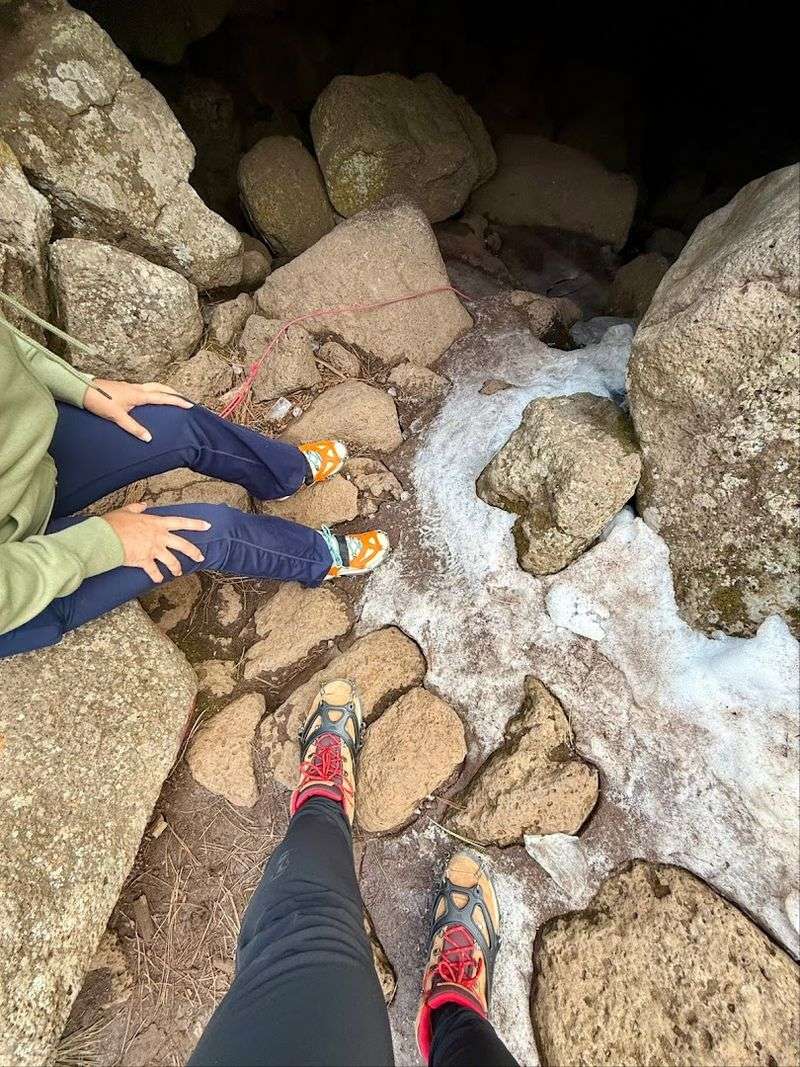
Forget the flip-flops. One of the most important footwear decisions you will make for this trip is choosing shoes with a strong grip and ankle support.
The lava rock structure is uneven, jagged and sometimes wet near the entrance. Solid hiking boots are the clear winner here, and sandals are a really bad idea on this terrain.
Light sources are non-negotiable. A headlamp is a top recommendation as it keeps both hands free during the rocky entry section.
Bringing a backup flashlight and extra batteries is smart planning, not overkill. Phone flashlights can work in a pinch, but they drain battery quickly and leave you hands-free when you need them most.
A light jacket or long-sleeve layer handles the cold inside the cave well. You don’t need heavy winter gear, but a regular sweater or fleece is really appreciated when you get deep.
Carrying a small backpack with water is also a good call. Keeping Lava River Caves clean is a shared responsibility for everyone visiting this amazing underground area of Arizona, so pack everything you bring.
Family friendly and beginner accessible
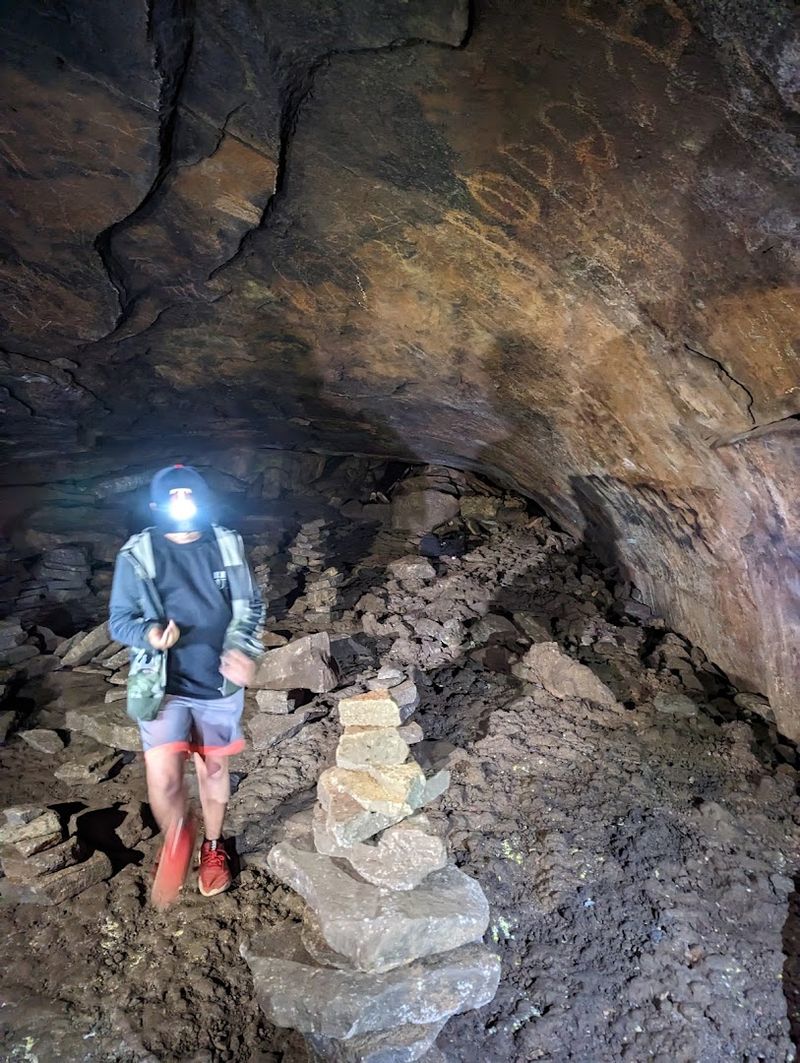
Kids absolutely love this place.
Five-year-olds have completed the entire hike on their own two feet, and families with children of different ages report having a wonderful time navigating the tunnel together. Caving rewards curiosity, and young explorers seem to have a knack for it.
Lava River Cave’s beginner-friendly reputation is well-earned. Most of the tunnels, once past the entrance, are walkable without any climbing experience.
The only section that demands extra care is the initial rocky descent at the mouth of the cave. After that, the path turns out significantly.
The factions often split at the fork, with some members choosing the easy left path while others tackled more strictly to the right. This flexibility serves as a caveat for mixed-ability groups.
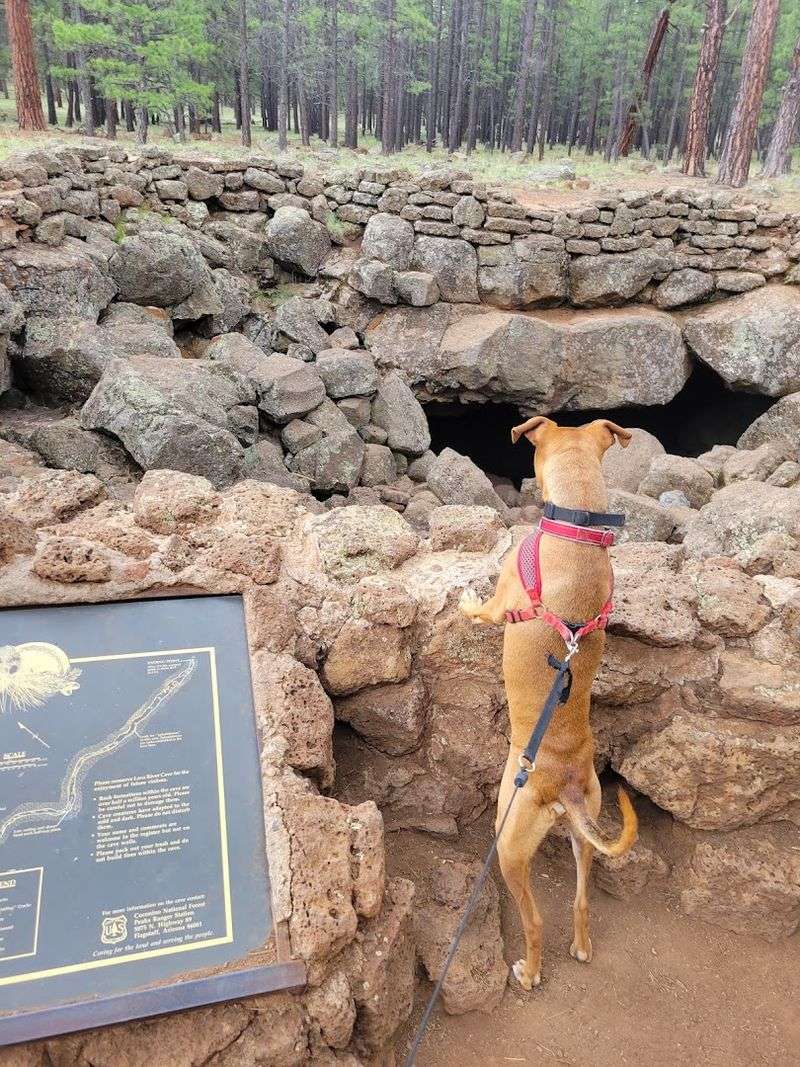
Dogs are not allowed inside the cave, so plan accordingly if you’re traveling with a pet.
The History Beneath the Pines
Long before hikers showed up with headlamps, the cave had practical value.
Arizona’s indigenous people have known this subterranean passageway for thousands of years, and used it as part of their daily lives in the surrounding landscape. The constant cold temperature of the cave made it a natural resource worth knowing about.
In 1915, the cave was formally rediscovered by settlers in the area. Homesteaders quickly discovered that a near-freezing interior was perfect for storing ice.
Before refrigeration was common, such places were really valuable. People would harvest ice from inside the cave and use it to keep food cold during the hot Arizona summers.
That history adds a layer of meaning to every visit. You’re walking through spaces that have served human needs through a wide variety of eras, from ancient uses to frontier-era refrigeration and modern recreational inventions.
The cave was formed by forces that predated the entire time of human history, yet people found ways to weave it into their lives again and again.
Tips for your best visit ever
The cave is open every day of the week, all year round, giving you real flexibility in planning.
An early morning visit means there are fewer people on the trail, and the tranquility inside the cave feels more dramatic when you’re not navigating around other groups.
Weekdays are generally quieter than weekends. There is no entrance fee to visit, which is a nice bonus for this memorable place.
There is no ranger station on site, so be self-sufficient and well prepared. Signs in the parking area explain and enforce safety rules.
Graffiti appears at the end of the cave, a reminder that protecting this place is entirely up to the people who visit it.
A full round trip inside takes about a mile and a half in total. Allow at least two hours for a gentle pace.
Lava River Cave rewards visitors who come prepared, stay curious, and treat the place with respect as one of Arizona’s most unique natural wonders.



