


Before you begin
Pressure washers are one of the main causes Effective in cleaning Hard, porous materials such as wood are powerful sprays produced by these tools. It is also a powerful spray so it is important to wear protective glasses, thick boots and heavy-duty gloves during use.
Strong spray can also knock down pebbles, small rocks and dirt. Consider Covering bushesgardens, and air conditioners with a drop cloth before you start. This will help protect them from powerful sprays and flying debris and help reduce unwanted splashing.
Step 1: Attach the spray nozzle to the pressure washer.
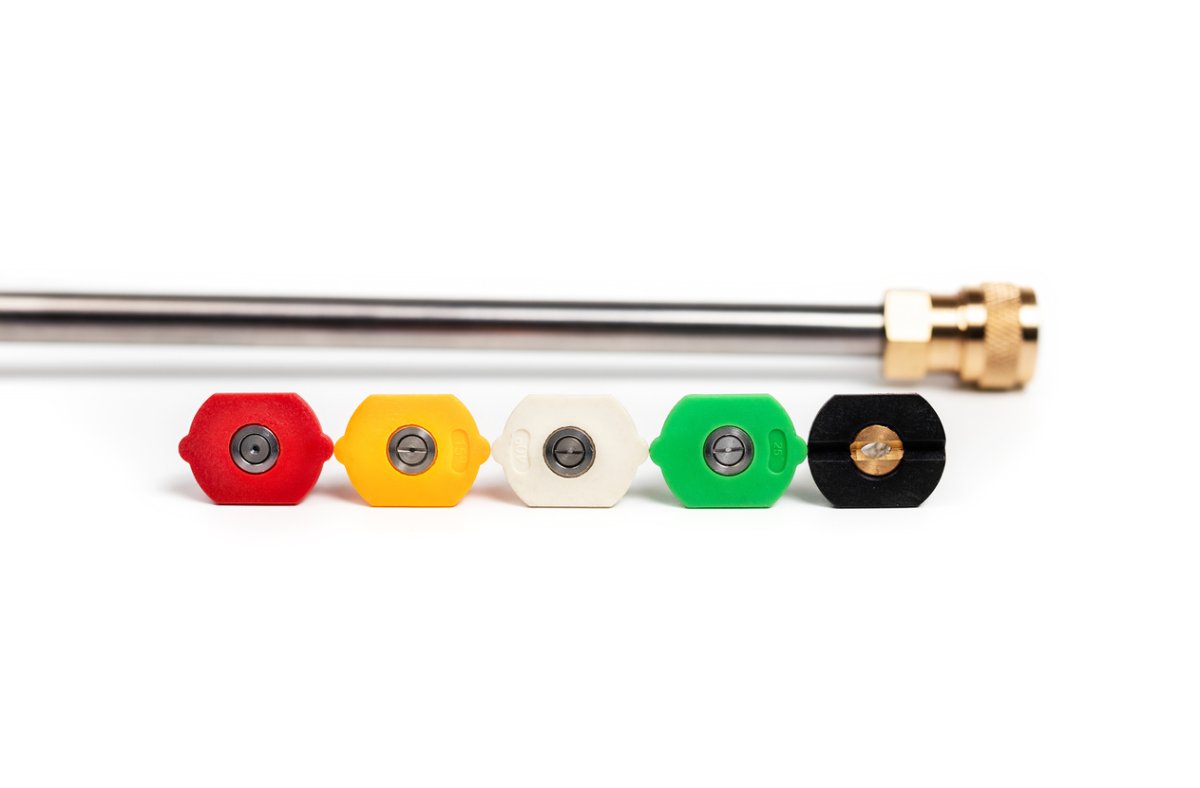
To get the right angle and water pressure to clean the deck, you need to attach the nozzle Pressure washer. Start with the soap-dispensing nozzle if you’re using a cleaning solution or just the widest nozzle to make sure the initial water pressure is relatively low. Spray nozzles are usually color-coded to help indicate the spray pattern.
- White indicates the nozzle sprays at 40 degrees.
- Green indicates that the nozzle sprays at 25 degrees.
- Yellow indicates the nozzle sprays at 15 degrees.
- Red indicates the nozzle is spraying at 0 degrees.
- A black color indicates that the nozzle dispenses soap and controls the pressure significantly.
Step 2: Connect and turn on the pressure washer.
Connect the pressure washer hose to the pressure washer and turn it on. Make sure the hose has a clear path to the pressure washer and the area where you are working so that it does not block or catch the water flow to the pressure washer.
Set the pressure washer to the lowest power setting and pull the trigger to test the current water pressure output. It is recommended to start in an inconspicuous part of the deck if the initial flow of water will damage the wood surface.
Adjust the distance between the nozzle and the deck, as well as the angle of the spray until the pressure washer successfully removes dirt without damaging the deck or splashing you.
Step 3: Add the deck cleaning solution to the pressure washer.
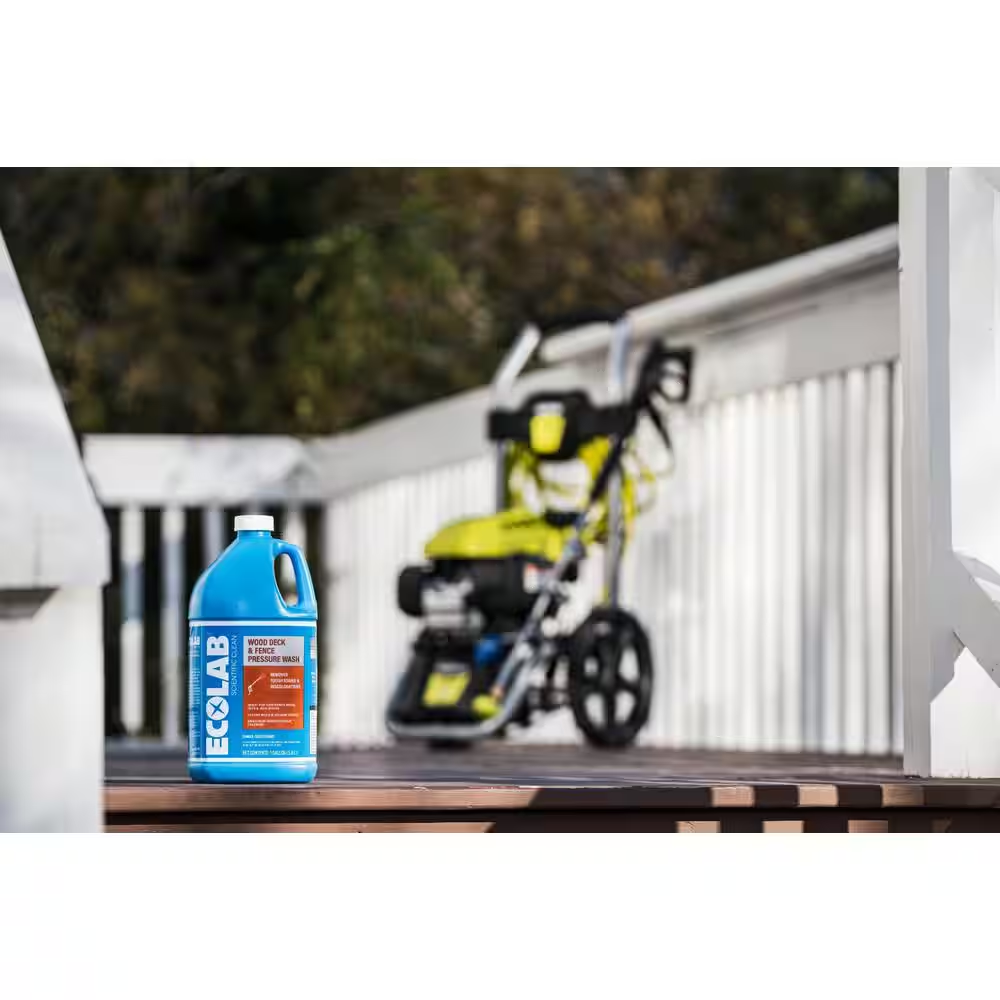
Like a deck cleaning solution This highly rated Ecolab wood deck and fence pressure wash concentrate— is a great option to help remove tough, stuck-on oils and grime. Simply mix the cleaner with water according to the package instructions and pour the solution into the dispenser on the pressure washer.
Step 4: Apply a deck cleaning solution.
With attached black soap-dispensing nozzle Pressure washerBegin applying the deck cleaning solution to the deck. Use long, wide strokes with the pressure washer wand to make sure the cleaning solution reaches the entire deck, including any corners, cracks, or crevices.
After application, let the cleaner sit on the wood for about 10 to 20 minutes before switching to the white or green spray nozzle on your pressure washer, or as suggested by the manufacturer’s directions.
Step 5: Pressure wash the deck.
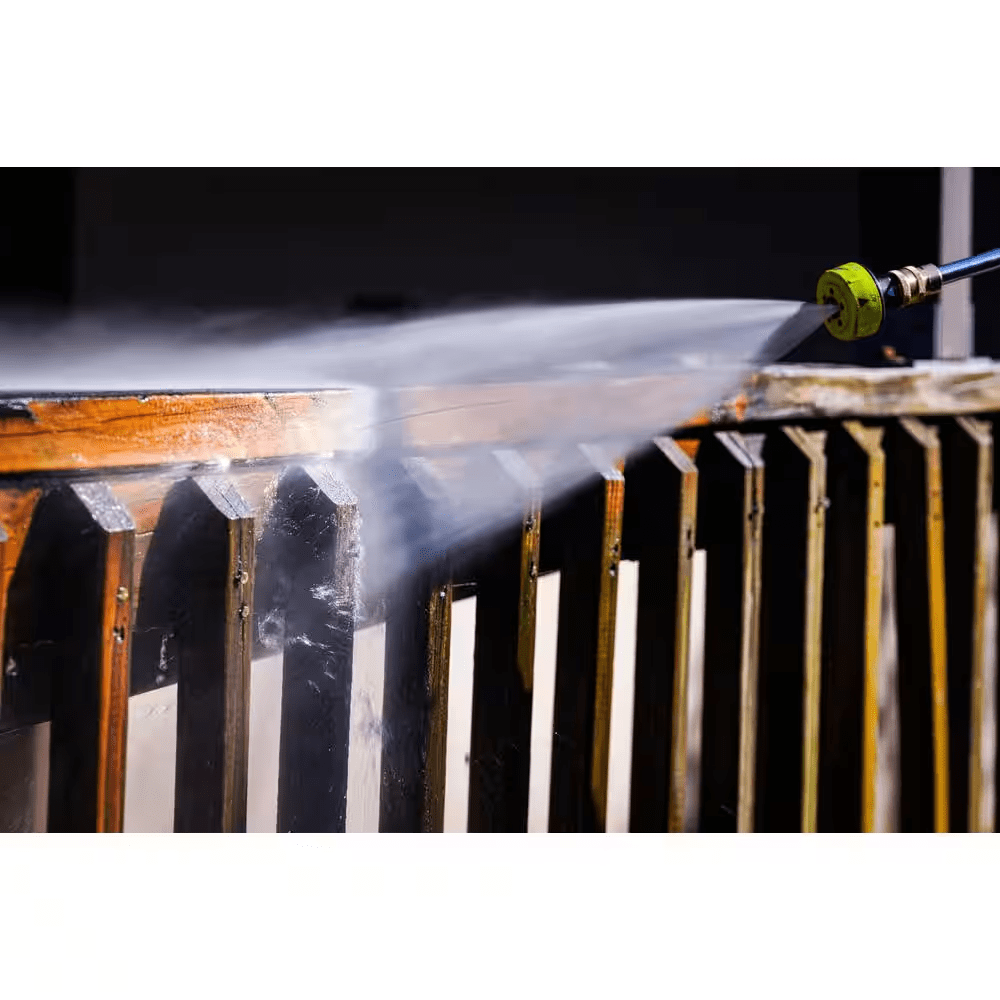
The powerful water pressure generated by a pressure washer will do most of the work for you. Your job is to control the water pressure and the purpose of the pressure washer wand. Choose one side to start and begin pressure washing the deck in a wide, horizontal strip.
Once a row is done, move down and across to force wash the next row. Continue working in this manner until the entire deck is cleared. Also, keep in mind that a wood deck’s porous surface may require multiple passes with a deck cleaning solution or pressure washer to completely clean it.
Step 6: Allow the deck to dry before sanding, staining or sealing.
Allow the deck to dry before walking on it to prevent the wood from warping or warping. It can take up to 2 days for the deck to dry completely after pressure washing, and longer if it rains. Once the deck is completely dry, you can take on additional projects to reduce Deck maintenance in the future
Use a sander to remove any stains from the deck’s surface and to remove any residual chemicals from old stains or paint products. then Sanding wood decksBefore that it’s a good idea to pressure wash the deck again to remove any sand particles Staining or painting. Be sure to let the deck dry after this second wash so that the stain or paint can bond effectively to the wood.
Final thoughts
When the dirt and grime are removed, Water spraying generates a considerable amount of basic power and easily May damage wood.
They can also damage exposed skin or sensitive areas of the body, such as the eyes, ears, or nose. Avoid aiming the pressure washer near you or another person during use. If you or someone else is sprayed in the eyes by a pressure washer, it is recommended to seek medical help as soon as possible.
This content is presented by Home Depot. Facts and opinions included are those of BobVila.com.

Meet the tools of the year 2025



