


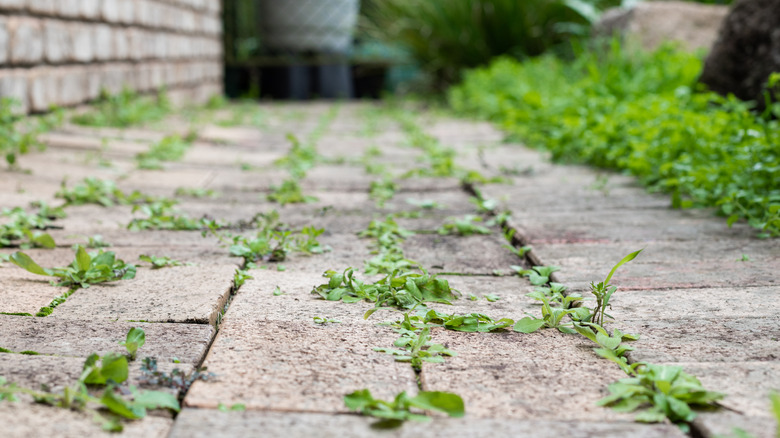
Pavers, whether used in patios, walkways, driveways or other decorative outdoor endeavors, are a time-honored building material. In fact, pavers have been used at least since the Roman Empire built its famous roads. Strong, attractive, functional, apart from weeds growing between individual pavers, they have few drawbacks. In some ways, you have to admire weeds for their tenacity to endure regardless of the situation. However, you hate your pavers even more for looking shaggy and bad. Weeds between pavers can be harmful to pavers and their installation and should be removed. But one question remains: Can you prevent weeds from growing between your pavers? The answer is yes and no, and the yes part does not include plastic weed barriers.
If you are learning about How to install brick paversThere are two primary things you can do to make it nearly impossible for weeds to grow between your pavers, and neither of them is a weed barrier or landscape fabric. One is when you install your pavers, the other is how you maintain the pavers over time.
The most important thing you can do to prevent weeds is to lay down a proper foundation. The base is a layer of gravel and sand on which you install the pavers yourself. If any one of those key details is done inadequately, it is difficult to prevent weed growth to some extent.
Lay a thick base to prevent weeds from growing
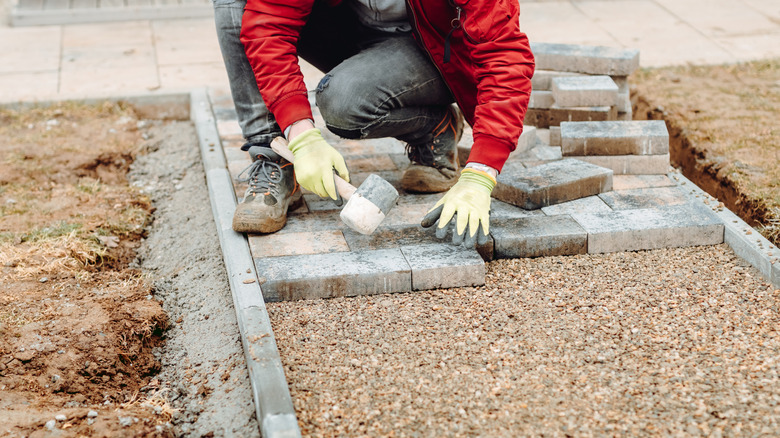
The base should be at least four inches thick, but up to six inches of gravel and sand is common. Coarse gravel (clear stone or crushed stone gravel) comes first and is tightly packed down, making up most of the thickness. Coarse sand or small chip stone, often an inch thick, follows the gravel and is tightly compacted. This base allows for proper drainage and will effectively support the pavers, so you don’t have to Repair a sunken patio. You may wonder if all of this should be on top of a landscape fabric or plastic weed barrier? The answer is no. A thick base layer will not allow weed growth, so it is unnecessary. A plastic barrier will limit drainage, allowing water to collect on the surface to support weed growth.
Another important factor in preventing weed growth through pavers has to do with sand. Once the pavers are installed on the foundation, sand should be firmly packed into the cracks, into the spaces between them. This prevents the pavers from shifting and dirt from building up. Mason sand is commonly used, but Polymeric sand is now available, which you can often remove yourself if necessary. It uses a polymer and hardens when sprayed with water. It is more expensive but a superior product.
Sealing your pavers will protect them and their color, but also help prevent weeds from growing between the pavers. Sealing also makes it easier to clean the surface or remove dirt and any seeds that might get in and try to germinate. Keeping pavers clean is another key to a pest-free patio or walkway.



