



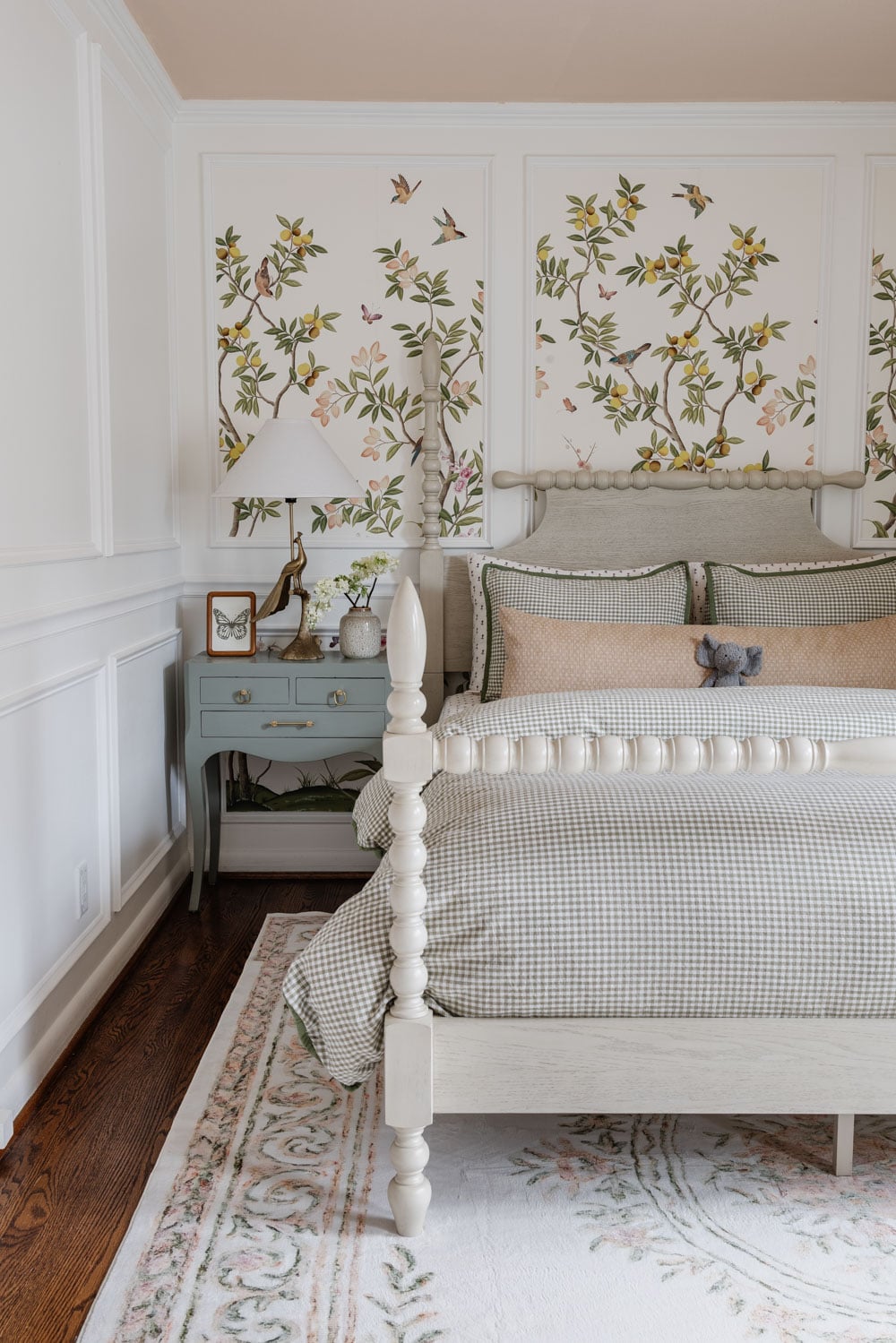
For years, I thought pattern mixing was one of those decorating skills that certain people were born knowing how to do.
You know the type. People who somehow combine floral wallpaper with striped curtains and plaid pillows, and instead of looking like a decorating identity crisis, it looks effortlessly beautiful.
Meanwhile, I’m here nervously clutching a plaid throw pillow wondering if adding one more pattern will create chaos throughout the room.
Turns out, pattern mixing isn’t magic. It’s not talent. And it’s definitely not random. It is a formula.
There are actually some simple guidelines that make mixing patterns surprisingly foolproof once you know what to look for.
After experimenting with floral wallpaper, geometric bedding, striped accents, and patterned rugs in my girls’ bedroom and other spaces in our home, I’ve discovered that rooms that look layered and interesting have a few things in common.
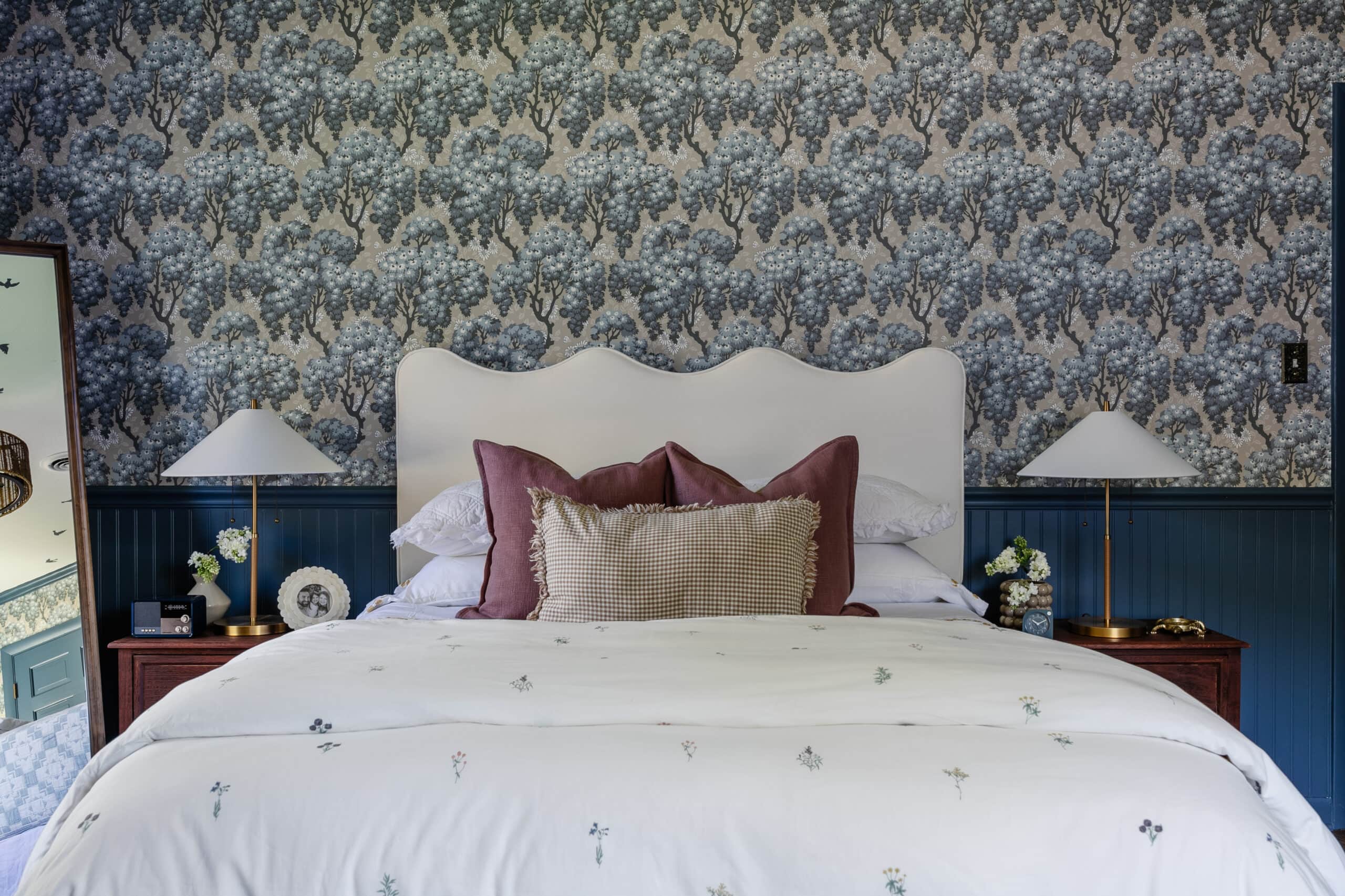
1. Start with a pattern you absolutely love
The biggest mistake I see people make is trying to select multiple patterns at once. It’s a fast track to drowning.
Instead, start with a pattern that makes your heart happy. Maybe it’s floral wallpaper, a plaid rug, a striped chair, a patterned duvet.
Whatever it is, let it be your starting point.
Once you have your “hero pattern,” building the rest of the room around becomes much easier.
Related: Our cottagecore style girl’s room makeover
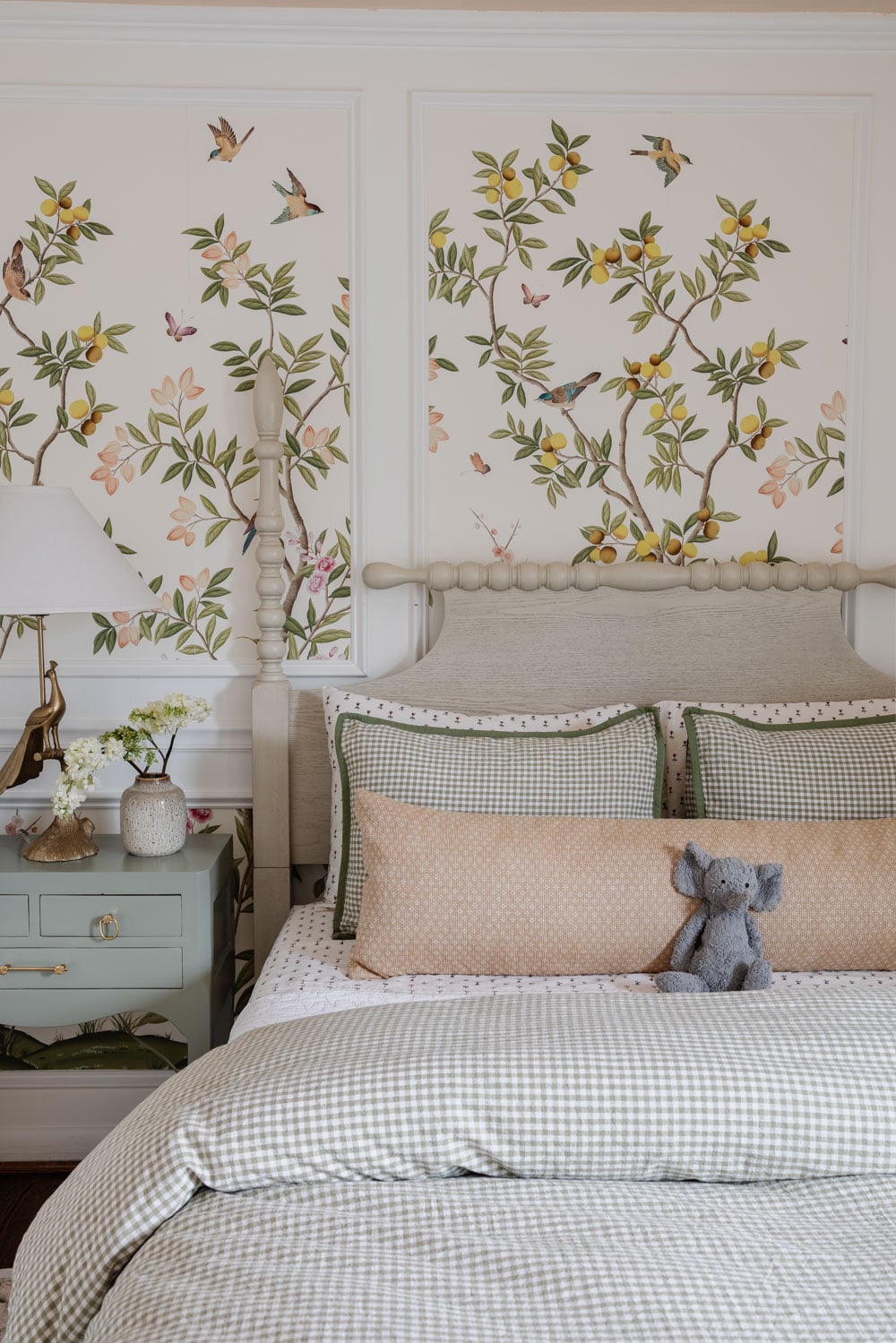
shop: Reagan’s room
2. Mix different pattern sizes
This is perhaps the most important rule of all. If every pattern in the room is the same size and scale, they compete with each other.
Think of patterns the same way you think of sounds in conversation. If everyone is shouting at the same volume, it’s hard to know where to focus.
Instead, combine:
- A large scale pattern
- A medium-scale pattern
- A small scale pattern
For example, floral wallpaper with oversized blooms can pair beautifully with a medium-sized striped duvet and a small floral pillow.
Every pattern has breathing space.
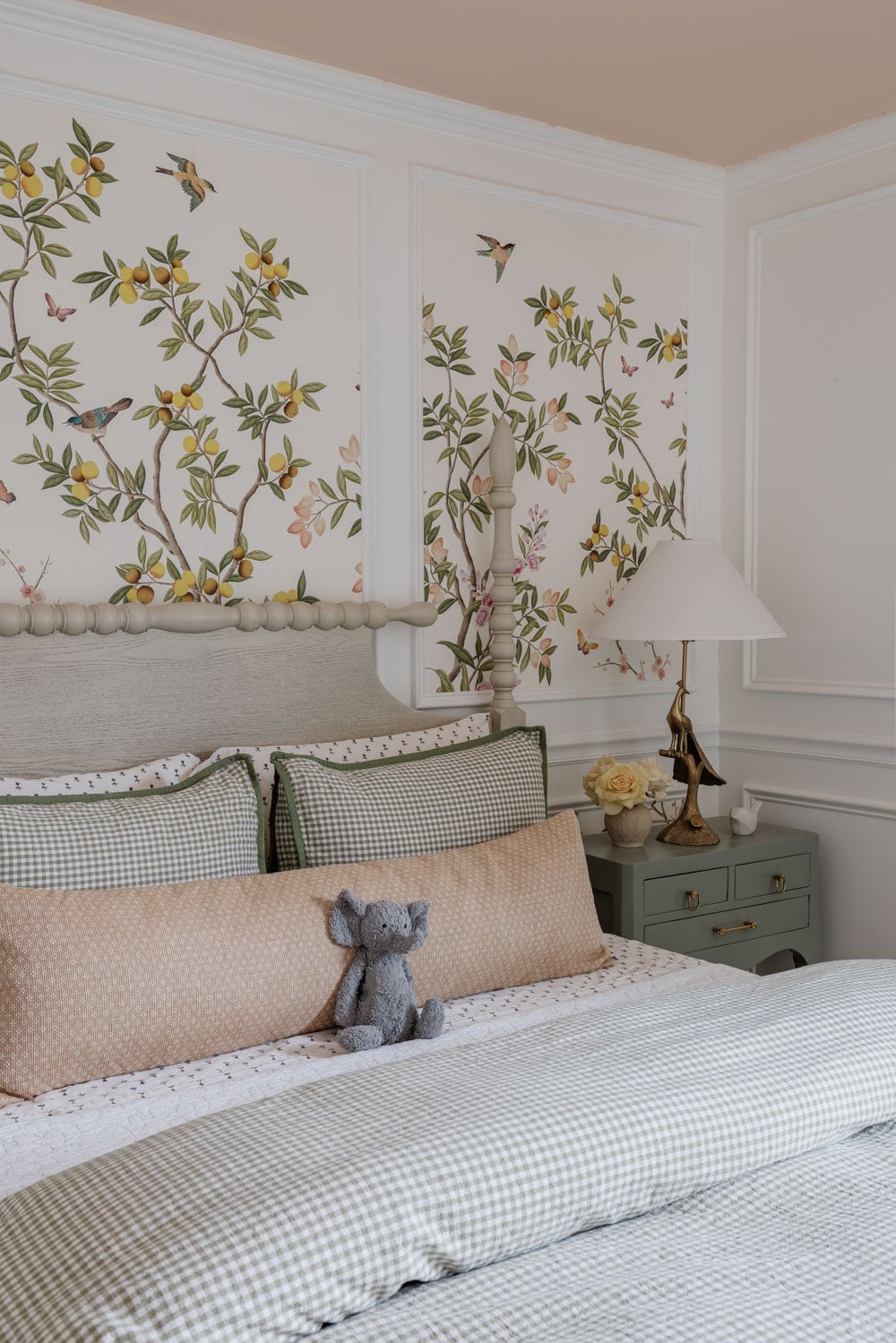
3. Repeat the colors throughout the room
Even wildly different patterns can work together when they share the same color palette.
This is the secret sauce.
If your wallpaper includes shades of blue, green, and ivory, look for bedding, pillows, rugs, and curtains that repeat some of those same colors.
The patterns can be completely different, but the color association helps everything feel intentional.
It’s like introducing friends from different social circles to the same party. They may not know each other, but suddenly they have something in common.

shop: Olivia’s room
4. Mix structured patterns with organic ones
Some of the most successful rooms combine the two.
Structured patterns include things like:
- Stripes
- Plaids
- verifies
- Geometric print
Organic patterns include:
- Flowers
- Botany
- Abstract watercolor design
- Nature inspired motifs
When every pattern in a room is geometric, the space starts to feel a little drab.
While every pattern is floral, things can sometimes feel overly sweet.
A combination of both creates a balance. Keeps a room grounded. Others keep it interesting.
Related: Blue Teen Girl’s Bedroom Makeover Tour

5. Don’t forget about solids
Ironically, one of the most important parts of pattern mixing is not the pattern itself.
It is a solid fabric and finish that gives your eyes a place to rest.
If every surface is covered in prints, the room can quickly feel busy.
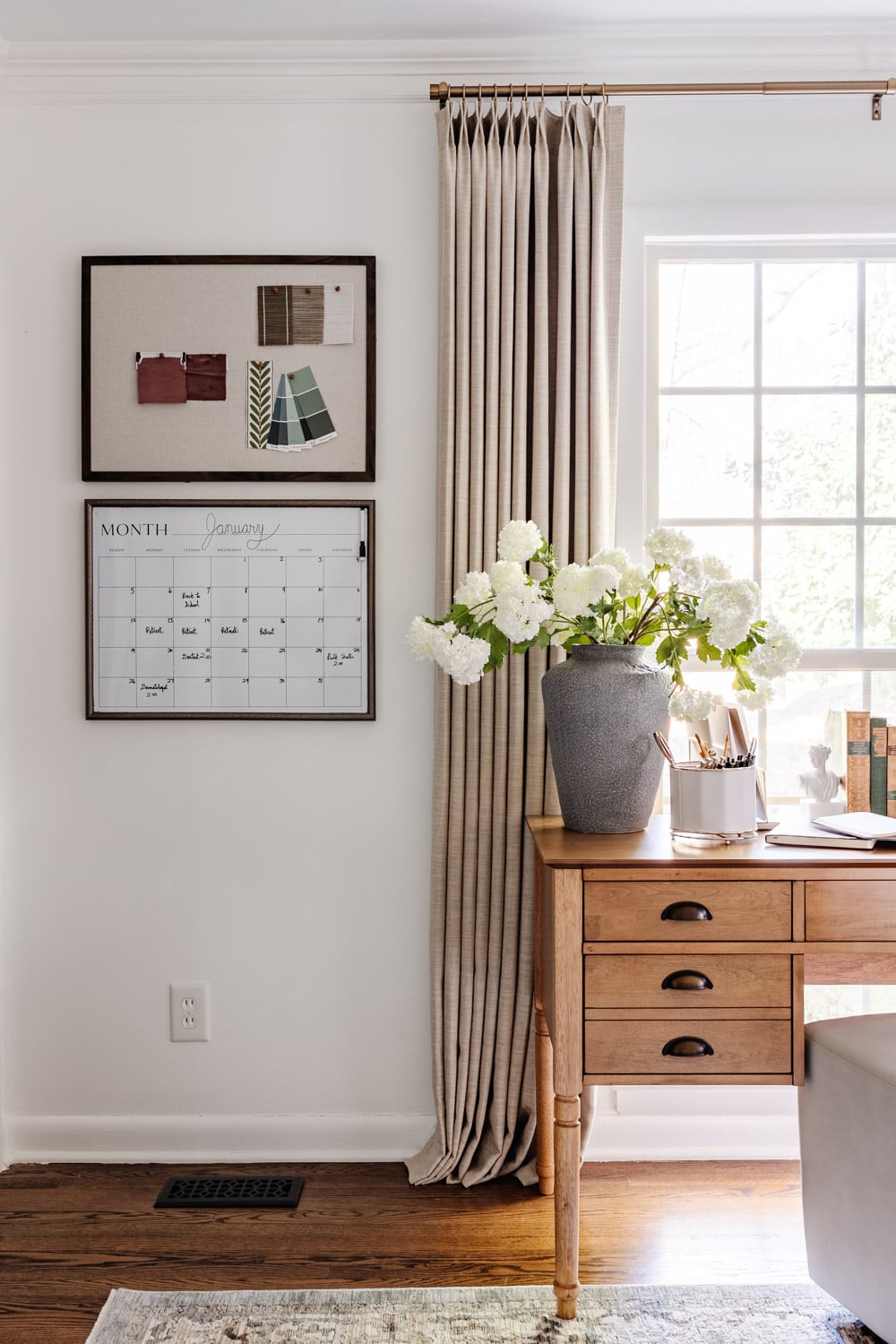
Solid bedding, painted furniture, neutral curtains, a simple area rug… these elements create space to breathe between patterns.
Think of them as punctuation marks. Without them, the room starts to feel like a giant run-on sentence.
6. Let a pattern become a star
Every room needs a leader. If every pattern is trying to steal the spotlight, things can quickly get confusing.
Usually, the largest pattern in the room naturally becomes the focal point.
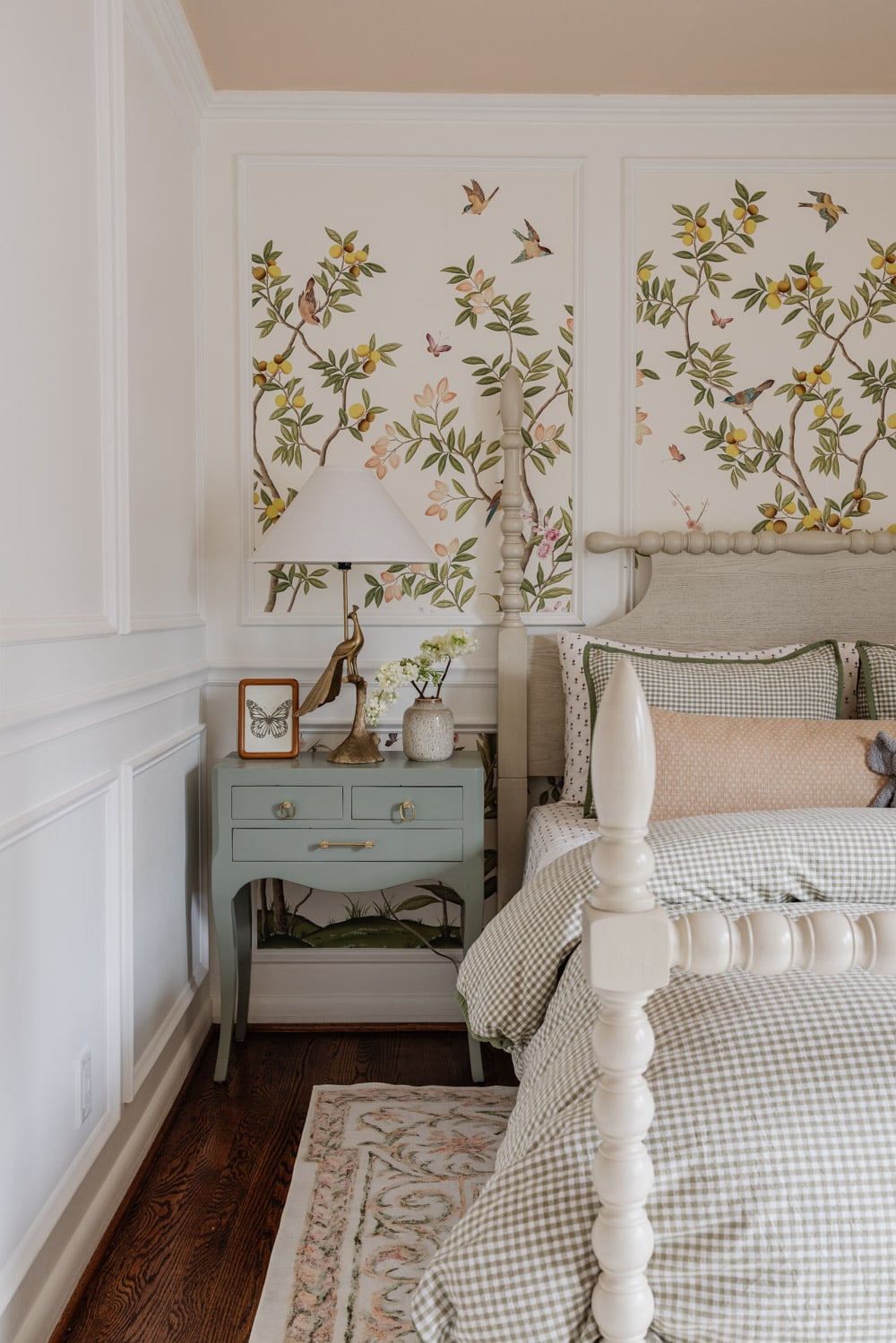
In my girls’ bedrooms, wallpaper often plays that role. In Reagan’s room, this chinoiserie mural is the showstopper. In Olivia’s room, this Scandinavian-style print floral wallpaper adds a lot of interest to a plain and simple space.
Bedding, pillows, artwork and accessories support it rather than compete with it.
When in doubt, ask yourself:
“What pattern do I want people to notice first?” Then let others play supporting roles.
7. Trust the process
This is the part no one tells you.
Pattern mixing almost always looks a little odd in the middle.
You add the wallpaper, then the rug, then the bedding, then the pillows. And suddenly you’re questioning every life choice that led you to this moment.
Completely normal.
The magic usually happens in the final levels.
Once artwork, lighting, accessories and concrete elements are added, the room feels cohesive.
So don’t panic too early.
I’ve learned that some of my favorite rooms looked the weirdest before they came together.
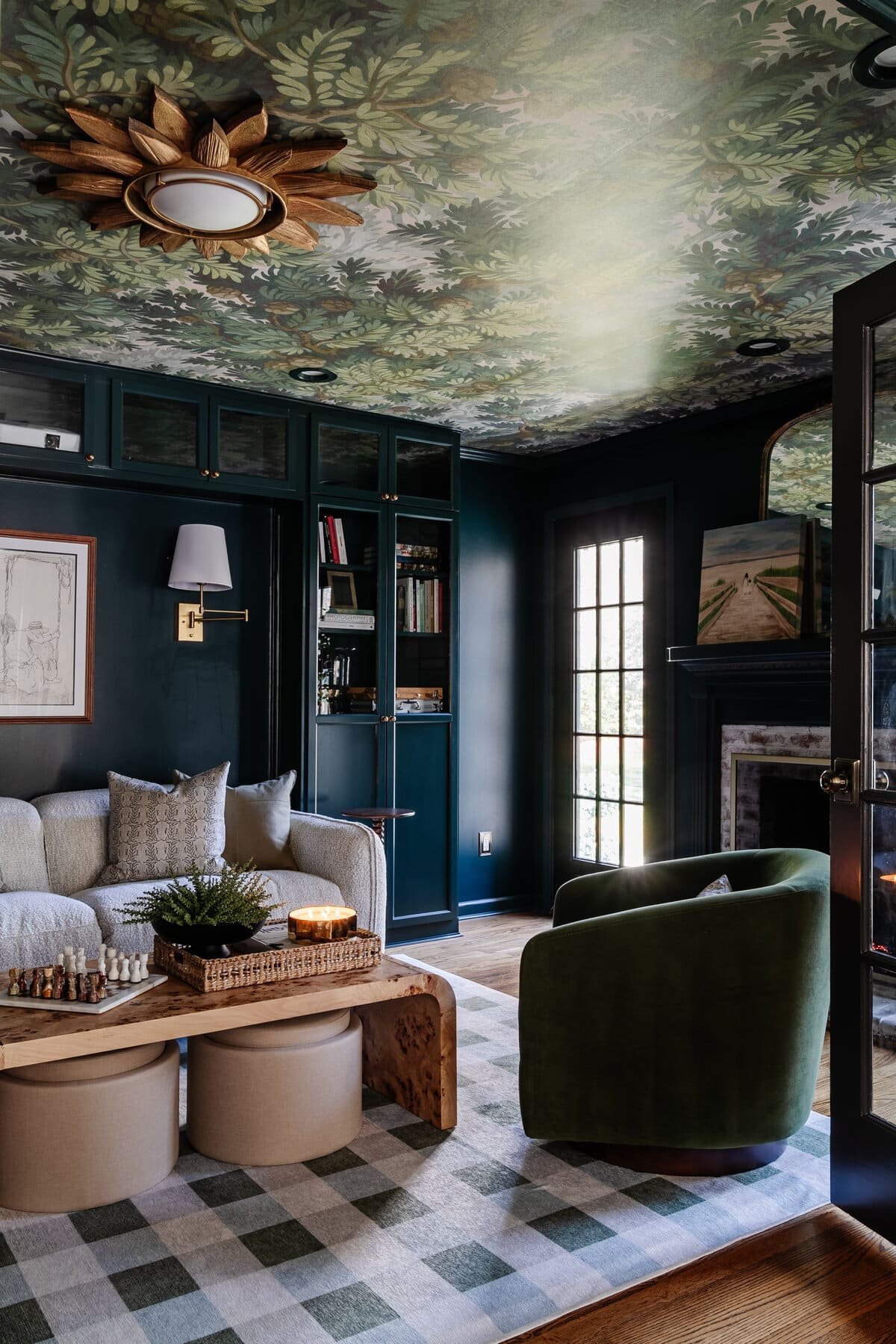
Source: Tell us about the media room makeover
Pattern mixing is a formula, not a talent
The longer I’ve decorated homes, the more I’ve realized that many of the things we assume designers just “know” are actually based on repetitive principles.
Pattern mixing is one of them.
When you focus on different scales, repeat colors, balance organic and structured prints, and give patterns room to breathe, the process becomes much less intimidating.
And suddenly rooms that once seemed impossible to remodel seem completely achievable.
Decorating is not about being born with talent. It’s about learning the formulas that make the room work.
Want to use more decorative tricks pros?




