
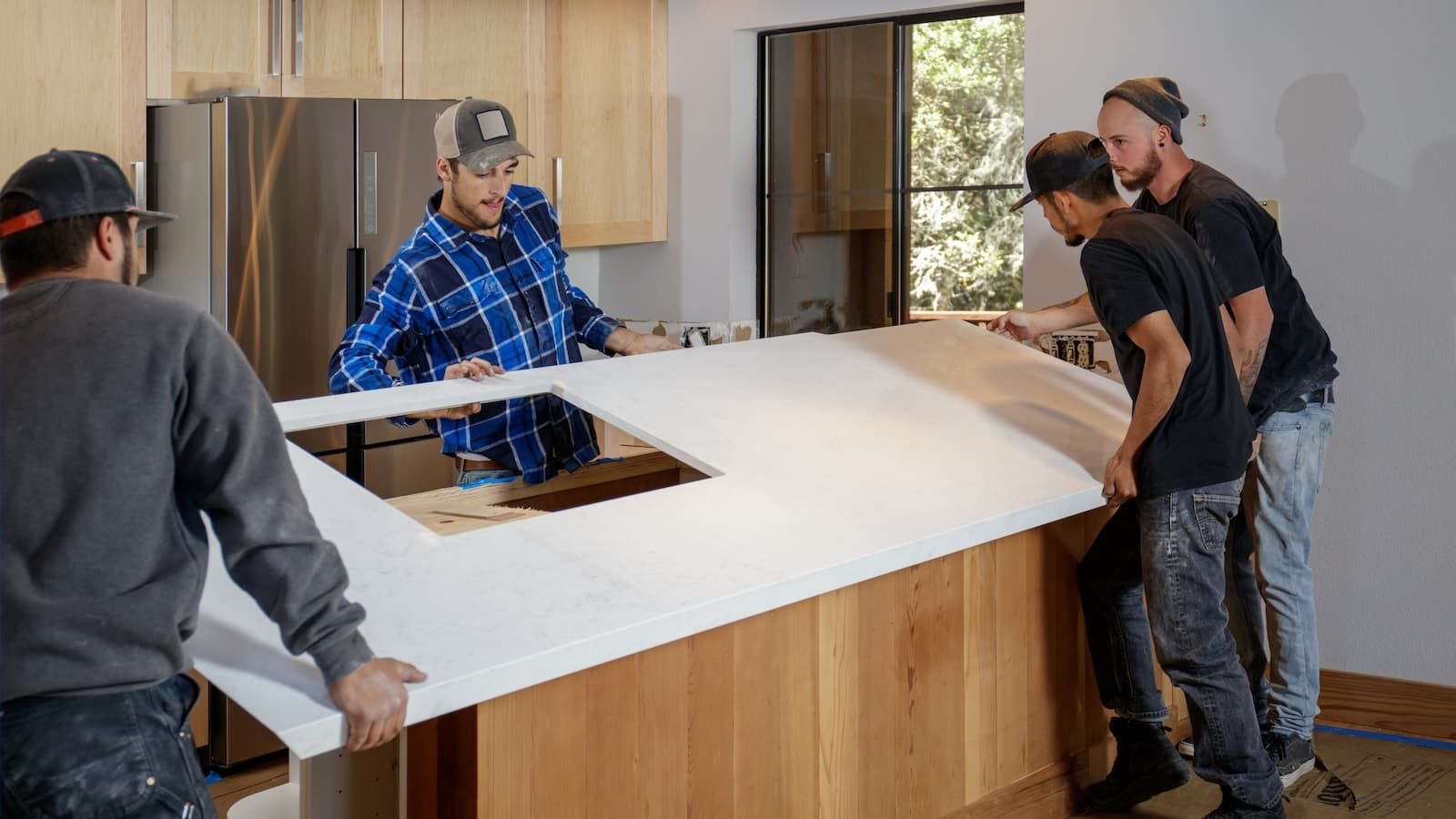

A major action has been initiated on the cutting of engineered stone used in Kitchen worktops Following concerns over exposure to deadly silica dust.
The Health and Safety Executive (HSE) has banned dry cutting and says safer water suppression methods must now be used to control harmful dust.
More than 1,000 inspections are being carried out across Great Britain to enforce the new guidelines.

Prohibition of unsafe cutting methods
This HSE has confirmed that dry cutting engineered stone is unacceptable, warning that it can expose workers to dangerous levels of respirable crystalline silica (RCS), a dust linked to the lung disease silicosis.
Regulators say businesses must now switch to safer methods such as water suppression systems, which reduce dust during cutting and fabrication.
The HSE’s Mike Calcutt said the risks are clear: “Silicosis is incurable, but it is completely preventable. No worker should lose their life to lung disease because of their job.”
He added that some companies still fail to meet basic safety standards: “Many businesses do not put in place proper controls, they are still using engineered stone with high silica content and dry cutting, which should be stopped.”
This decision follows an earlier call Ban on kitchen worktops made from artificial stone.
Investigations are going on across the country

The HSE has launched a massive inspection program to target businesses that manufacture and fit engineered stone kitchen worktops.
Over the next year, inspectors will carry out more than 1,000 visits across Great Britain, with enforcement action expected for companies that fail to comply.
Mike Calcutt warned employers that investigations are already taking place: “The guidance is now published, the expectations are clear, and our inspectors are coming.”
Inspectors will assess whether businesses are using approved dust control, providing protective equipment and meeting legal safety duties.
Some companies have already taken significant action of their own, as well Herringbone has become the first UK kitchen company to ban high-silica quartz.
Why is action being taken?
Engineered stone widely used in kitchen worktops can contain up to 95% crystalline silica. When cut or shaped, it can release fine dust that can be inhaled deeply.
The HSE says recent cases, including the deaths of two young workers from silicosis, have highlighted the seriousness of the risk and called for immediate intervention.
Social Security and Disability Minister Sir Stephen Timms said: “Every worker deserves to come home safe, without the fear of losing their life to a preventable, fatal lung disease caused by their job.”
Regulators say the new rules aim to prevent more cases by ensuring safe working practices become standard across the industry.



