
Want an entry that looks shaped, not just cut into the wall? This arched front door shows how a curved top changes the entire first impression, turning a basic opening into something built with design and purpose.

In 2026, flat rectangular doors are giving way to arched forms that add depth, structure and visual focus. Curves work throughout the style, from the stone facade to the white exterior and warm wood interior, creating a cohesive focal point without relying on extra decor.
From solid wood panels to glass grids and double-door entries, these ideas show how an arch defines the space around it. It frames the door, connects the material and sets a clear transition from outside to inside.
Stone facade entrance with soft arched center

An arched opening sits within a structured stone façade, breaking up the rigid grid of the exterior. That curve draws attention to the center, making the entry feel deliberate rather than just placed within the wall.
Shutters, planters and lanterns all follow that central axis, reinforcing the arch without competing with it. The result feels balanced, where curves add softness but the overall texture remains controlled.
Internal glass door with black arched frame

The black steel frame turns the arch into a graphic element within the neutral hallway. It defines the transition between spaces without closing them off, allowing light to pass through while marking the boundary.
The curve contrasts with the straight walls and ceiling lines, making the door stand out without adding decoration. It works because the shape does the visual work on its own.
Minimal exterior with soft blue arched doors

Arched doors are integrated into the clean white facade, where curves become the main detail. The soft blue color adds contrast, but the shape is what gives the entrance its identity.
Symmetrical planters and a simple light fixture keep the setup grounded. Nothing distracts from the doors, which act as both a focal point and a defining feature of the exterior.
An internal passage formed by a deep arched opening

This archway creates a layered view, guiding movement from one space to another. The curve softens the transition and makes the hallway feel less like a corridor and more like a sequence of rooms.
The paneling inside the arch adds depth, turning it into a structural feature rather than just an opening. A dark exterior door strengthens the contrast and draws the eye forward.
Wooden arched doors set in a dark exterior

A warm wood door stands out against dark siding, with an arched top adding a traditional note. The curve breaks the straight lines of the foreground and draws attention to the entry point.
Lighting and greenery frame the door without cluttering it. The setup works because the material and shape carry the design, not adding decoration.
Large exterior with central arched entrance and columns

An arched doorway anchors a large façade, which sits between columns and under a covered entrance. The curve softens the scale of the house and gives the center a clear focal point.
The dark doors contrast with the light exterior, making the arch more visible from a distance. It becomes the reference point for the entire front elevation.
Open interior with arched entry and open floor plan

An arched doorway connects the interior and exterior spaces, created by exposed beams and structural elements. The curves work with the texture of the wood, creating a transition that feels natural in the architecture.
Light enters through openings and spreads over the floor, reinforcing the connection between inside and outside. An arch defines a threshold without obstructing the flow.
Double arched wooden doors with brick surrounds

Double doors accentuate the arch by extending it into a wide opening. Symmetry reinforces the effect, making the entrance feel substantial and grounded.
White brick frames the door and highlights the curves, while wood adds warmth. The combination creates a clear focal point that reads up close and from afar.
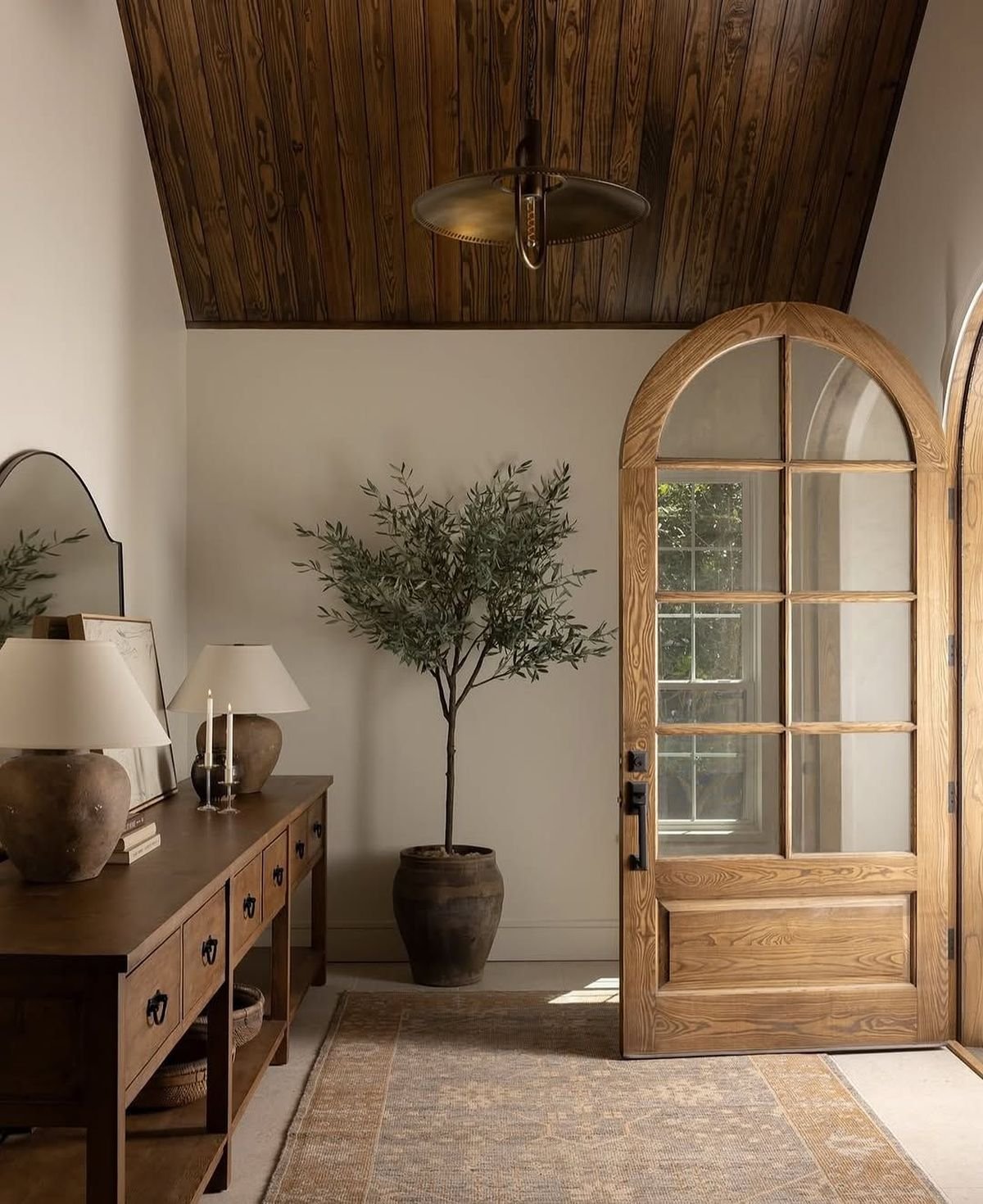
Warm wood arched doors with glass grid panels

A natural wood frame highlights the arch without the need for contrasting colors. Split glass panels follow the curve, reinforcing the shape and keeping the design consistent from top to bottom.
The surrounding setup stays grounded with dark furniture and soft textures. This keeps the door as a focal point while connecting it to the rest of the room.
Cream double arched doorways framed by brick

A brick arch wraps tightly around the double doors, creating a strong frame that accentuates the curve. The light door color softens the heavy brick texture.
Symmetry does most of the work here. Handles, panels, and beads all align with the center, giving the entryway a balanced and purposeful feel.
Covered porch with repeating arched forms

The arch of the main door is echoed in the structure of the porch and the upper windows. This repetition ties the whole facade together rather than letting the entrance stand alone.
Light materials and soft tones keep the composition calm. The arch becomes part of a larger system rather than a decorative move.
A dark solid door set within a stone arch frame

The surrounding heavy stone gives depth and thickness to the arch, making the entry seem permanent. A dark door contrasts sharply, drawing attention inward.
Seasonal elements at the base add softness, but structure remains the focus. The arch works because it looks built into the wall, not applied.
Internal entrance with light wooden arched doorway

Curved tops stand out against the straight lines of walls and stairs. Light wood keeps the look open and joins the flooring for continuity.
Natural light filters through the glass, making the entry even brighter. An arch shapes a space without closing it off.
Arched doorways decorated with patterned wooden panels

A carved wood pattern adds texture within the arched frame, turning the door into a focal object. The surrounding white walls add to the attention to detail.
The curve softens the geometric pattern, balancing the ornament with the structure. This makes the entree look crafted rather than flat.
A green arched doorway set into a stone wall

The dark green color contrasts with the rough stone, making the arch stand out even more. A glass panel at the top follows the curve, reinforcing the shape.
Seasonal planters and vertical accents frame the entry without blocking it. The result is a grounded feel, where color and form work together to define the door.