
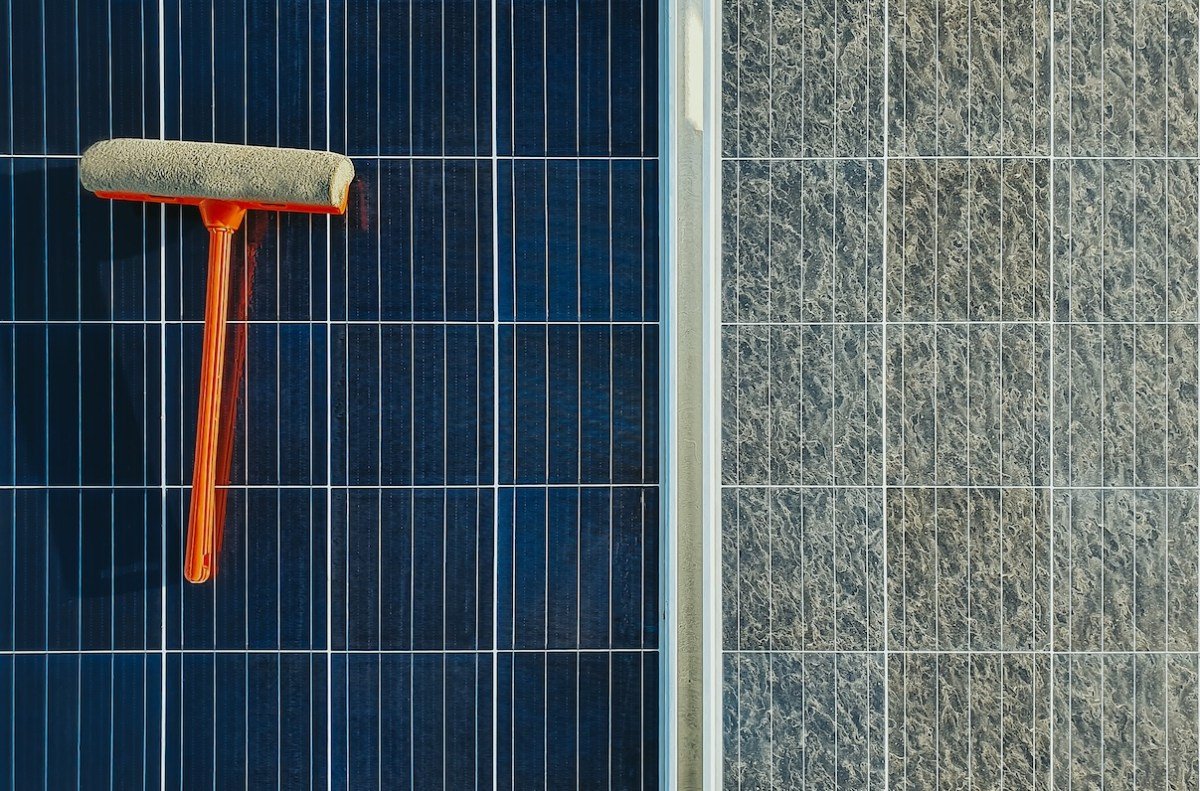

Before you begin
Not all solar panels have the same maintenance instructions, so check the manufacturer’s instructions before doing any DIY solar cleaning work. It is also worth noting that, despite the high initial cost of solar shingles, this type of solar roof does not require cleaning.
Unless you’re cleaning Portable Solar PanelsThe system is probably located on the roof. In this case, consider your ability to work safely while learning how to clean solar panels that are high. If the solar panel is too tall to comfortably reach with tools or is set on a slope or slippery surface, professional help can help avoid potentially serious injuries.
Tips for cleaning solar panels
- The best time to clean solar panels is when it is cool, cloudy and mild in temperature. Save this work for the mornings or evenings of the spring and fall months. The water will be less likely to evaporate too quickly and leave streaks behind.
- Never apply cold water to a hot panel; This will cause them to crack.
- A great homemade solar panel cleaning solution is to use a mild soap mixed with one part vinegar and eight parts water to clean the glass on the solar panel. (Skip the abrasive, heavy-duty detergent.)
Safety matters
- Solar panels should be turned off before cleaning and the underside should never be touched.
- It is safest to clean solar panels from the ground with extension tools while wearing gloves. However, 2-story and 3-story houses may require roof boarding.
- Homeowners who are unsure of their ability to safely clean their solar panels may want to consider calling a local solar power professional to complete the job for them.
Pros have the right tools for the job
Get free, no-obligation estimates from solar panel cleaning experts near you.
+
DIY cleaning of rooftop solar panels
Step 1: Gather supplies and safety equipment.
Cleaning solar panels properly starts with having the right supplies on hand. A solar panel cleaning kit can include all the necessary items. In general, however, solar panels are treated the same as windows or other glass surfaces: Combine water with mild soap to make a homemade solar panel cleaner. For scrubbing, a soft sponge or solar panel cleaning brush that will not scratch the panel surface will suffice. A lint-free cloth or squeegee can be used to remove excess water.
While standard hardware supplies can be used for solar panel cleaning projects, safety considerations are important. A hard hat, ladder support, and harness are recommended for any homeowner who plans to clean solar panels from the ground to the roof.
Step 2: Turn off the solar panel system.
If you’re trying to DIY this job, start by closing the panel. Solar panels are electrical equipment and cannot be cleaned while active due to the risk of electric shock. The solar panel manufacturer’s specifications will explain how to check that both the currents produced by the panels and to the home are off.
Step 3: Remove any dust, dirt or leaves with a soft brush.
Leaves, bird droppings and dust accumulate on the solar panel. Even though rain cleans some of this, it doesn’t get all of it and when the puddles evaporate, they can create a dirty residue. Debris can be removed by gentle brushing with a soft-bristled tool to begin the cleaning process.
This can be done from the ground if a soft brush is attached to a telescopic extension pole with a threaded tip or hook. Some poles extend up to 24 feet. Without a long enough extension pole, an extension ladder will be needed to reach the solar panels. If work requires climbing onto a roof, take safety precautions, such as wearing a hard hat and harness.
The best way to clean solar panels is to start with a light brush. Otherwise, if there is a lot of material sitting on the solar panel, immediately mixing the debris with water can cause spills and smears. Brushing breaks up and removes some of the material, making the next steps in the cleaning process more effective. Wear work gloves to keep your hands clean and protected.
If you are on the roof to clean, check if the panels have drainage holes and make sure they are clear as well. These holes will be located on the sides of the panel and can be cleaned by inserting a toothpick inside.
Step 4: Use a garden hose to clean the panels.
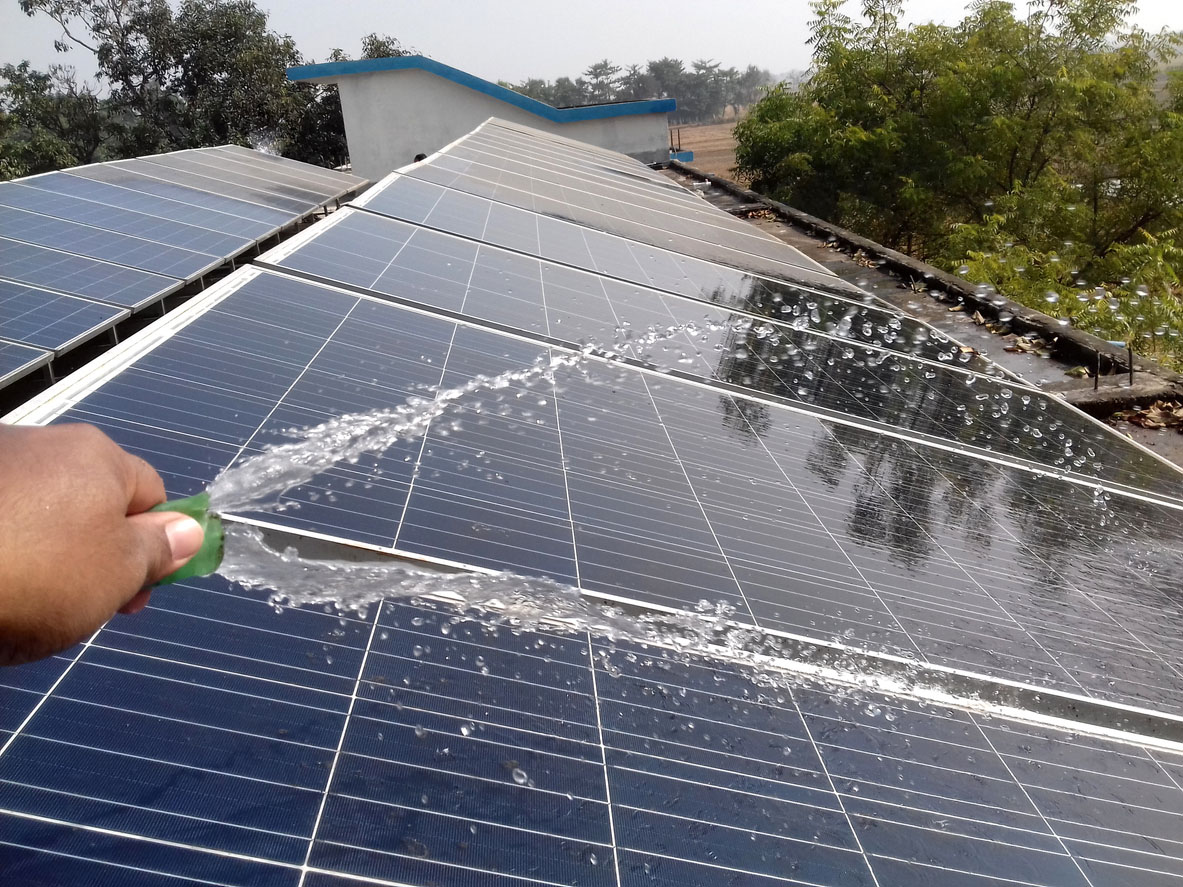
After removing dry debris by brushing, a garden hose can clean most of the dirt on the solar panels.
Remove any high-pressure connections before cleaning your solar panels. It may be tempting to hit the solar panels with as much water as possible to get the job done quickly, but high-pressure cleaning is likely to create fine cracks on their surface. This will destroy the efficiency of the solar system and cause problems in the future. It can also void the existing warranty due to not following the manufacturer’s specifications for maintaining the solar panel.
The key is to spray deliberately with each solar panel. If a garden hose does not provide adequate spray control, try a telescopic hose wand. This has a more supportive grip than the tube on its own.
Step 5: Scrub any problem areas with a soft brush and water.
Give extra attention to problem areas with a sponge, squeegee or soft cloth dipped in a bucket of clean water. Gentle, focused cleaning in repetitive motions — with some patience — is best because aggressive scrubbing can scratch the panel.
Even cleaning products considered “safe” for use on solar panels can be abrasive. Water is the best solar panel cleaner, especially if it is deionized or distilled. This water attracts other chemicals, so it is more efficient for cleaning. If deionized or distilled water is not available, treating tap water with a water softener can help improve its cleaning power.
Step 6: Apply cleaning solution to heavily soiled areas, making sure to wipe and rinse the solution thoroughly.
To tackle any stubborn stains, mix one part vinegar and eight parts water with a mild dish soap. Any soap should be used with caution. When the soap is washed off, it can leave a residue that sticks to dirt in the future, leading to streaky solar panels. Not only is this less aesthetically pleasing, but it can also compromise some of the functionality of the panels.
Glass solar panel cleaners can also be used instead of soap as they are generally designed not to leave unsightly streaks. However, there are strong chemicals not Not recommended as they may damage the surface of the panels.
Step 7: Once cleaned use a squeegee or soft cloth to dry the panels thoroughly.
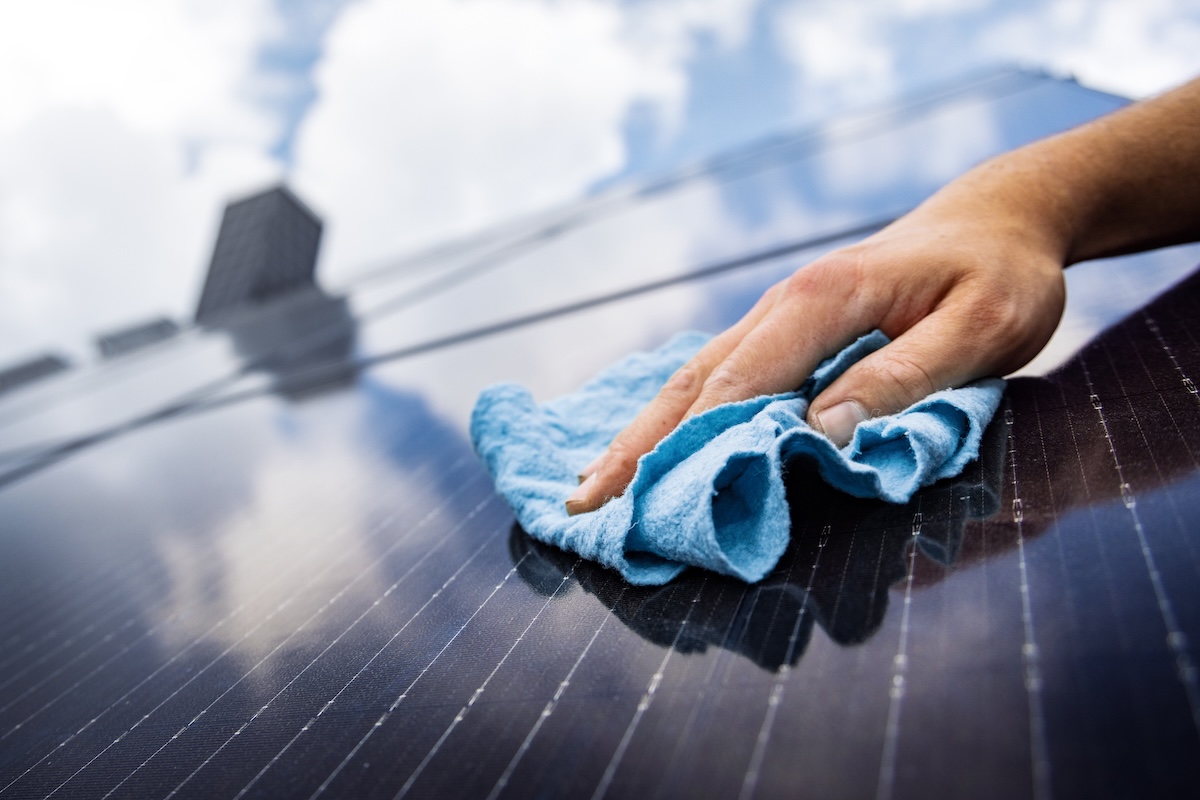
To avoid hard water marks and streaks, each panel will need to be thoroughly dried. If using a squeegee, start at the top of the panel and work in downward strokes until the entire panel is dry. Excess drops can be wiped off with a cloth. Be selective about the type of cloth used to dry the panels; Even a mostly soft towel can accidentally leave scratches on the panel surface.
Solar panel cleaning is best left to the pros
Get free, no-obligation estimates from solar panel cleaning experts near you.
+
Step 8: Call a professional if the job is too dangerous to handle yourself.
Depends on How many solar panels are needed to power a house?As well as how accessible they are from the ground, cleaning solar panels can be a challenging and lengthy process. Also, there can be too much debris for a garden hose and sponge. Whenever cleaning solar panels seems more difficult and dangerous than you want to do yourself, don’t hesitate to call the pros. (As a rule of thumb, only solar panels that are easy and safe to access should be cleaned without professional services.)
In some cases, the company that installed the system may offer this service. You can also hire companies whose sole purpose is to clean solar panels.
Step 9: Restart the system, and measure the cleaning effect.
More access to direct sunlight should increase the solar output of your panels (ie, how much power they produce). To determine the impact of cleaning solar panels, review your energy bill before and after cleaning.
Solar panels are rated for solar output within a specific range of watts. Normal operating conditions cause fluctuations within the predicted range. When solar panels are dirty, however, they produce energy at the low end of the range. With lower solar output, homeowners rely on power from an additional energy provider, increasing energy bills and solar payback periods. Clean solar panels will have lower energy costs as they allow for maximum exposure and high solar output.
Why do solar panels need to be cleaned?
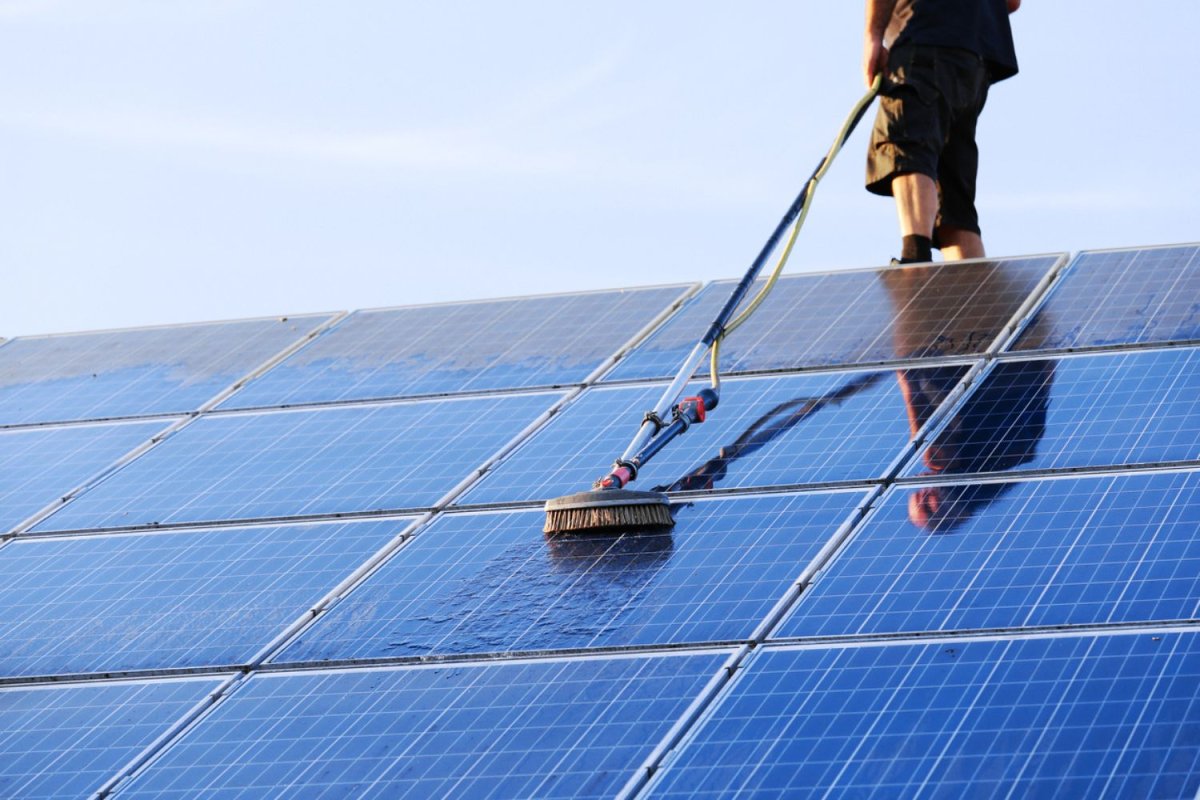
Because they are on the roof, solar panels are bound to collect dust, dirt, leaves, bird droppings and other debris. Buildup occurs more quickly for panels that are completely horizontal, which the rain simply cannot wash away. Cleaning solar panels can help keep them operating at peak efficiency and extend their lifespan. Failure to clean the panels regularly may also void the warranty.
How often do solar panels need to be cleaned?
In most cases, cleaning solar panels once or twice a year is usually sufficient. However, the exact frequency depends on several factors:
- local rainfall. Generally, solar panels require less cleaning and maintenance in areas that receive regular rainfall. In regions with relatively little rainfall, however, the panels should be cleaned more often.
- pitch of the roof. Homes with low or non-sloping roofs may also require frequent cleaning.
- Construction nearby. If a neighbor is having their home constructed, cleaning may be necessary after the project is completed to remove any dust that has settled on the panels.

Homeowner Survival Kit



