

Want a side table that adds function without overwhelming the room? Many small tables create the opposite problem. Thick legs, wide bases and square shapes tend to crowd the space around the sofa instead of helping it.

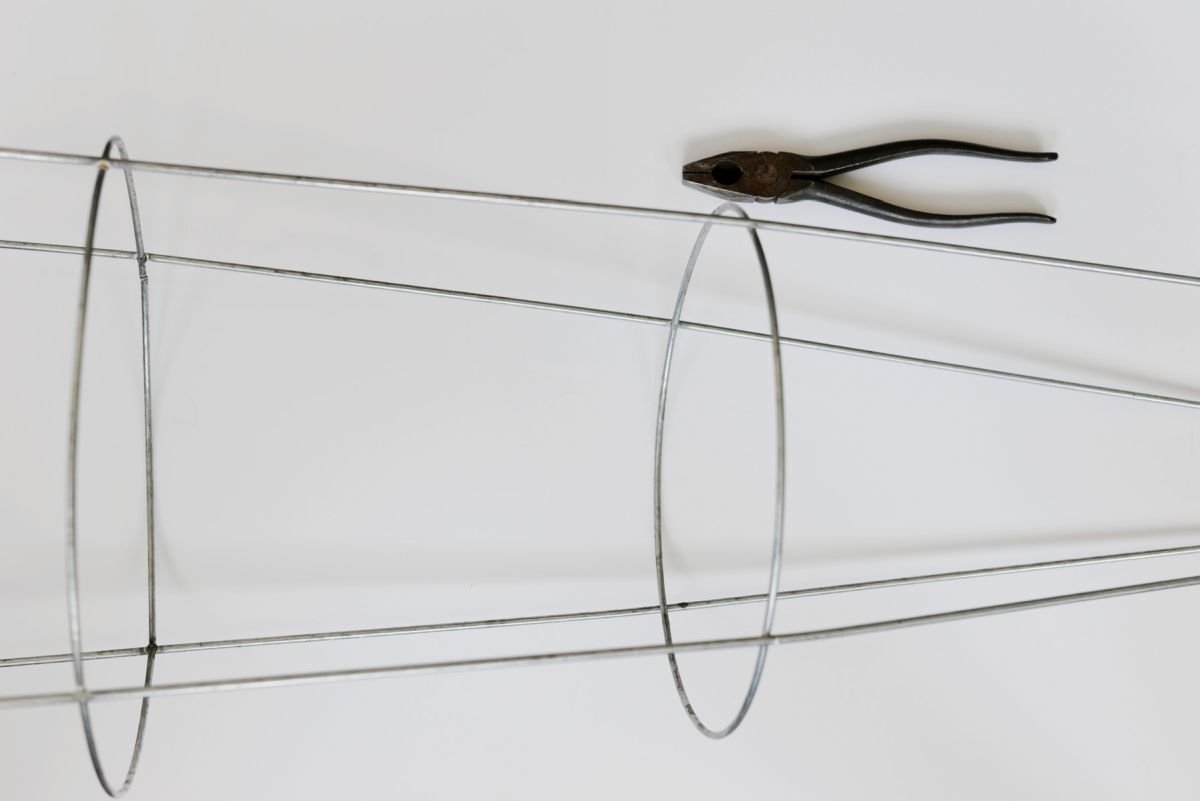
This project started with a tomato cage from the garden section.
After cutting off the top layer, adding paint, and attaching the round wooden surface, the wire frame stopped looking like a plant support and started behaving like modern furniture. The open base keeps the floor visible, the table is easy to move, and the corner next to the sofa feels relaxed rather than cluttered with furniture.
This shape already looked like a furniture base
The reason this works comes down to proportion.
Tomato cages already have a tapered structure that many modern side tables use. Wide at the bottom, narrow at the top and visually open in the middle.
Once the extra layer was removed, the proportions became shorter and more balanced on the side of the seat. Wire frames stopped looking tall and awkward and began to look closer to the sculptural metal furniture sold in design stores.

Paint completely replaced the wire
Before paint, cages looked makeshift and industrial.
After a few coats, the wire began to read as part of the design rather than garden hardware. The soft green gives the table a relaxed feel next to the gray sofa, while the natural wood top doesn’t make the piece look flat or plastic.
The contrast between the painted metal and the unfinished wood is what made the table feel deliberate rather than improvised.

The open base changed the corner next to the sofa
Most side tables block part of the room because the base becomes a solid visual object next to the seat.
This one did the opposite.
Much of the floor was visible thanks to the wire frame, making the area next to the sofa feel less crowded. Even with a lamp, books and small pieces of decor on top, the table still kept the corner open visually.
Once placed in the room it became the biggest difference.

It solves the problem of many small rooms
Small living rooms often require side tables but don’t handle large furniture well.
Heavy wooden bases, storage drawers and thick legs create a visual weight that begins to constrict the layout around the seating area. This table avoids that because almost all structure remains transparent.
It adds surface area to the side of the sofa without adding another visual block.

Then what changed
The corner seemed full of furniture and closed.
The table became a place for lamps, books, drinks or plants without making the space tight. Because the structure was lightweight, it could also go outside on a porch or patio when extra table space was needed.
Most people won’t recognize the base that started as a tomato cage.



