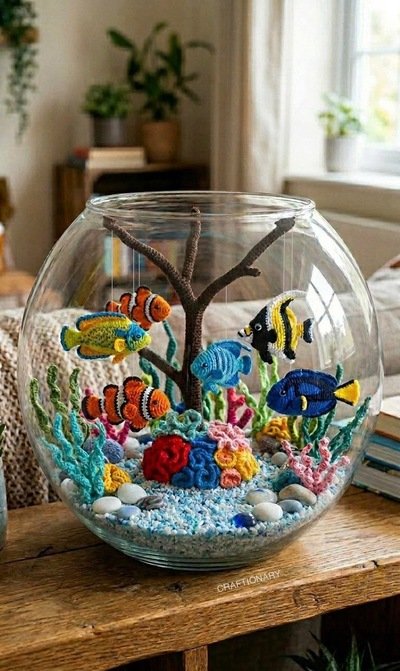

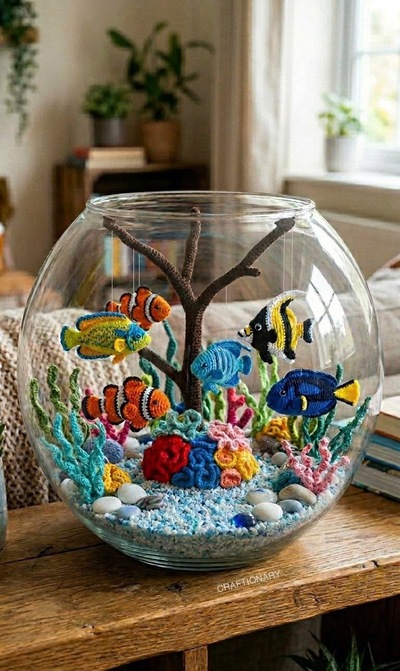
This crochet aquarium display features a glass bowl filled with a central crocheted driftwood branch (or real twig), hanging crocheted fish, colorful crocheted coral/seaweed/anemones, and a gravel/pebble base (real or crocheted accents).
Imagine an aquarium that never needs cleaning, requires no feeding, and brings a vibrant splash of the ocean into your living room. Crochet aquarium is a masterpiece of slow crafting that combines amigurumi techniques with creative home decor.
Whether you’re looking for a unique nursery accent or conversation starter for your bookshelf, we’ll walk you through creating your own underwater wonderland. Please note that some basic knowledge is required to follow the instructions.
DIY Crochet Aquarium in Fisbowl
A no-water aquarium is a low-maintenance and sustainable decor. For fiber artists, this project is the ultimate way to use yarn scraps while practicing a variety of stitches—from the tight rounds of an amigurumi clownfish to the wavy, organic texture of crochet kelp.
Materials needed
Collect these supplies to recreate a vivid scene:
- Glass container: A large round fish bowl or recycled glass terrarium.
- Yarn: Cotton or cotton-blend yarns in vibrant oranges, blues, yellows and greens. Cotton provides the stitch definition needed for detailed fish.
- Crochet Hooks: 2.0mm to 3.0mm. A small hook is essential to ensure that the stuffing does not peek out.
- Base Elements: Aquarium gravel or blue pebbles and smooth river stones.
- Structural basis: Wire wrapped with brown yarn for coral trees or a crocheted branch and clear fishing line for hanging fish.
- Details: 4 mm safety eyes Or black embroidery thread for fish eyes.
- Optional: Stuff lightly with polyester fiberfill where needed. Gauge is not important for this decorating project.
Step by step instructions
The fish appear suspended from a branch with invisible thread or fishing line for a floating effect. Below are detailed instructions and adaptable patterns for each key crocheted element.
Common Abbreviations:
- SC: A crochet
- DC: Double crochet
- HDC: Half double crochet
- MR: magic ring
Related: Amigurumi Fish Tank Pattern
1. Crochet your tropical fish
Clownfish, Blue tang/Dory, Moorish Idol, Yellow tang, Other fish
Iconic species like clownfish and blue tangs.
- body: Most fish start with the magic ring and work in a continuous round (spiral). Raise to widen belly and lower to tail. Use a stitch marker to keep track of your progress.
- Color Changes: To get those crisp stripes (like clownfish), use the jogless join technique while changing colors.
- Finns: This is usually worked flat and then sewn onto the body.
1) Clownfish (Nimo-style, orange with white/black stripes)
- Content: Orange, white, black yarn; 3.5-4 mm hook; safety eyes or embroidery; filling
Basic pattern:
- body: Start with oranges. 6 SC in magic ring.
- Increase: 2 SC in each stitch around (12).
- Growth: 1 SC, Inc (18) around.
- Color bar: Switch to black for 1 round, then white for 3 rounds, then black for 1 round.
- Taper: Return to Orange. SC around for 4 rounds, then 1 SC, December (12) around.
- tail: Chain 8-10, work 2-3 rows sc or dc, join or continue through body. Add a fork shape with increase/decrease. Flatten the ends and SC through both layers to close.
- Fins (orange with black edges): Crochet small triangles (chain 4, turn, 3 SC, turn, 2 SC, turn, 1 SC) and sew on the sides.
- Eyes: Black safety eyes or embroidered white/black dots.
- Assembly: Stuff body, sew parts, weave end. Size: 8-12 cm.
- Variation: Multiple clownfish of slightly different sizes.
2) Blue Tang (Dory-style, blue with yellow tail)
- Colors: Royal blue, yellow, black yarn.
Basic pattern:
- body: Start with blue. 6 SC in magic ring for nose and head.
- Wide body increase (tall/skinny profile): Use hdc for dorsal area. Place markers for top/bottom. Body round with strategic increase/decrease for oval-tapered shape (30-36 sts max).
- tail: From the taper to the base of the tail, switch to yellow for the tail. Raises on the sides for a triangular/lunette shape, then flattens and closes. Work 5 dc in the last stitch for a fan shape.
- Finns: Tall dorsal (blue), pectoral (yellow/black accents), small others.
- Details: Add black markings with surface crochet or embroidery.
3) The Moorish Idol (Black/yellow/white with long dorsal)
- Colors: White, yellow, black yarn.
Basic pattern:
Similar to above but with taller, more narrow body and much longer dorsal fin extension. The long flowing top fin is key. Detailed pattern is linked above.
4) Other fish (yellow/blue, striped blue)
Use the same oval body base. Change colors and fin shape.
- General Fish Body Tip: Work in continuous rounds. Usage increases for heads, decreases for tails. Flatten the tail by working rows across the ends.
- Hanging: Attach a strong thread/fishing line to the top of each fish (sewing securely). Attach to branches at different heights/lengths for a mobile effect.
2. Building a coral reef
Coral, seaweed and anemones
The bottom of the bowl is filled with hyperbolic crochet – a technique that creates ruffles by rapidly increasing the stitches.
- Use bright colors: Greens, pinks, reds, blues, yellows. Change the texture.
- Kelp: Chain a length of green yarn, then work 3-4 SC in each chain. It will naturally curl into a spiral.
- Brain Coral: Crochet a long, thin tube, lightly stuff it, and then coil it into a brain-like pattern and sew it onto itself.
1) Hyperbolic Chorale (ruffled, brain-like or branched)
- Colors: Red/pink brain coral, blue/green branches.
Basic pattern:
A great free technique for organic reef shapes:
- MR or chain ring.
- Round 1: Mix sc, hdc, dc.
- Subsequent rounds: 2 (or 3) dc in each stitch to create a quick ruffling (hyperbolic geometry).
- Change hook size/yarn for different scales. Finish with an edge (eg, ch 3, sc picots).
2) Tube/branching coral
Chain the base, then work a spiral or multiple fingers: eg, ch 10-20, work with sc or hdc, then branch by working in side stitches.
For long tubes: Work in the round around the chain or wire.
3) Seaweed/kelp (green/teal, wavy)
- Support: Chain 20–40+ (length of frond).
- Friends: Work back with chain: 2-3 sc in each ch for ruffling, or alternate sc/hdc/dc for different widths/waves.
- Add multiple fronds from one base chain. Steam or curl with fingers.
4) Anemones/sea flowers (pink, blue, red)
Support: MR 6–8 sc.
Petals/Tentacles: Work chains or loops outward (ch 5-10, sl st or sc back down, repeat around).
For the puffer: Use multiple layers or a picot edge.
5) Brain Coral (Pink/Yellow)
- Crochet a very long, thin tube (6 SC in magic ring, SC around 20+ inches).
- Fill the tube gently.
- Coil the tube tightly and use a tapestry needle to sew the coils together, creating a mounded “brain” texture.
3. Coral Tree Centerpiece
To give the aquarium height, make a wire armature, a crocheted branch, or for authenticity use a real cleaned driftwood branch and hang crocheted elements from it.
1) Yarn wrapped wire:
- Bend heavy-gauge floral wire into a branch shape.
- Wrap the wire tightly with brown yarn, securing the ends with glue dots.
- Anchor the tree to the gravel at the base of the bowl.
2) Simple crochet branch (or use a real twig):
- Use brown yarn (poor weight) and a 4 mm hook.
- Create a long I-cord or thick chain-stayed structure for the main trunk, then branch out.
- I-cord trunk: Cast on 4-6 stitches. Work i-cord (knit in the round without twist) to desired length (eg, 20-30 cm). Fold and stitch into shape.
- For Branches: Chain 10-20, work 1-2 rows of single crochet (sc), join to trunk with slip stitch (sl st) or sewing. Similarly add small side branches.
- For composition: Work only in back loops (BLO) or use twig stitch (search for tutorials) for bark-like stripes.
- Stiffen with fabric stiffener or starch if necessary. Insert wire for posing.
- Attach to the base of the bowl with hot glue or by anchoring in gravel.
4. Assembly and Suspension
This is where the magic happens.
- Support: Fill the bottom of your glass bowl with 2 inches of aquarium gravel. Place a few large feature stones in the center.
- Reef Planting: Push the base of your coral tree into the gravel. Arrange your brain coral and kelp around the base of the tree. Use a small dab of hot glue to secure the stones in case they fall over.
- Suspending the fish: Cut a 10-inch length of clear fishing line. Draw the line through the top of the fish and tie a secure knot. Tie the other end of the line to coral tree branches at different heights.
- Measurement: Fish 5-15 cm, create corals of different heights. Test fit in your bowl.
- finish: Block pieces if necessary. Use fabric glue or needle-felting for details. Add small crocheted bubbles (small circles) or beads.
- Customization: Adjust measurements. For beginners, start with seaweed and simple corals.
- Yarn and Safety: Acrylic or cotton yarn. If for children/pets, secure everything well and avoid small parts.
Common Questions:
1. How do you make my crochet fish look realistic?
Use surface slip stitch to add detail to the fins and body. This adds a 3D texture that makes the scales and fin rays stand out.
2. Can you wash the aquarium components?
Since these are housed in glass bowls, they remain relatively dust-free. If necessary, you can use a can of compressed air to dust the inside without moving the delicate fish.
3. What is the best way to anchor a tree?
If the gravel wire isn’t enough to keep the tree stable, use a small piece of floral foam or a glob of mounting putty in the bottom of the bowl before adding the gravel.
Crochet Tips for Best Results:
- Stress is everything: If your stitches are too loose, the poly-fill stuffing will show. Aim for a firm, tight fabric.
- Durability: Use recycled glass containers and leftover yarn from other projects to make this eco-friendly craft.
By following this guide, you’ll create vibrant, whimsical art that brings the beauty of the ocean into your home—no fish food required!
Share your finished projects with us Facebook And get specialized.
You may also like:
Crochet Realistic Hydrangea Bouquet: Free Pattern Instructions
Beginner crochet plant free pattern for first time crocheters