

Want a dishwasher that smells clean without adding anything extra? In 2026, small kitchen habits are replacing store-bought solutions, and one of the most recurring items is using leftover lemon peel instead of rinse aid.
The idea seems simple. You use what you already have, reduce waste and improve the performance of your dishwasher at the same time. The promise is a better smell, fewer water spots and a cleaner interior without adding another product to the cycle.
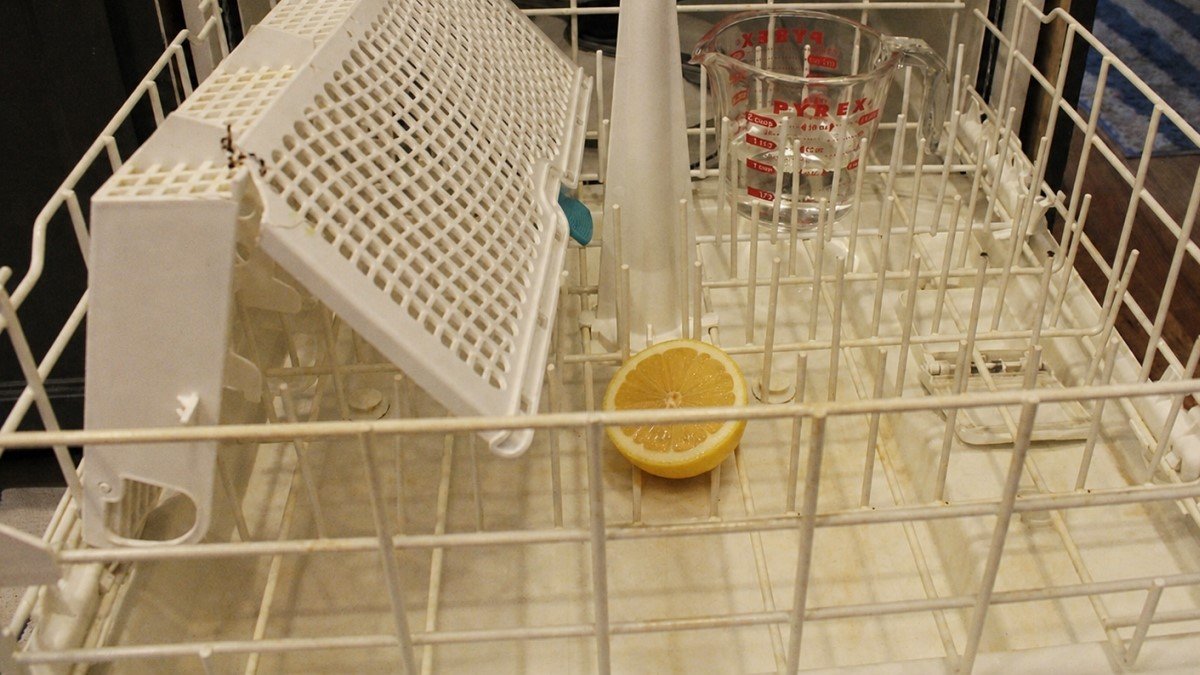
I tried it the way most people describe it. Squeeze half of the lemon on the top rack, run through the usual cycle with the rest of the dishes.

What does a lemon actually do during the cycle?
The effect comes from citric acid. As the dishwasher runs, the heat and water release the acid, which helps break down light lime scale and surface residue.
This is most clearly visible on glass and plastic. Containers that usually come out with a cloudy film look clearer, and have less of the dull layer that hard water leaves behind. It doesn’t replace detergent, but it does add a little boost where buildup usually occurs.
The smell changes immediately. Instead of the usual mix of detergent and trapped moisture, the dishwasher opens with a mild citrus scent. It’s not strong or artificial, and it doesn’t stretch heavily. It just removes that stale smell that builds up over time.

That’s where the method starts to break down
The part that gets overlooked is the lemon itself.
Even when you use only the peel, the pulp and fiber remains inside. During the cycle, small pieces are broken off and move through the machine. Some are caught in the filter area, while others settle to the bottom.
It is not enough to cause problems after one wash. The dishwasher still runs normally, and nothing seems to be blocked. The problem appears when the habit is repeated. Over time, those little pieces collect in places you don’t check often and that’s where the buildup starts.
This is where the method changes from helpful to what you need to manage. A cleaner result comes with a small maintenance trade-off that most quick tips never mention.

Where it works and how to use it without problems
This works best when you treat it as an occasional boost, not as a replacement for everything else.
Squeezed lemon peel on top rack, open side down, gives best results. It releases enough citric acid to help with odors and light residue without flooding the machine with pulp. It is sufficient to run it with normal load, no empty cycle is required.
The difference is controlled when the lemon is emptied before going inside. Less pulp means less residue left behind. Checking and rinsing the filter after a few uses keeps everything working as it should.
What starts as a simple savings turns into a small upgrade to how the dishwasher feels and works. It improves smell, cuts down on bulk, and uses something that would otherwise end up in the trash. It only works best when you understand what else it leaves out.



