

Covering weeds with mulch seems like a shortcut, not a real solution. I wasn’t trying to recreate the soil or follow a perfect gardening method.
The area was already taken over, with tall weeds growing unevenly and coming back faster than I could remove them. Digging out felt too much for what was supposed to be a simple reset.

So instead of taking everything out I covered it up. What changed after that wasn’t immediate, but it shifted how the ground behaved in a way I didn’t expect.
Why did I try it?
From a distance, the place looked overgrown but orderly.
Up close, it was clear that the weeds weren’t just surface level. They were coming back from the same place, thicker each time, which meant the roots were still active and spreading down. Cutting them out helped for a few days, but the pattern remained.
The idea of removing everything from it seems temporary. I wanted to see if covering up the problem instead of fighting it would change anything.
What I actually did
I didn’t clean the area completely before starting.
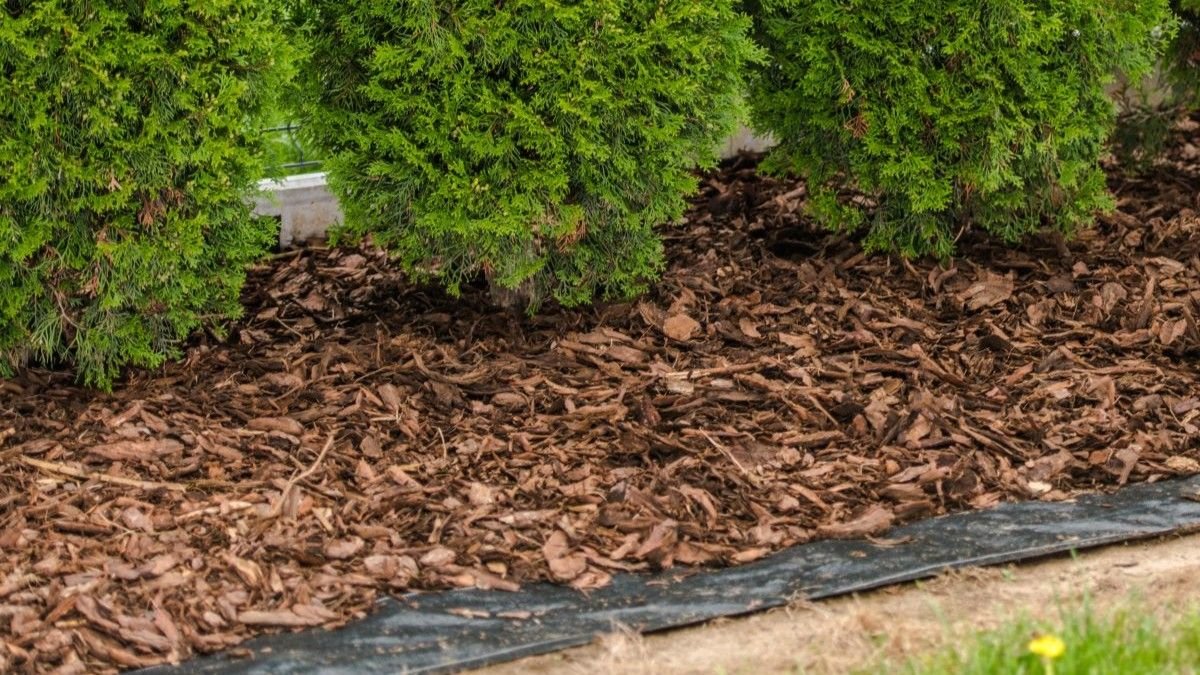
The weeds were cut back enough to bring them close to the ground, but the roots remained in place. On top of that, I laid a loose, even layer of mulch on the surface, thick enough to block most of the stuff below without compacting it.
There was no mixing with the soil, no digging, and no layers were added first. The goal was to see how the surface would react on its own once the light and exposure were reduced.
What changed first
The first change was not dramatic, but it was consistent.
The exposed soil disappeared almost immediately, replaced by a surface that held moisture and remained dark for a long time. This area looked more controlled, although nothing was removed from below.
The weeds didn’t disappear overnight, but their growth slowed. The new shoots were thinner, less stable and easier to pull out than before.

What changed over time
After a few weeks, the difference became easy to read.
Most of the small weeds stopped pushing completely. They had lost the conditions they needed to grow rapidly, and the mulch had created enough resistance to keep them down. The surface remained more even, without constantly breaking new growth in random spots.
But the deep weeds did not follow the same pattern.
Some of them came back through the green grass, slow but still active. Their stems were weak at first, but they kept coming back from the same roots below. Covering the surface changed how they grew, whether they existed or not.
At the same time, the soil itself began to shift. It retains moisture longer, feels less compact, and doesn’t dry out as quickly between showers or rain.
Where it worked and where it didn’t
The structure changed the surface more than the structure.
This made it easier to manage the area, reduced how often weeds appeared, and improved how the soil behaved on top. But that doesn’t remove what was already established below.
In areas where the weeds were shallow and sparse, the difference was obvious. In places where roots were deeper and stronger, mulch slowed but did not stop them.
It became less about eliminating weeds and more about controlling how they returned.
What does that mean?
The problem wasn’t just what was growing above ground.
How exposed the surface was, how quickly it dried, and how easily new weeds could take hold. Once that level was covered, conditions changed, and so did the pace of growth.
Mulch doesn’t fix everything, but it does change the balance. Instead of constant recovery, the area became something I could maintain without having to start over every time.
And it turned out to be more useful than I expected.



