
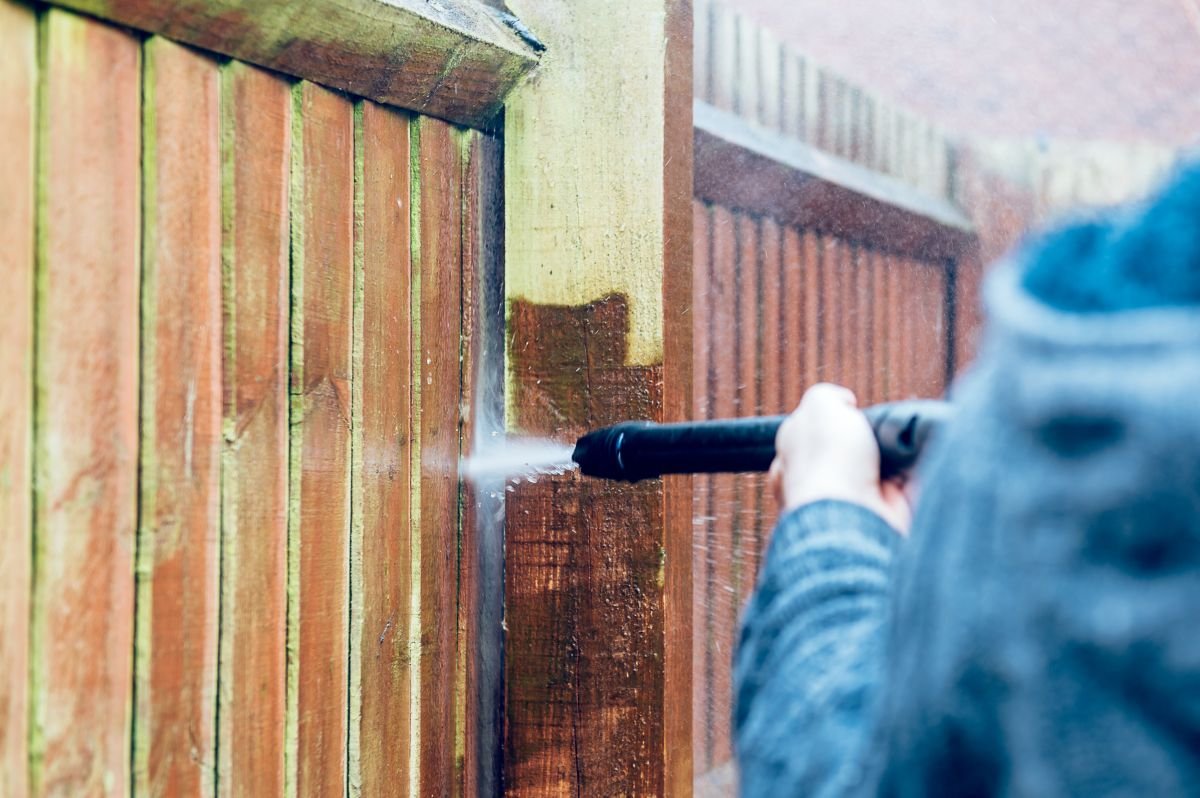

Pressure washing a fence can seem like one of the most satisfying outdoor projects you can do. Years of gray, weathered wood disappear in seconds, revealing a clean, warm tone underneath. It looks like you just changed the whole fence.
That was my reaction on the first day. What I didn’t expect was how different the wood would look after a few weeks, after it had time to dry, settle, and undergo normal weathering.

what i did
The fence had not been cleaned in years. It had that typical gray tone that most people assume because of how old wood looks.
I used a pressure washer with a standard tip and worked panel by panel. The difference was immediate. The gray layer disappeared, and fresh wood emerged almost immediately. It looked like a fresh installation, not a clean one.
At the time, everything indicated that it was the right decision.
This is what the fence looked like after
Immediately after washing, the result looked almost too good. The color was the same, the grain was visible, and the whole fence stood up again in the yard.
He didn’t look clean. He looked changed.
There were no visible signs of damage. No cracks, no missing pieces, no obvious splintering. Just clean wood and a sharp contrast to what was before.

Weeks later what started to show
After about two to three weeks, the surface began to change.
The wood felt rough as I ran my hand across it. Small fibers started to lift from the surface. In some sections, thin splinters were visible, especially where the spray was stopped for a long time.
The color also changed faster than expected. Instead of staying fresh, parts of the fence began to fade unevenly, the patches dulled again.
What really did the pressure
Removing the outer layer of wood gave a clean look.
That gray color is not just dirt. It is aged wood that has been hardened by sun and weather over time. Pressure washing strips away that layer, exposing the softer material underneath.
That new level is more sensitive.
High-pressure water also forces moisture deeper into the wood. As it dries, the fibers rise, expand, and then contract. This is what causes the rough texture and early splintering.
The effect is not immediate. It appears after a drying cycle and exposure to the sun.

Where the damage first shows
Sections that were already slightly worn reacted first.
Areas close to the ground, where moisture remains longer, change faster. Panels receiving direct sun also show more uneven fading after cleaning.
The edges and knots in the wood were the first places where fibers were lifted and small cracks appeared.
Old fences react much faster than new fences.
What I changed next
I stopped using high pressure on the fence.
For maintenance cleaning, a gentler approach works better. A cleaning solution and brush remove buildup without stripping the surface.
After pressure washing, sealing becomes essential. Without it, exposed wood weathers faster than before.
A clean look is not the end result. It is the starting point for protection.
What works better than high pressure
Wide spray pattern minimizes impact on wood fibers.
Keeping the distance from the surface reduces the force without stopping the cleaning effect.
For older fences, low-pressure washing or gentle washing gives better long-term results. It removes dirt without stripping the surface too much.
In many cases, a simple cleaning solution does the same visual job without damaging the structure.
This is what changed
Before, I thought pressure washing was a quick way to clean wood.
It is not.
It is close to sanding with water. It removes material, not just dirt.
The fence looked its best the day it was cleaned. A few weeks later, it showed what really happened on the surface. The change did not come from new losses. It was already there, just not visible yet.



