
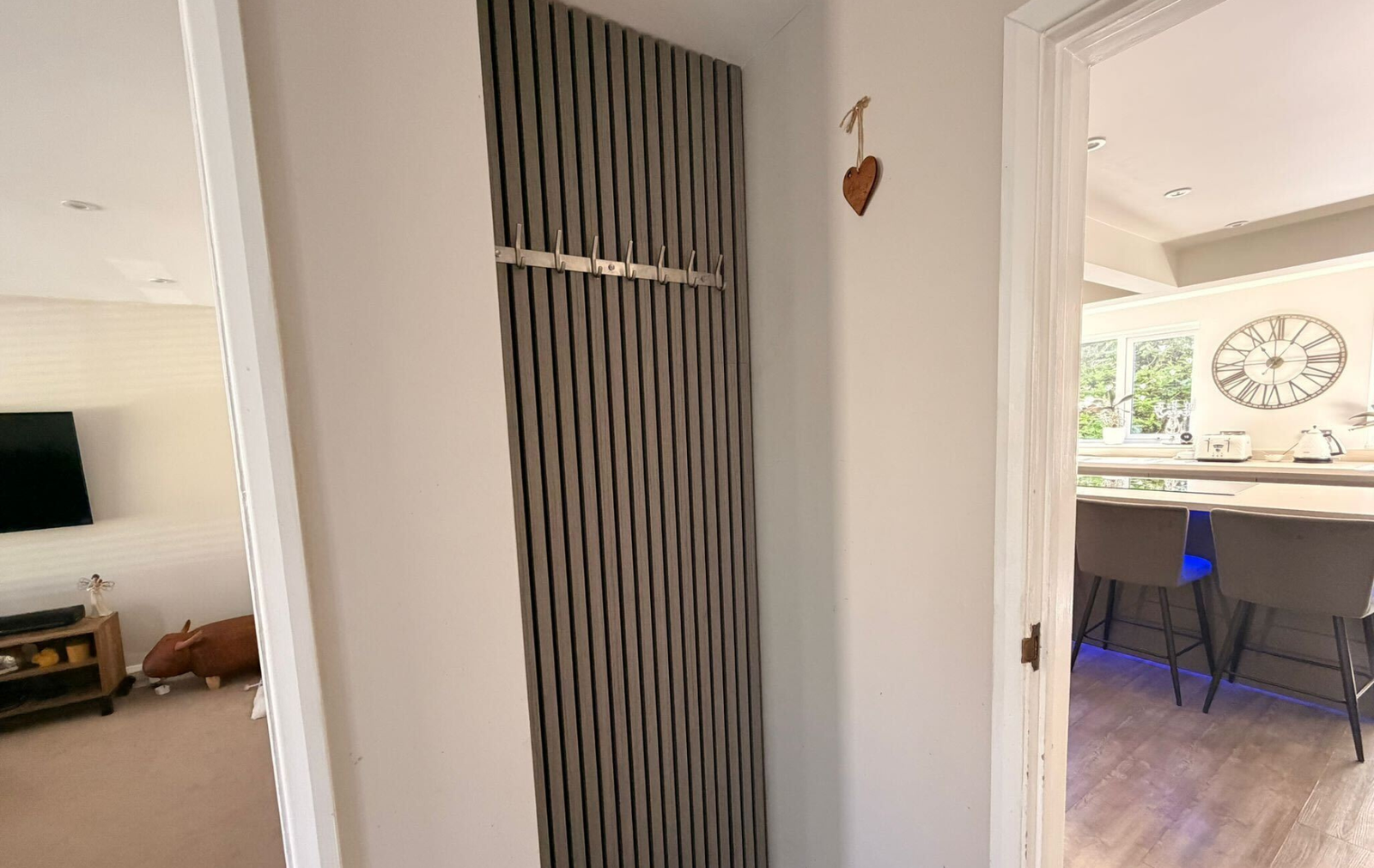

After decorating the guest bedroom with a slatted feature wallMy parents were left with an abundance of paneling and no idea what to do with it.
But after a video surfaced suggesting clever ways to upcycle it, they knew just the place for it—a lifeless alcove in their hallway that was in desperate need of a refresh.
Not only does this new addition breathe new life into a once-boring wall, but it’s also a game-changer for catching spills from under cat food, as it’s easier to clean.
Article continues below
“When you’re redecorating on a budget, upcycling dated or tired-looking features is a great place to start. It’s a simple and easy way to instantly add some character, without needing to completely overhaul a room,” says Summa Costandi, co-founder Panels by Sophia.
How to recreate this idea
After measuring the width of the alcove, the paneling was cut to size using a Stanley knife, pulling down the felt backing.
If you are dealing with a particularly curved ceiling or curved wall and need to cut it lengthwise, you can create a template using cardboard. Cut it to match the profile, place it on the wall panel, draw around it and then cut it out using a jigsaw.
To fix the paneling in place, my parents used Stixal adhesive and sealant, but any adhesive, such as Grip Fill, will work well for this. Consider wall paneling. It doesn’t take long to stick – just push it on the wall and away you go.
They decided to keep the original skirting in place, so the paneling sits nicely on top without coming down.
To make the most of this once-forgotten corner, they screwed in eight pegs, turning it into a useful hanging area for when you pass through the door, tucked slightly behind the edge of the alcove.
They’re really happy with the result and feel that the space looks more polished and put together than ever, while making the most of spare materials that would have been a real shame to waste.
What will you need?

Sika Stixall Extreme Power Sealant and Adhesive
This versatile adhesive can be used on wood, metal, plastic, glass and more and dries in just 10 minutes.

Stanley Sliding Pocket Knife
Durable, pocket-friendly and built to last, Stanley knives have a great reputation for a reason.
Other ways to upcycle leftover paneling
Even if you don’t have enough paneling to cover an entire wall, there are plenty of ways to get creative and put it to good use. Here are some of my favorite ideas I’ve found:
1. Media wall
If your Media wall While the idea may seem flat and boring, adding some paneling to the back is a great way to create some visual interest – Without buying a lot of knick-knacks to fill it.
As pictured below, slatted panels work best for this type of setup, offering a subtle but stylish backdrop to your TV. Shaker and wainscoting can also work, but you have to think carefully about the arrangement of rectangles.

2. Fireplace
Paneling is an easy way to liven up a tired-looking fireplace, but you’ll need to make sure you use fire-rated MDF panels.
“Installing paneling This is an easy and affordable way to give a classic home feature the refresh it deserves, even if you’re short on time and on a budget. Panels can be fitted to the front of the mantelpiece or across the entire feature wall to stylishly frame the fireplace,” says Summa Costandi.


total cost
Summa Costandi is the co-founder of Panels by Sophia, a decorative wall paneling company based in North Yorkshire. As well as driving all marketing activities and helping to grow the brand, Summa offers practical advice on product installation and styling, enabling DIY enthusiasts to create the home of their dreams.
3. Shelves
Another easy way to upcycle leftover paneling is to turn it into floating shelves. do you Hang it up Use it on a paneled wall for a seamless blend (as pictured below) or elsewhere to add a pop of interest, it’s a frugal way to use it.
“Small offcuts can work brilliantly as floating shelves, helping to create a more cohesive look throughout the home,” says James Bryant, founder of cut my. “It’s an easy way to reduce waste while adding a finishing touch that feels unique and personal.”


James Bryant is the founder of Cut My, a UK-based made-to-measure interiors company specializing in bespoke products for homes and gardens. A dedicated DIY enthusiast, James founded Cut My to make precision-cut materials accessible to everyone—from aspiring home improvers to professional tradespeople—by combining his expertise with a commitment to quality craftsmanship and customer service.
All of these ideas are incredibly simple and (virtually) free, but will go a long way in bringing forgotten features to life or even creating a new focal point.
If you found this helpful, you might want to learn too How I turned leftover decking into a DIY planter Or how a writer used a A wall paneling kit to revive a boring chimney breast.



