

Want a backyard where water feels like part of the layout, not something you blow away? In 2026, the temporary paddling pool disappears and is replaced by a fixed water zone.

Small plunges, shallow basins and integrated splash areas remain in place throughout the season and combine seating, shade and circulation. They are designed to be used frequently, not stored away.
What defines these setups is how they organize the yard. Water is no longer a separate activity. It becomes part of how people move, sit and spend time outdoors.
Curved lounge next to shallow edge pool

The pool sits snugly against the seat rather than pushing it over the edge of the yard. A low waterline and minimal coping eliminate visual obstruction, so the lounge and pool read as one continuous zone rather than two separate functions.
This layout changes how the space is used during the day. Children get in and out without the need for stairs or steps, while the seat remains active and attached. It turns the cool space into a place where people linger, not just pass through.
A formal pool with an integrated planter edge

The pool is framed by raised planters that define its footprint and control how people move around it. Instead of loose edges, the geometry creates an inclusive layout where greenery and water share the same structure.
This approach adds order and eliminates the ephemeral feel of backyard water features. The pool forms part of a designed garden structure, where planting, seating and circulation follow a clear structure.
Compact pool framed by perfect outdoor living

The water feature sits within a complete outdoor setup with loungers, a fire pit and seating arranged around it. There are no spaces or undefined lawns between elements, so everything functions as one zone.
This makes the pool useful beyond brief moments. It supports longer stays because the surrounding layout already solves where to sit, relax and gather, turning the backyard into a full-use extension of the home.
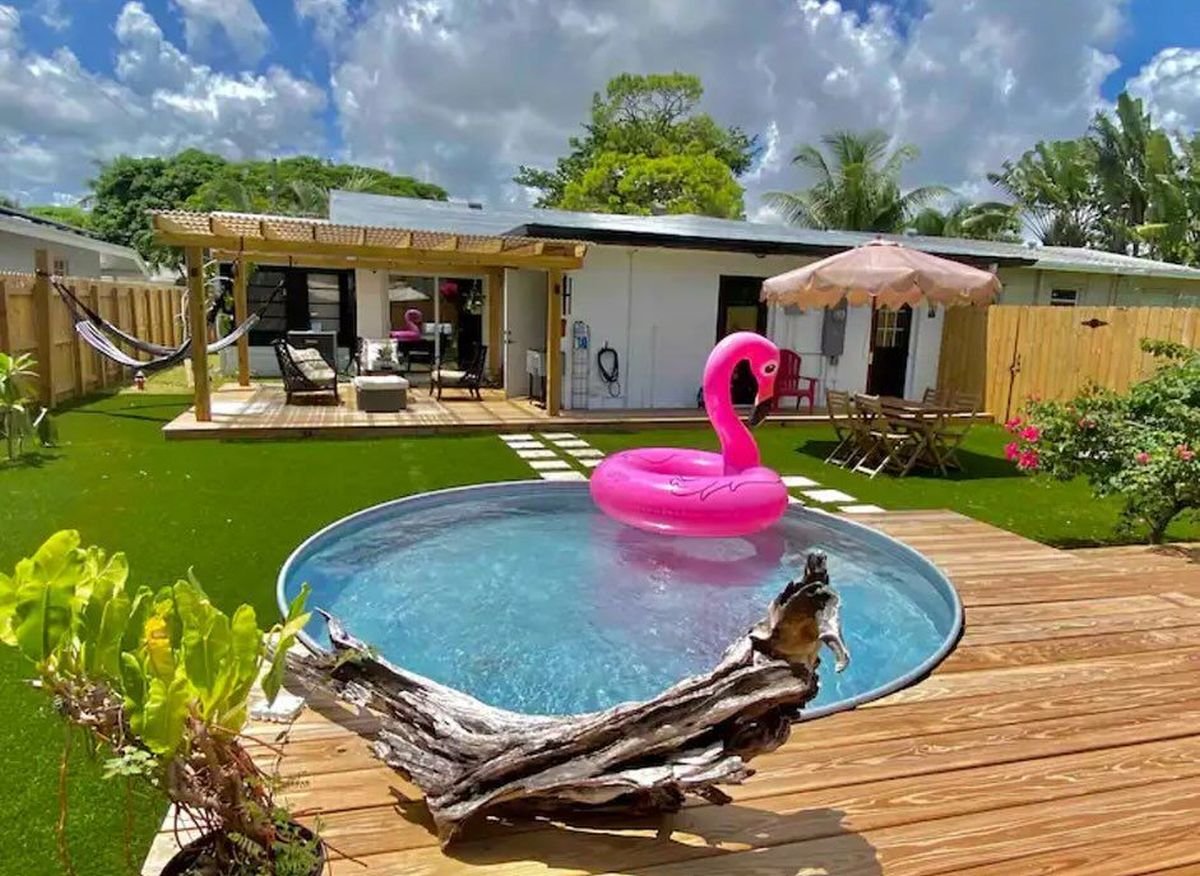
A circular wood-covered plunge pool on the lawn

A raised circular basin replaces an inflatable pool with a solid, permanent form. Wood cladding softens the structure and helps it blend into the lawn without looking industrial or temporary.
A defined edge keeps water contained and predictable, which improves safety and maintenance. It also creates a clear destination in the yard, giving the presence of a water feature without requiring a full in-ground installation.
Deck platform with built-in round basin

The pool is integrated directly into the raised deck, which controls both access and movement. Steps and level changes guide how people interact with the water, avoiding chaotic circulation throughout the yard.
This setup works well in small spaces because it concentrates activity in a defined platform. The deck becomes both a transition and usable surface, reducing the need for additional paving or separate seating areas.
Small pool with water wall feature

A standing water element adds movement and sound, turning the pool into more than a static surface. A water wall presents a visual anchor that draws attention even when the pool is not in active use.
This type of feature expands the purpose of the space. It supports comfort and ambiance, not only for playing, but also makes the backyard feel complete when one is not in the water.
Galvanized stock tank integrated into the patio

A stock tank becomes a permanent feature once it is set in a paved patio and surrounded by furniture. The metallic edge contrasts with the clean surfaces, giving the space a more purposeful look.
This solution keeps costs down while eliminating the disposable feel of plastic pools. It fits into the designed layout, so it reads as part of the patio rather than an add-on placed on top of it.
Shallow basin in open backyard layout

The pool sits flush with the ground, with grass and footpaths winding around it unimpeded. There are no high edges or heavy edges, which keeps the yard open and easy to navigate.
This creates a flexible layout where water does not impede movement. It allows the same area to play, walk and rest without dividing the space into separate zones.
Vertical tank with stair access

Elevated pools use steps to define entry and exit points, making movement more controlled. The height also gives the structure more visual weight, so it stands out as a fixed element in the yard.
This improves usability for both children and adults. Access feels deliberate, and the raised form minimizes splashing onto surrounding surfaces, keeping the area clean.
Pergola-centered pool with shade structure

The pool connects directly to the shaded seating area, so the transition between water and relaxation occurs without crossing the open space. A pergola defines the zone and makes it usable during hot hours.
This layout maximizes time spent outdoors. It supports long stays because it solves both sun exposure and sitting in one place, making the water feature part of a complete outdoor system.
A minimal round pool within white walls

The circular basin sits within a controlled courtyard, where walls block outside views and reduce visual noise. The focus remains on the water and immediate surroundings.
This approach works in compact or urban settings. It creates a private zone that feels complete even with limited space and eliminates the need for large landscaping gestures.
Bamboo covered basin with rock border

Natural materials wrap the pool, with bamboo cladding and stone edging blending it into the planting. The transition between water and garden seems gradual rather than abrupt.
This reduces the gap between built and natural elements. The pool becomes part of the landscape rather than sitting on top of it, softening the overall look of the yard.
Pool and spa combined in one structure

A connected spa section adds another function without requiring a separate installation. The two zones share the same footprint but serve different uses.
This increases flexibility without increasing space requirements. It allows both active use and quiet relaxation in the same layout, making the facility usable in more situations.
A rectangular pool framed by symmetry

The pool is centered in a balanced layout, with seating and planting arranged in an arrangement. Symmetry creates a clear structure that organizes the entire yard.
This approach brings consistency and control. It makes the space easier to read and use, especially in large backyards where the elements can feel disconnected.
Sunken pool next to outdoor lounge

The pool sits below the main seating level, using elevation changes to define the water area. Steps guide access while keeping the lounge area separate but connected.
This improves both safety and flow. A lower position reduces visual clutter and creates a natural boundary without adding fences or barriers.
Round deck pool with integrated seating area

A circular deck wraps around the pool and doubles as seating. Shape controls how people gather and keep everything oriented towards the water.
This reduces the need for additional furniture and keeps the layout compact. The structure itself becomes useful, which simplifies the overall design.
The pool is directly connected to the inner room

Large openings connect the indoor space directly to the pool, eliminating the divide between house and yard. The transition takes place in one step.
This increases the frequency of use. The pool becomes part of everyday life, not a separate activity, as it sits within immediate reach of the interior.



