
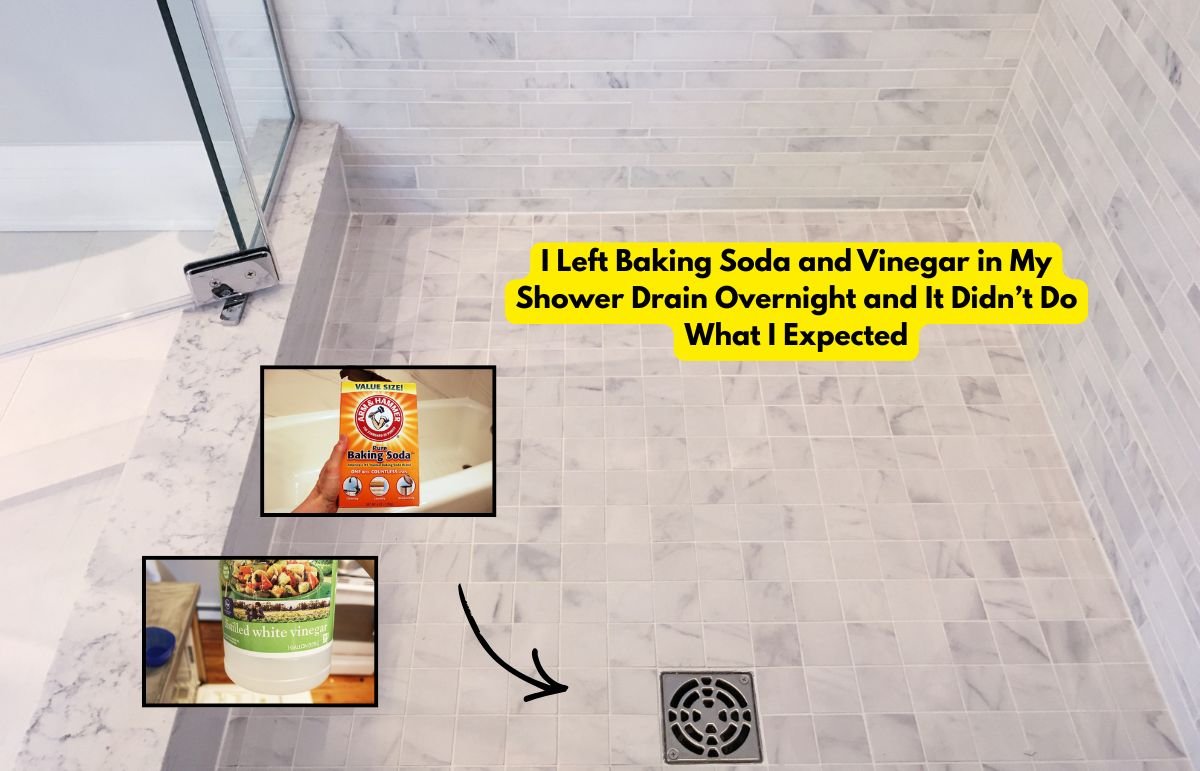

Pouring baking soda and vinegar down the drain seems to work. The bubbles start immediately, they make a noise, and it sounds like something is happening inside the pipe.
That reaction is why so many people believe it. But due to the bubbles, the drain is not cleaned. It is just a chemical reaction that creates a gas. The buildup inside the pipe stays where it is.
After testing vinegar overnight and comparing it to what people actually do over time, the difference becomes clear. Some methods appear to be active. Others actually eliminate the problem.

Why the baking soda and vinegar trick seems to work
The moment the two combine, you get a visible reaction. The foam rises, the pressure builds slightly, and it gives the impression that the drain is being cleaned from the inside.
The problem is what happens chemically. Vinegar is an acid. Baking soda is a base. When combined, they cancel each other out and turn into mostly water with gas bubbles.
The bubbles pass through the pipe, but they do not break the film containing hair, soap residue or odors. The reaction occurs rapidly, then stops. The buildup remains.
Instead of what actually worked
Once you stop focusing on the reaction and look at what physically changes inside the drain, the solutions become much easier.
Mechanical removal is the removal of most drains
Most clogs are not chemical problems. They are physical.
Hair, soap scum and oil clump together and sit inside the pipe, especially near where the water slows down. No mild solution can dissolve it completely.
What works removes it:
- Drain snake
- “Zip-It” plastic tool
- Bent wire hanger
- Remove the stopper and take out the debris
Once the material is drained, the drain is immediately cleared. No waiting, no reaction required.

Change the hot water and detergent to see how the drain behaves
After the blockage is removed, the buildup still builds up over time. This is where hot water and detergent make a difference.
Filling a sink or tub with hot water and a small amount of dish soap, then draining it all at once, creates both heat and movement through the pipes.
Heat softens grease and soap residue. Detergent breaks it down. The volume of water forces it through rather than allowing it to refreeze.
This works better than most “quick fixes” because it targets how the buildup formed in the first place.
Vinegar alone works, but only over time
Vinegar still has a place, just not in the bubbling mixture.
By itself, left in the drain overnight, it helps loosen organic buildup and reduce odors. It works gradually, not aggressively.
These are the main differences:
- Vinegar alone: Breaks down residue over time
- Vinegar + Baking Soda: Cancels and stops working
The overnight method works because it gives the fluid time to stay in contact with the pipe walls, where the buildup actually sits.
Enzyme cleaners maintain what you’ve already fixed
For long-term maintenance, enzyme or bacterial cleaners frequently appear in real-world use.
They do not unclog drains. They do not replace mechanical cleaning. But they help prevent the buildup from returning quickly.
Used occasionally, they break down organic material before it becomes a problem.
The plunger still does more than people expect
For soft clogs or partial blockages, the plunger can move enough material to restore flow.
It doesn’t completely remove the buildup, but it can change it so the water can flow again. In many cases, it is enough to avoid a major problem.
The real reason most drain fixes fail
The mistake is simple.
People try to dissolve something that needs to be removed.
Hair, soap film and oil do not disappear easily. They accumulate, bind together and stay in place. A quick reaction in the pipe does not change that.
Once you approach the drain as a physical system rather than a chemical system, the results become predictable.
What changed after testing this approach
The biggest shift was not the method itself. How was the drain treated?
Instead of reacting to odors or slow drainage, the focus shifted to preventing the buildup from staying inside the pipe.
- Remove any that get stuck
- Flush what starts to happen
- Use slower methods only when they have time to work
Once that was replaced, the drain stopped needing constant attention. No iterative “corrections”, no guesswork, and no reliance on only reactions that seem effective.



