
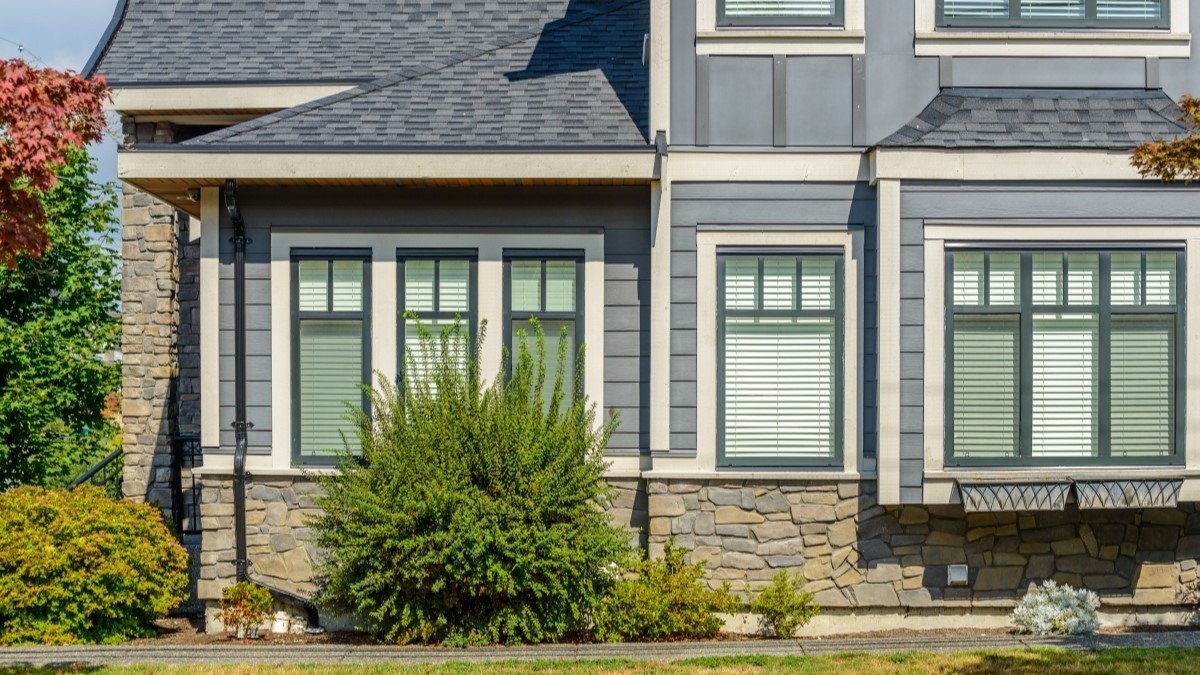

Tired of repainting exteriors that fade, chip and lose definition after a few seasons? In 2026, exterior design turns to materials that have their own texture, tone and structure from scratch.

Rather than relying on paint to define a facade, these choices use wood grain, stone depth, metal patina and panel systems to create a surface over time. Each option changes how the house reads from the street, turning flat walls into a material that ages, adapts and remains consistent without constant maintenance.
Corten steel panels

Corten steel panels wrap the volume with a uniform surface that changes in tone over time. The material develops a protective patina, moving from raw metal to deep rust shades that add depth to the facade without additional finishing.
The panels align in clean vertical seams that match the sharp roof geometry. The result reads solid and controlled, while the changing surface keeps the exterior from being static or over-finished.
Burning Wood (Shou Sugi Ban)

Shou Sugi Ban gives the facade deep black tones without relying on finish paint. The surface comes from charred Nordic spruce, then brushed and sealed, creating a texture that carries color through the material itself.
Vertical boards emphasize the simple gable form while the dark finish sharpens every edge and opening. Light from the inside is reflected against the matte exterior, making the volume stand out without the need for contrast trim or layered materials.
Board-formed concrete

Board-formed concrete bears the impression of wooden planks, leaving a linear texture across the facade. The surface is read as both structure and finish, eliminating the need for paint or adding cladding layers.
The long horizontal grain contrasts with the sharp window cuts and clean roof edges. The material maintains its tone over time, giving the home a stable, low-maintenance exterior that doesn’t rely on reapplication or touch-ups.
Concrete walls completely eliminate cladding. Board-formed texture adds scale and grain, giving the facade rhythm without applied layers.
Freeform stone cladding

Freeform stone cladding breaks away from flat rendered surfaces and introduces depth throughout the facade. Each piece has its own shape and edge, creating a layered wall that reads as built rather than coated.
Sky gray tones keep the palette calm while irregular patterns add movement. Paired with clean wood doors and dark trim, stone becomes the main surface finish, eliminating the need for paint while adding weight and texture over time.
A brick facade that has its pattern without paint

Brick replaces painted siding with a surface that already has color, pattern and depth. The combination of vertical and horizontal placement creates a grid that reads as designed rather than enforced, giving the facade a clear rhythm from a distance.
The warm earthy tones remain consistent over time and resist the wear that the paint first appears. Combined with sharp window openings and exposed concrete edges, brick becomes the main finish, eliminating the need for coating while keeping the exterior grounded and durable.
Vertical timber cladding

Vertical timber cladding creates a facade through repetition and natural variation rather than flat colour. Each board carries its own grain and tone, creating a surface that bends to the light without relying on paint to define it.
A vertical layout lengthens the elevation and sharpens the geometry around openings and edges. As the wood ages, the tone softens rather than peels, turning the veneer into a material that evolves over time while keeping the texture clear and consistent.
Fiber Cement Panels (Large Format)

Fiber cement panels create a facade defined by joints, lines and microstructure rather than surface color. Fine vertical ribbing adds depth without adding bulk, giving large walls a controlled pattern that reads from both close range and distance.
Panel layout becomes the design language. Sharp seams, aligned corners and framed holes give exterior structure without relying on paint layers. The finish maintains its tone over time, resists fading and surface wear, keeping the facade consistent and precise.
Stucco and stone combo

Stucco combined with stone breaks up the facade into separate materials rather than relying on a single painted surface. Simple walls create a clean backdrop, while stone columns and plinth sections add depth and weight where the structure meets the ground.
Contrast defines entry zones and corners without additional detail. Light stucco reflects heat and maintains tone, while stone holds texture and hides wear, creating a balanced exterior that stays consistent without repainting.
Cedar shingle siding

Cedar shingle siding creates a facade through repetition and shadow rather than a flat painted surface. Each stair creates a small offset, creating a layered skin that softens the volume and gives the elevation a consistent texture from top to bottom.
Muted blue tones paired with crisp white trim keep the structure defined while the staircase controls visual depth. As the material ages, the surface changes in tone rather than peeling, allowing the exterior to evolve while maintaining a clear, harmonious appearance.
Board-and-batten siding

Board-and-batten siding creates a vertical rhythm across the facade, using battens to break up the surface into distinct sections rather than one continuous painted plane. Distance creates depth and shadow lines that define height without adding extra material.
Light siding attached to exposed timber framing and stone foundations anchors the structure at key points. The finish remains consistent over time, while the battens add visual interest, turning a plain exterior into a built surface that doesn’t rely on repainting to stay defined.



