
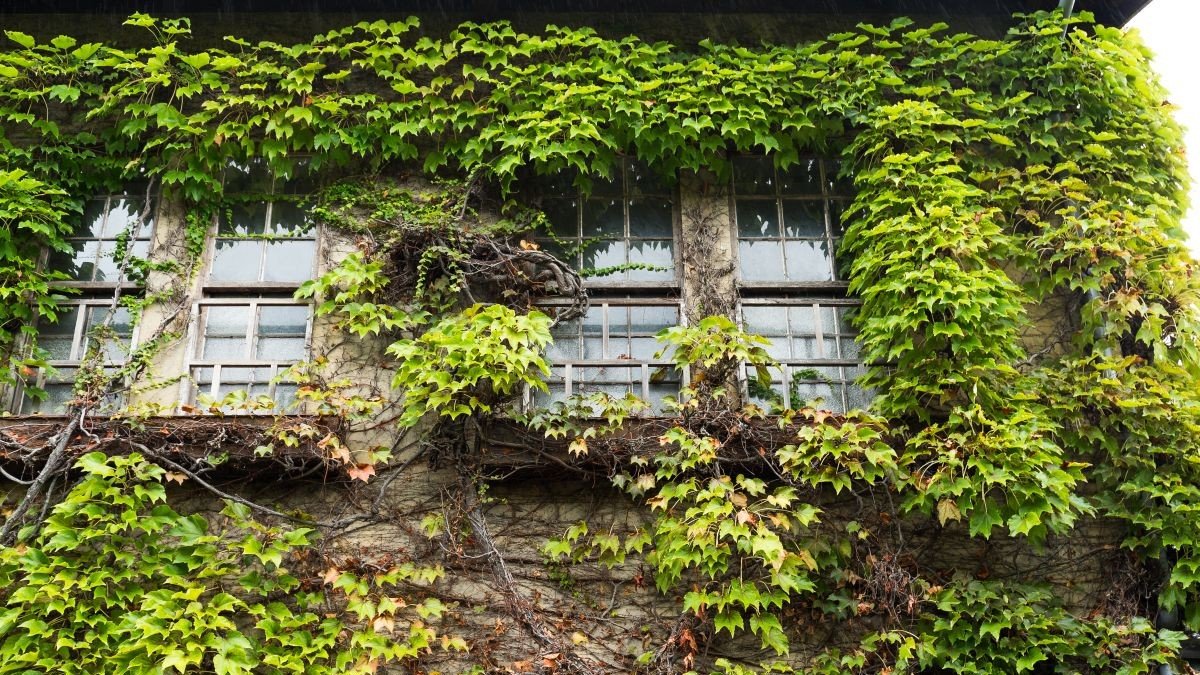

Climbing plants bring life to the garden. They soften fences, add greenery to walls and create that layered look that many landscapes need. I’ve always loved vines for the way they fill vertical space and connect the structures to the rest of the garden.

But one plant I avoid near my home is English ivy.
It has a classic look and appears in many older landscapes. The glossy evergreen leaves create a dense cover and the plant grows in almost any condition. At first glance, it seems like the perfect vine.
The problem is how it behaves once it spreads.
Why English ivy causes problems in the garden
English ivy (Hedera helix) spreads quickly once established. Grows in shade or sun and adapts to many types of soil. The long stems trail along the ground and take root wherever they touch the soil. Each rooted stem becomes another plant.
Ripe ivy also bears fruit. Birds eat the fruit and spread seeds far beyond the original planting area. This allows ivy to move into nearby gardens, woodlands and natural habitats.
Dense mats form on the ground, preventing other plants from growing. In many regions, the plant is classified as invasive because it replaces native vegetation.
What happens when Ivy climbs trees
Ivy often grows on tree trunks because it seeks light. While the species may appear decorative, the vine poses several problems for trees.
The plant competes with the tree for water and nutrients in the soil. Over time, the vines become thick and woody, adding weight to the branches and trunks.
Dense growth also hides structural problems. Cracks, cavities or rot in the trunk become difficult to notice under a dense cover of ivy. This makes it harder to spot safety issues until the damage is serious.

Why it can damage walls and structures
English ivy climbs surfaces using tiny aerial roots. These roots attach to materials such as brick, wood and plaster.
If there are already cracks in mortar or siding, roots can enter these spaces and trap moisture against the surface. Over time, this weakens the joints and extends existing damage.
The vine also gets heavy as it matures. Thick growth pulls on surfaces and can leave marks when removed.
Why ivy removal takes time
Once ivy has spread across the garden bed, removal requires persistence.
Cutting the plant once will not solve the problem. The roots remain in the soil and produce new growth. Repeated pruning forces the plant to use up stored energy until the roots weaken.
When ivy climbs trees, the safest method is to cut the vines at the base. The upper sections will dry out and die over time.
All removed vines should be bagged and disposed of. Pieces left on the ground or in compost can re-root and resume growth.
Better alternatives to English ivy
Gardeners who like the look of creepers still have good options that don’t behave as aggressively.
- Climbing Hydrangea – Climbing hydrangea grows more slowly but forms a strong and manageable vine. Tolerates shade and produces white lacy flowers in early summer. Once established, it creates cover without overwhelming nearby plants.
- Sweet Potato Vine – Sweet potato vine works well in containers or as a seasonal ground cover. Leaves appear in bright green, burgundy and mixed colors. Because it grows as an annual, it won’t spread across the landscape year after year.
- Virginia Creeper – Virginia Creeper is a native vine known for deep red fall color. It grows quickly but causes fewer structural problems than English ivy. Regular pruning keeps the plant under control.
- Boston Ivy – Boston ivy covers walls with dense foliage and strong fall color. It spreads faster than hydrangea but remains easier to manage than English ivy with periodic pruning.
- Wild Ginger – Wild ginger forms a low ground cover in shady locations. The heart-shaped leaves create a dense covering on the soil. The plant spreads slowly and does not climb trees or structures.
The bottom line
English ivy has a timeless appearance, but its growth pattern creates long-term problems in many gardens. The plant spreads quickly, climbs trees and can damage structures when left unchecked.
For gardeners who enjoy climbing plants, choosing a vine that remains manageable will create the same green effect without the risk of a plant spreading out of control.



