
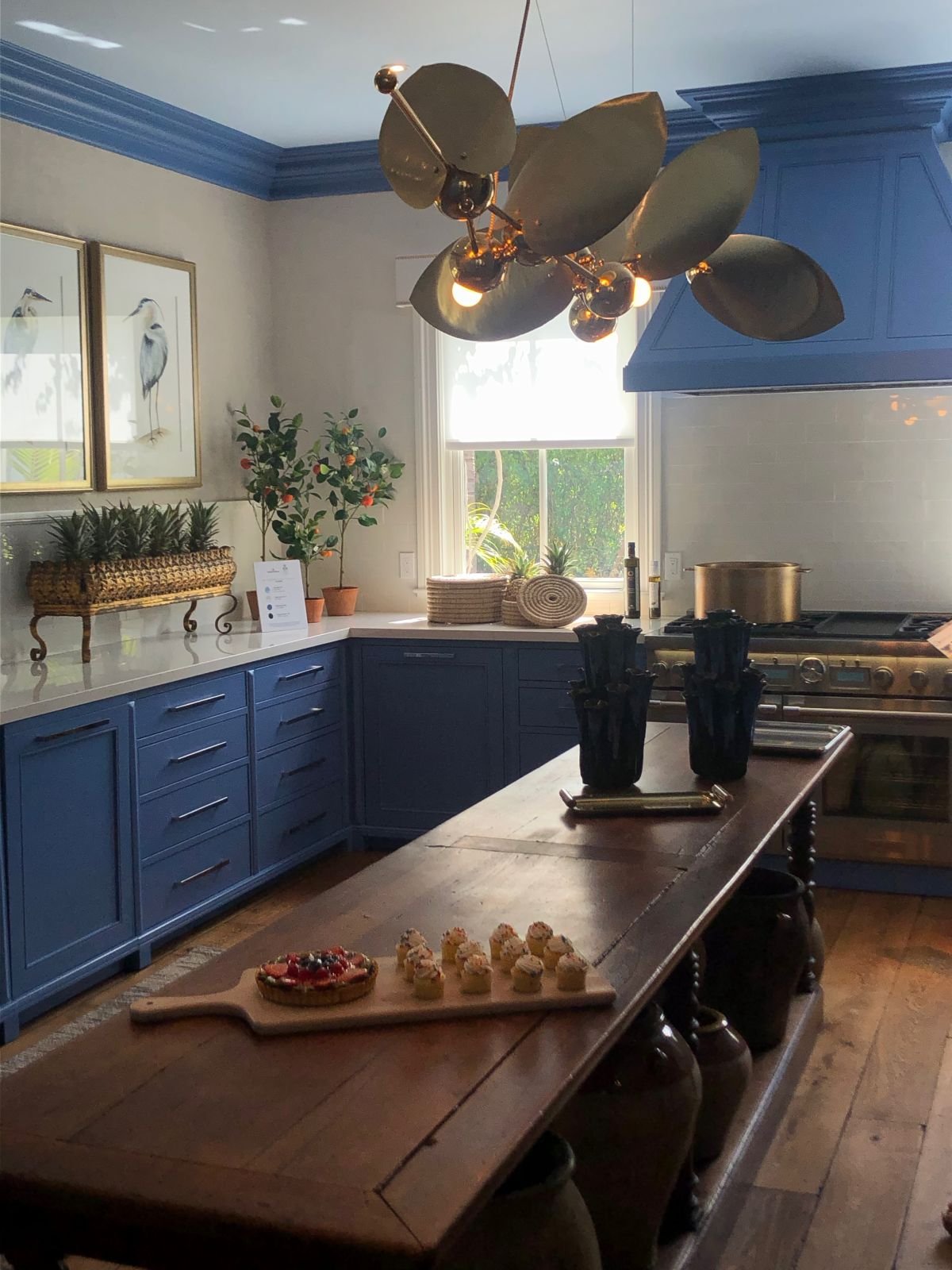

Most kitchens follow the same path. White cabinets, clean counters and an island that blends in with everything else. It looks finished, but it doesn’t last long.

What is seen in this kitchen is not a complete redesign, but a few moves that change how the space feels. A colorful island breaks up the monotonous look. Seating adds texture instead of disappearing. Lighting stops acting as a background and starts defining the layout. Even small choices, like what sits on the counter or how the shelves are used, begin to shape the room.
The shift is not about adding more. It’s about giving each part of the kitchen a role. An island becomes an anchor, not just a surface. Content works together rather than competing. Storage remains visible but controlled. These decisions make the space feel settled, connected and easy to use without being forced.
A green island breaks up an all-white kitchen

The layout remains simple, but the island changes how the space reads. A soft green base breaks up the white cabinetry and gives the room a clear focus rather than one continuous surface. It adds depth without adding new elements.
Seating and lighting are also arranged on this island. Stools line up with purpose, pendants sit straight up, and everything ties together around this one piece. The kitchen looks more defined, not just finished.
Bistro chairs bring texture to the kitchen island

The island remains classic, but the seating changes the feel of the space. Bistro chairs introduce patterns and textures that break up the solid surfaces of cabinetry and countertops. Curved frames soften the straight lines of the island and make the seating area feel more relaxed.
The combination of woven seats, warm wood and natural light create a layered look without adding clutter. Instead of a standard stool, these chairs turn the island into a place where people linger, not just pass through.
An oversized lighting island defines the zone

Large pendant fixtures pull the island into focus and give it weight within the room. Rather than blending into the ceiling, these frames form a structure above the workspace, making the island feel like its own defined area.
Scale is important. When the lighting matches the size of the island, the entire layout feels deliberate. The contrast between bold fixtures and clean cabinetry adds depth, turning a standard kitchen setup into something eye-catching.
Open island shelving keeps cookbooks within reach

The island doubles as storage, turning one side into open shelving that holds cookbooks and everyday items. It keeps things close without filling up upper cabinets or adding extra furniture.
This setup changes the way you work in the kitchen. Instead of hiding everything, it puts the most-used pieces on display and within reach. The combination of storage and seating keeps the island active on both sides, making it feel like the center of the room.
Open shelves keep everything visible but controlled

The layout avoids upper cabinets in key areas and replaces them with open shelves that hold everyday items. Jars, boards and small tools stay within reach, while the island and counters carry only what is used daily.
The difference comes from how it is arranged. Anything seems random or crowded. Everything has a place, and distance keeps surfaces clear. It turns storage into a design element without losing control of the space.
A single vase anchors the island

The island remains mostly clear, with a large vase placed in the center. It draws attention without adding clutter, giving the surface a focal point that feels purposeful.
This approach works because it limits what sits on the counter. Instead of filling a space with small objects, one element sets the tone. The contrast between the clean stone surfaces and the organic shapes of the flowers keeps the kitchen open but not empty.
Mixed materials give depth to the kitchen

The space layers stone, wood, tile and woven textures without forcing contrast. The marble island, wood cabinetry and tiled backsplash each hold their own, but none take over the room.
This blend works because the tones stay connected. Warm wood softens the stone, while a textured backsplash adds movement behind the range. Instead of a single finish carrying the design, a balance between materials keeps the kitchen feeling complete.
Earthy tones make the kitchen feel warm

The palette stays grounded with soft beige cabinetry, warm wood and muted stone surfaces. Nothing feels sharp or high-contrast, which keeps the space calm and easy to sit in.
This works because the tones connect to each surface. The island adds depth without breaking the flow, while brass accents and natural textures add enough variety. The result feels warm, balanced and without looking heavy.



