
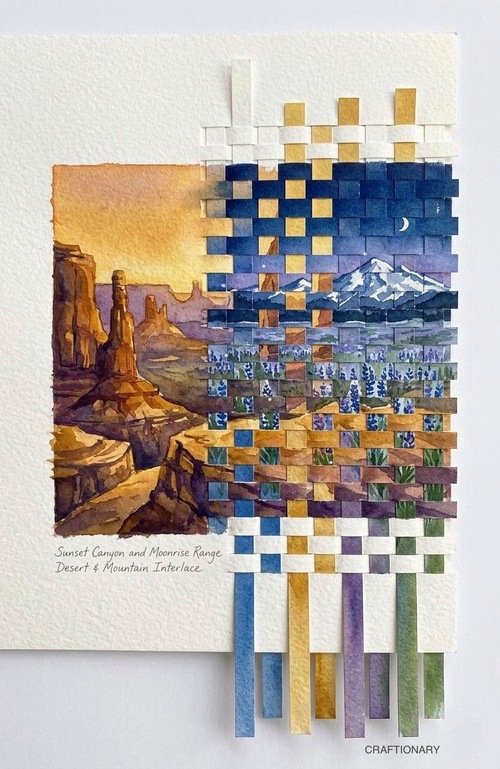

This style of art, often called paper weaving interlace, is a beautiful way to blend two different moods, landscapes or color palettes into one tactile piece. The example shown, Sunset Canyon and Moonrise Range, uses watercolor paintings to create a seamless transition between day and night.
Here’s how you can recreate this effect. If you are new to this art, you can try simple Paper weaving art technique First to get acquainted with it.
Materials you will need
- Two pieces of heavy paper: Watercolor paper (300gsm) is best if you plan to paint.
- Art Supplies: Watercolors, gouache or high-quality markers.
- Tools: A sharp craft knife (X-Acto), a metal ruler, a self-healing cutting mat, and a glue stick.
- Support: A large piece of cardstock or foam board for mounting.
Related: 50 Landscape Watercolor Painting Ideas for Beginners
How to make paper weaving art with paper strips?
1. Create your two artworks
Draw or draw two different scenes on separate sheets of paper. For best interlaced effect, use contrasting themes:
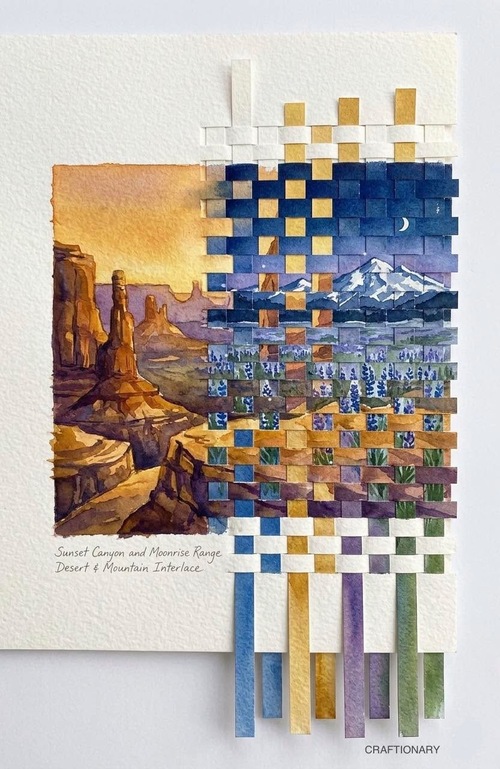
- Image A (The Base): This will be the warp (vertical structure). In the example, this is the warm, golden Sunset Canyon.
- Image B (The Strips): This will be the weft (horizontal threads). For example, this is the cold, blue moonrise series.
Pro tip: Make sure both paintings are exactly the same so that the horizon and details are the same when woven.
2. Prepare the base (vertical cut)
- Take image A and decide where you want to start weaving. In the photo, the weave covers the right half of the image.
- Using your metal ruler and craft knife, cut vertical slits in the paper.
- Decisive: Do not cut all the way to the edges. Leave a 1-inch border at the top and bottom to keep the paper intact as a single frame.
- Space your slits evenly (eg, every 1/2 inch).
3. Prepare strips (cut horizontally)
- Take image B and cut it into perfect horizontal strips.
- Keep them in order! It helps to lightly number them in the back so you don’t clutter up your landscape.
- Cut these strips the same width as your vertical slits for a perfect square grid.
4. Weaving process
- Take the first horizontal strip from image B and thread it through the vertical slits of image A.
- Use the classic over-under pattern.
- For the second strip, reverse the pattern (under-over).
- Press each strip tightly against the one above it to eliminate gaps.
The final touch
- Adjust the tails: In the example, some vertical strips are longer on the bottom and some horizontal strips are longer on the right. This creates a deconstructed look.
- Safe: Once the weave is tight and the images are aligned, place a small dot of glue under the ends of the strips on the back to prevent them from sliding.
- Mount: Glue the entire piece to your backing cardstock to give it stability and a clean border.
Design secrets from images
- Color transitions: Notice the additional strips painted in a solid color (blue, gold, purple, green) that extend across the bottom. The color palette adds key to this piece.
- Half-Half Look: By cutting slits in the right half of the base painting, you leave the left side pure image, making the woven transition look more deliberate and magical.
Some more ideas for inspiration are shared below:
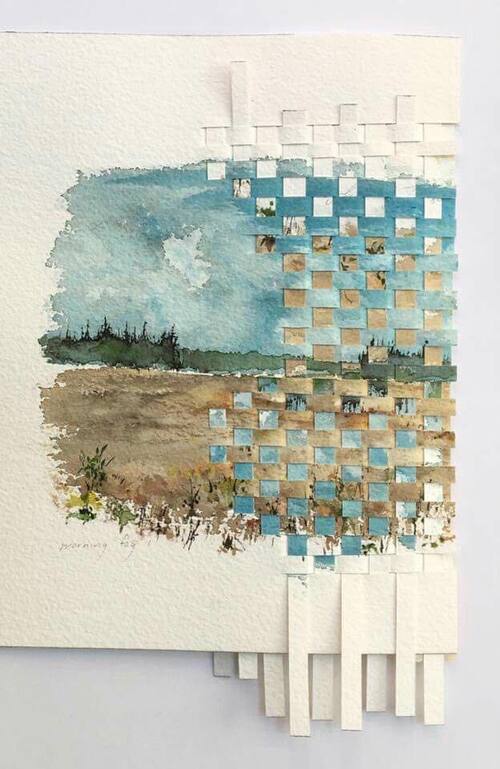
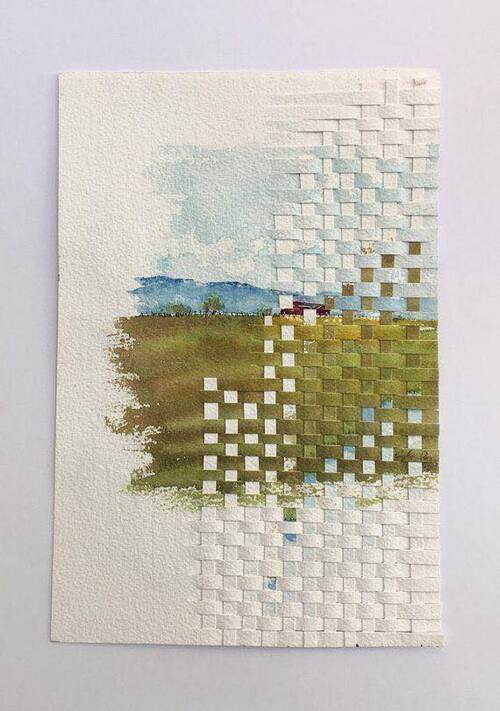
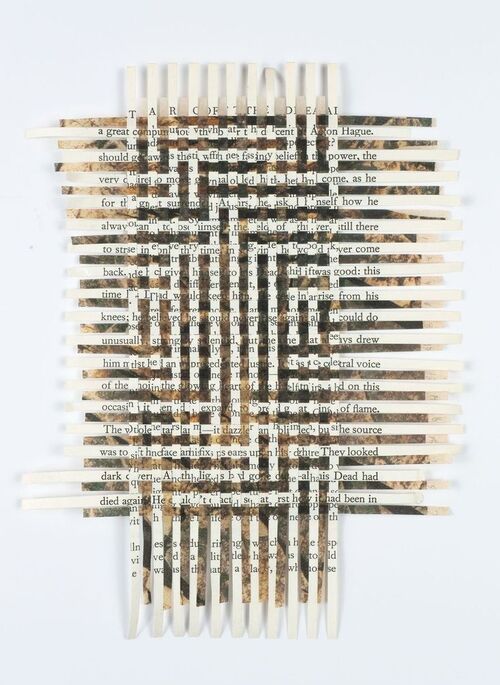
Geometric paper weaving artwork by Pauline Carleroux
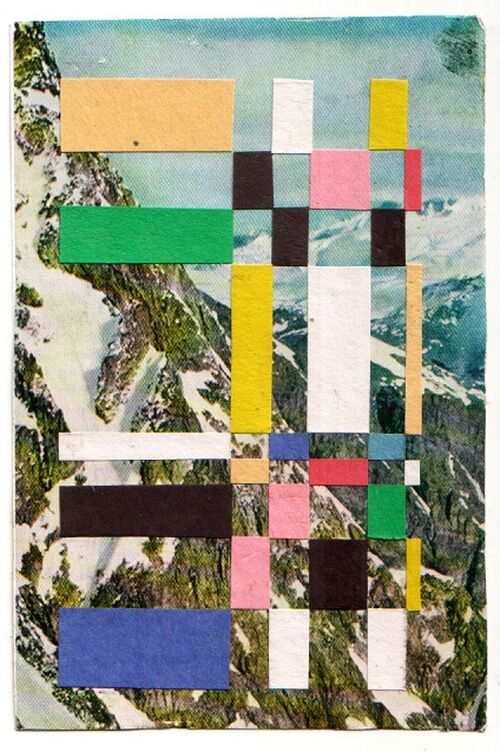
Photo and colorful paper strips by Arlene Sollum
You may also like:
Paper Woven Art: How to make a strip weaving from two artworks
Paper Quilling Art Ideas – Amazing Quill Projects for Beginners
Inkjet Printing on Fabric Using Freezer Paper (Easy Instructions)



