
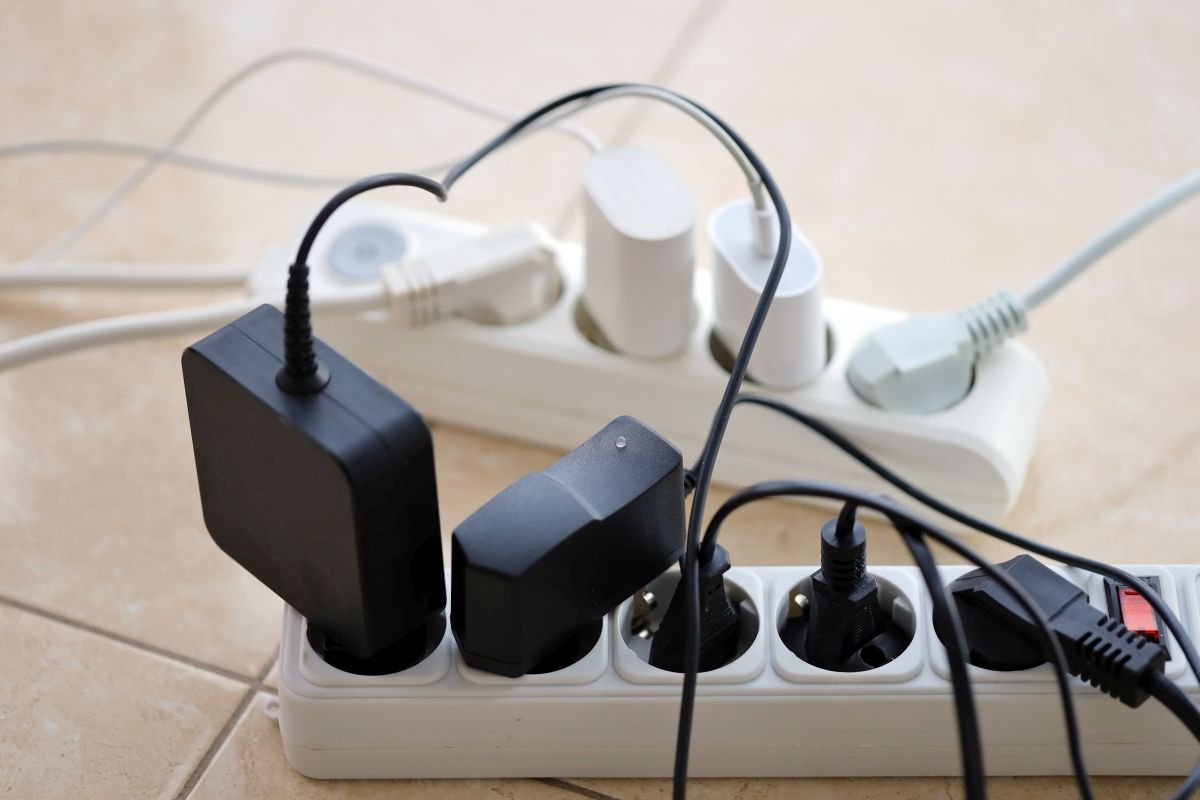

It doesn’t look dangerous. Two extension cords connected to reach one outlet seems like an easy fix. It solves a short distance problem without much thought. Most people have done it at some point, especially in rooms where outlets are limited.

But this setup can overload the circuit within minutes.
Electricians point to this particular mistake as one of the most common causes of preventable electrical fires inside homes.
Most people don’t think about this mistake
The problem is called daisy chaining.
It occurs when one extension cord or power strip is plugged into another to extend the reach or add more outlets. On the surface, it seems harmless. Everything still works. Nothing sparks immediately.
Danger happens quietly.
Each connection adds resistance. Every device pulls more load through the wiring than it was ever meant to handle. Heat begins to build up inside the cords, often without any apparent warning.
Why it quickly becomes dangerous
Extension cords are designed for temporary use and limited loads.
When multiple cords are connected, the system loses control. Power is not evenly distributed. Instead, it concentrates through a chain of connections that trap heat.
If the load from heaters, air conditioners or kitchen appliances increases, the temperature inside the cord can rise rapidly. Insulation begins to weaken. In some cases, it melts.
From there the fire starts.

Where this happens most often
Setups typically appear in locations where power is limited but demand is high.
- Behind entertainment centers where multiple devices share an outlet.
- Under the desk where the computer, charger and accessories go together.
- In a garage or workshop where tools need extra reach.
- Near heaters or window units where extension cords replace permanent wiring.
These are not rare situations. It’s the everyday setups that slowly push the system past its limits.
What makes it hard to notice
The threat is not immediately apparent.
Cords can look good. Devices continue to work. There is no clear indication that something is wrong. Heat builds up inside the insulation, out of sight.
When you feel a warm cord or notice discoloration, the system is already under stress.
That delay is what makes it easy to ignore the danger.

What the electrician recommends instead
The solution is not to manage the chain better. It has to be removed.
- If more reach is needed, use a single heavy-duty cord rated for the load.
- If more outlets are needed, install additional outlets or use a suitable surge protector with a built-in breaker.
- If the setup seems permanent, it should be permanent.
Extension cords are not designed to replace fixed wiring.
How to inspect your home
Walk through places where you rely on extension cords.
Look behind furniture, under desks and around appliances. If you find cords stacked together with other cords or power strips, that’s the first setup to replace.
Check for warmth, damage or loose connections. These are signs that the system is already stressed.
Connecting an extension cord may seem like a quick fix, but it creates a hidden problem that builds up over time.
Fixing it by removing the chain or upgrading the setup takes minutes.
Failure to do so may result in heat, damage, and in some cases fire.
This is the difference that makes a mistake.



