
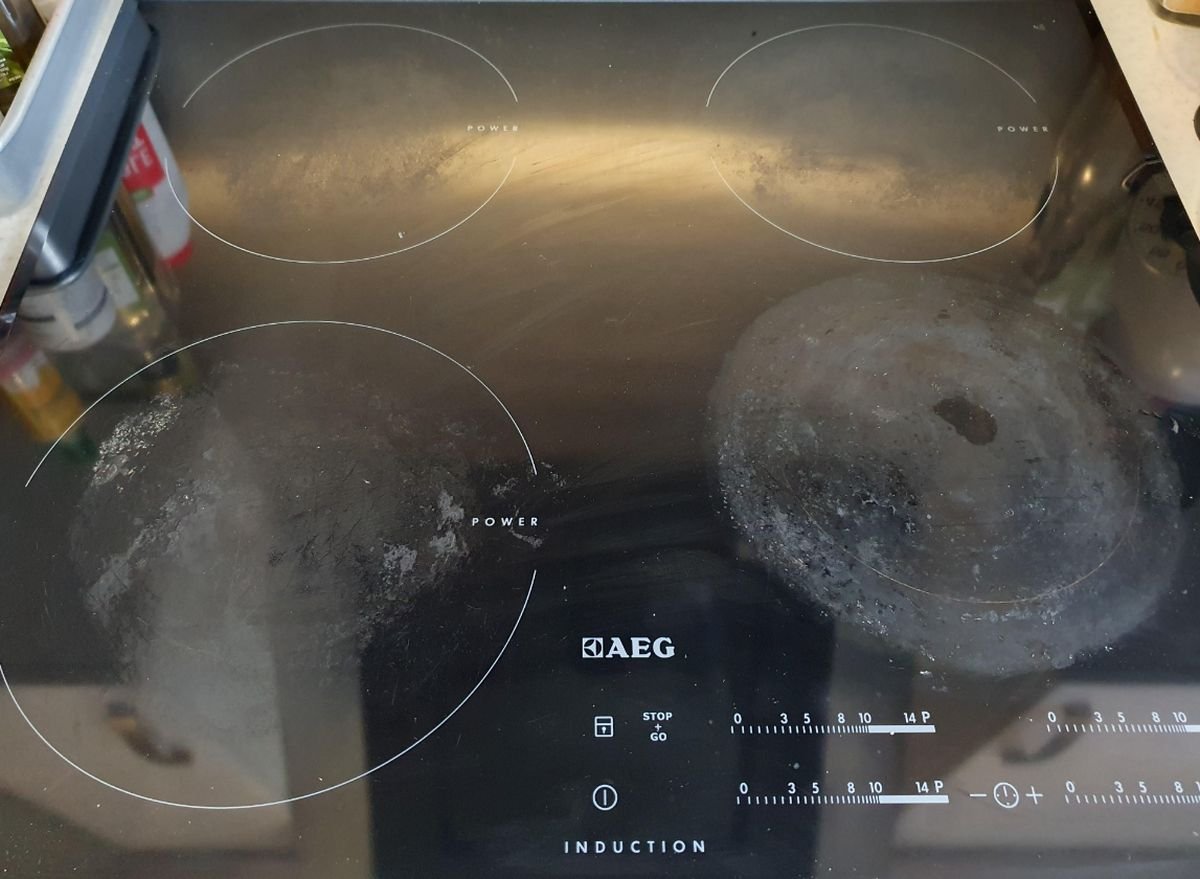

An induction cooktop seems almost single-use. After that, it starts showing rings, tarnish, and burn marks that don’t match how new it is. I went through the same cycle. Baking soda, vinegar, random cleaners. Nothing has yielded consistent results.
What changed was not a miracle product. It was a combination of the right cleaner and the right tool used in the right order. Once I followed it, the cooktop stopped looking worn after every meal.

Why most cleaning methods fail
Most people try the soft solution first. Baking soda, vinegar, dish soap. This helps with light grease but does nothing for heat-bound residue. Once food burns onto the glass, it becomes a thin layer that sits on top of the surface.
Mixing vinegar and baking soda appears active, but it breaks down into water and gas. That reaction doesn’t clear up. It removes loose dirt the best, but it can’t break down the baked-on residue that causes those white rings.
I tried natural cleaning methods first and they didn’t work
I started Baking soda paste and soft sponge. It helped with a fresh splash, but the burnt rings remained in place. More scrubbing didn’t change the result, it just spread the residue.
Then I tried vinegar, both on its own and mixed with baking soda. It fizzled, looked active, but after cleaning everything, the surface looked the same. The marks were still there because they weren’t surface dirt, they were bonded to the glass.

What really works best
The most relevant solution is a ceramic cooktop cleaner, specifically Weimann or similar formulas Made for glass surfaces. These are designed to lift residue without scratching.
For heavy buildup, the real tool is a cooktop scraper. A flat blade, held at a low angle, removes the burnt layer without damaging the glass. This is what most people overlook, and it’s the reason nothing else works.
The method that finally cleared it
Start with a cool surface. Apply a small amount of cooktop cleaner and spread it over the stained areas. Let it sit for a minute to soften the residue.
Then use the scraper at a low angle and move slowly across the surface. Do not press down. The goal is to lift the level, not force it off. Once the buildup is gone, wipe everything down and finish with a microfiber cloth.
What happens when you do it right
The difference is immediate. The cloudy rings disappear, and the surface returns to a uniform black finish. It doesn’t look new forever, but it stops looking damaged.
More importantly, future cleaning becomes easier. Once the thick residue is gone, daily wipes really work. You no longer fight against levels built over time.
What to use for daily cleaning
For everyday use, keep it simple. A damp microfiber cloth and a small amount of dish soap is enough after cooking. Clean up spills before they burn onto surfaces.
If you maintain it this way, you avoid needing a scraper every so often. The cooktop stays consistent instead of going through buildup and deep cleaning cycles.

Tools that make a real difference
Microfiber cloth is not optional. It removes residue without leaving streaks. Rough sponges or abrasive pads create micro scratches that worsen the surface over time.
For scrubbing, soft pads such as Scotch-Brite glass-safe pads work well. They help spread the cleaner evenly and lift light residue without damaging the surface.
What to avoid completely
Avoid strong abrasives such as comet or rough steel wool. Even though the glass looks tough, it leaves fine scratches that trap dirt and dull the cooktop.
Skip random solutions like tire cleaner or harsh oven chemicals unless the label confirms they are safe for glass cooktops. Some of these can damage the finish or leave marks that won’t come off.
A trick that helps with stubborn stains
If the residue does not move, soften it first. Place a warm, damp cloth over the area for a few minutes before using the cleaner and scraper.
This step reduces the effort. Instead of pushing the residue, you loosen it so it clears. It also reduces the risk of scratching the surface.
Why induction cooktops always look used
The surface shows everything because it is flat and reflective. Even clean glass can show signs of contact with heat, minerals in water, or cookware.
This is normal. The issue isn’t the content, it’s how quickly the residue builds up when it’s left there. Once stains sit through multiple cooking cycles, they harden and become more difficult to remove.
What changed after switching methods
Once I changed a couple of things the cleaning stopped being frustrating. I stopped relying on natural solutions for cold stains, and I stopped leaving the cooktop dirty after use.
The biggest difference came from timing. If I clean it after every use, it remains easy to maintain. If I leave it for days or weeks, even the best cleaner takes effort. A cooktop doesn’t need a whole lot of care, it just needs consistency.



