

Want a backyard that looks designed, not just decorated? In 2026, the shift is clear. It’s no longer about filling a space with plants or furniture. It’s about placing some strong elements that anchor everything around them.

Backyards behave more like curated outdoor rooms. Sculptural pieces, defined seating zones, water features and layered materials are doing most of the visual work, while planting plays a supporting role. The result feels deliberate, structured and more memorable.
These backyard ideas show how one accent, when placed correctly, can transform an entire space.
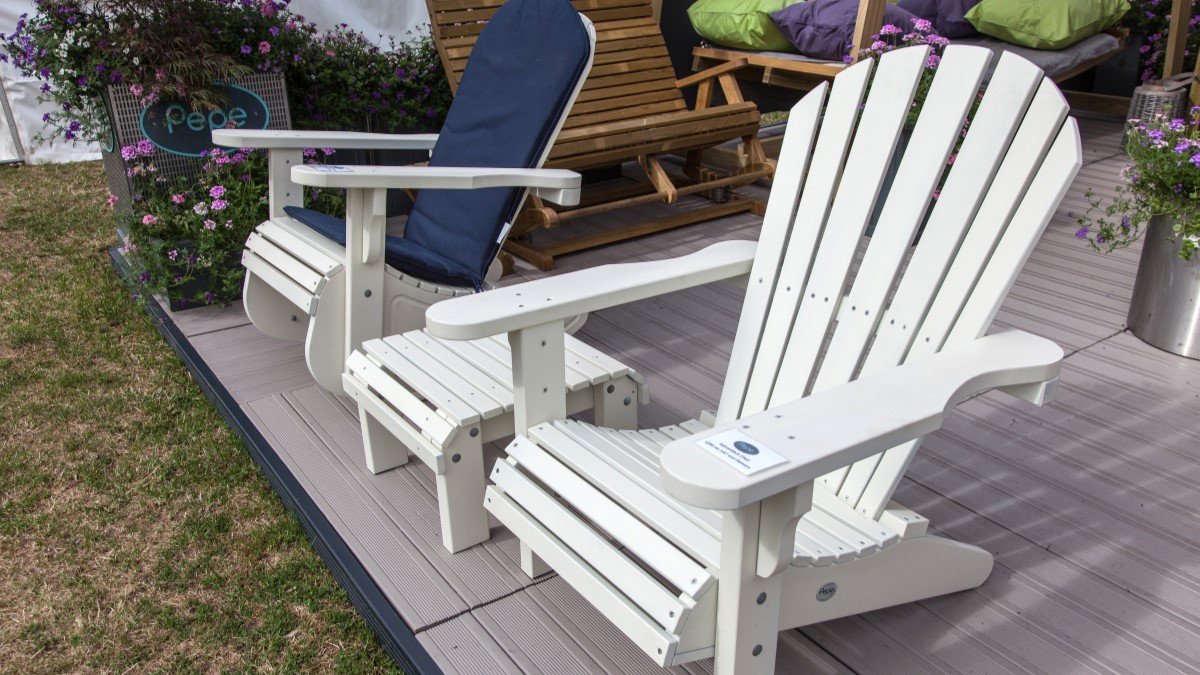
Classic Adirondack chairs define a relaxed deck edge

Two clean-lined Adirondack chairs sit at the edge of the upper deck, angled slightly toward each other. With wide armrests and a low profile, they immediately suggest a place to stop.
This is where simplicity becomes structure. You don’t need a full lounge setup. Just two well-arranged chairs can define a zone, frame a view and turn a blank space into a functional, inviting moment.
Sculptural stone seating replaces traditional outdoor furniture

Large polished stone forms serve as seating, placed directly on wooden decks and surrounded by loose pebbles. They look closer to landscape art than furniture.
This is where work meets sculpture. Instead of adding chairs, the seating becomes part of the environment, visually grounding the space.
A layered flower border creates a relaxed seating zone

Soft, layered plantings wrap around modern outdoor chairs to create a semi-enclosed garden room. Tall stems, mixed textures and natural variations add depth to the space.
Seating does not dominate here. Flowers define the atmosphere, turning a simple corner into a quiet, immersive retreat.
A stepping stone path leads to a defined patio

Clear the rectangular stepping stones cut from the grass and lead directly to the raised patio. The transition feels deliberate and structured.
Movement becomes part of the design. A simple path like this organizes the entire backyard and makes even a small space feel organized.
A circular fire bowl is forming the social center

A low, mirrored fire bowl sits in the center of a circular paved area, surrounded by curved concrete benches. Everything radiates from this point.
This is a focal core idea. Instead of scattered features, a strong element draws people in and defines how the space is used.
An outdoor lounge setup that resembles a living room

Woven sofas, a central table and soft cushions create a fully furnished outdoor lounge. The layout feels closed and deliberate.
Comfort becomes the structure. When the furniture is arranged like an interior, the backyard instantly feels more useful and complete.
A water field feature to add movement and sound

A textured stone sphere fountain sits within a gravel base, creating a constant movement and subtle sound.
Water features do not have to be large to be effective. Even a compact element like this adds a sensory layer that changes how a space feels.
A garden shed turned into a backyard workspace

A small painted shed becomes a functional workspace, complete with desk and storage. Surrounded by plantations, it blends into the garden.
This turns the backyard into a useful extension of the home. It is no longer just decorative – it supports daily life.
A sculptural lounge chair serves as a design statement

A curved wooden lounge chair sits on the deck, adding to the minimalist ambiance. Its shape itself attracts attention.
A strong part can define a zone. You don’t need multiple elements when the form itself carries the visual weight.
A rustic wood corner creates a natural retreat

A raw wood fence, log stools and organic branches create a small enclosed corner that feels grounded and tactile.
Natural materials immediately create an atmosphere. This type of setup looks informal but still feels intentional because of how contained it is.
Natural rock water feature blending into the landscape

Large boulders and a shallow water basin create a feature that looks like it belongs in the landscape. Grasses and wild plantings soften the edges.
This approach blurs the line between design and nature. A feature doesn’t sit in the garden – it becomes part of it.
The Fallen Tree Swing turns nature into a play feature

A fallen tree is transformed into a sculptural garden element, a simple rope dangling from its curved trunk. Surrounded by soft planting and natural stone edging, it feels like part of the landscape rather than an additional feature.
This is where design meets storytelling. Instead of taking away from the tree, it becomes the focal point. It adds movement, character and a sense of discovery that no store-bought piece can replicate.
The hot tub corner is framed by soft planting

The compact hot tub sits on a gravel base, surrounded by layered plantings that soften its edges. Flowers and ornamental grasses bring color and texture, balancing the structured form of the spa.
This setup turns a functional feature into a destination. Planting creates privacy and ambiance, making the hot tub feel integrated into the garden rather than placed on top of it.



