
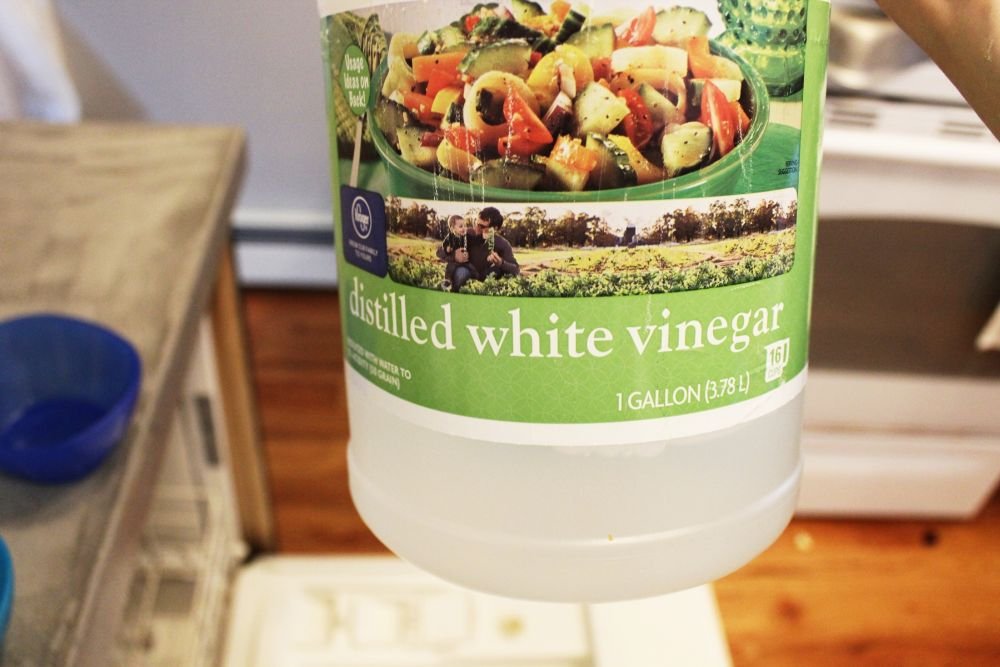

I always use vinegar for cleaning. It removes mineral build-up, cuts soap residue and eliminates odors. For years it felt like the safest natural cleaner in the house.
So, I started using it everywhere.
Kitchen surfaces. devices. Bathroom fixtures.
Then I saw something I didn’t expect. Some surfaces looked worse after cleaning, not better. A finish lost its luster. A seal felt dry. One surface even developed faint marks that would not fade.
That was when I realized that vinegar is not as universal as it seems.
These eight surfaces are what experts constantly warn about.

1. Marble and Limestone
Marble and limestone contain calcium carbonate. The acid reacts with the calcium and etches the surface. Polish becomes dull. Light reflects unevenly. Ring marks may appear where the droplet sits.
Carving changes the stone itself. It doesn’t wipe. Repairs require honing or refinishing. Dilution does not eliminate risk. Use pH-neutral stone cleaners or mild dish soap with water.
2. Granite and Sealed Natural Stone
Granite resists acid better than marble, but most installations rely on penetrating sealers. Vinegar weakens those sealers over time. Once the protection is broken, the fluid penetrates quickly and the scar deepens.
The shine fades. Dark spots appear. Re-sealing becomes necessary sooner. For granite, slate, quartzite and other natural stone, use cleaners labeled safe for sealed stone.
3. Hardwood floors
Hardwood floors are protected by polyurethane or oil-based finishes. Vinegar breaks down that finish with repeated use. The floor becomes cloudy. Dim the depth and shine. Subtle scratches show more.
As the finish thins, moisture penetrates the wood fibers. The board swells or warps. Some flooring brands warn that using vinegar voids warranties. Use cleaners made for finished wood.
4. Steam iron
Steam irons have an inner casing inside a water chamber. The acid eats away at that lining and corrodes the metal parts. Corrosion forms. Steam vents clog. Particles can stain fabric.
Most manufacturers offer a self-cleaning function or an approved descaling method. Pouring vinegar into the tank risks internal damage that cannot be reversed.
5. Washing machines and dishwashers
Vinegar dissolves mineral deposits, but repeated use affects rubber seals and hoses. The acid dries out the rubber. Cracks form. Seals lose flexibility. Leaks follow.
Front-load washers face a greater risk because the door gasket remains under pressure. Appliance cleaners designed for machines target the buildup without damaging the rubber components.
6. Electronic screen
The screen has an anti-glare and anti-fingerprint coating. Vinegar erodes these layers and leaves streaking or discoloration. Moisture can seep into seams and corrode internal components.
Use a dry microfiber cloth. For stubborn marks, dampen a cloth with water or use a screen-safe cleaner. Apply the liquid to the cloth, not the device.
7. Unsealed grout
Grout consists of cement and sand. Unsealed grout absorbs liquids. Vinegar penetrates and weakens the cement structure. Over time, the joints become soft and worn away.
Test the grout by spraying it with water. If it darkens and absorbs moisture, it is unsealed. Avoid vinegar. Use a grout cleaner or baking soda paste.
8. Cast iron cookware
Cast iron relies on seasoning, a layer of polymerized oil that protects the surface. Vinegar strips that layer and releases the raw iron. Rust forms quickly.
Restoration methods sometimes use vinegar under controlled conditions, followed by immediate drying and raisining. Regular cleaning does not require acid. Use mild soap and water.
conclusion
Marble is different because damage starts on contact. There is no buffer, no protective layer to resist the acid. Once etched, the surface cannot be wiped back to polish. Repair means refinishing.
That’s the real difference with vinegar. On some materials, it removes buildup. On others, it changes the content itself.
Have you experienced vinegar damage to a surface you didn’t expect? Share what happened and what you learned.



